
Lieferung heute & morgen

Qualitätsgarantie

Willkommens-Angebote freischalten: KOSTENLOSE Lieferung | Bis zu 80 % RABATT | Kostenlose 30-Tage-JoyPlus-Testphase
App herunterladen
By Joybuy Product Recommendation Officer, 29 August 2026
A cluttered hallway overflowing with shoes is a daily nuisance. However, the search for the right shoe storage solution often leads to frustration. Many products promise order but quickly prove to be impractical or unstable. Before you make a decision, it's helpful to understand the common pitfalls that can lead to a bad purchase.
This guide focuses on the objective criteria that define a functional and durable solution. We'll highlight the three most common flaws in shoe storage systems and show you what to look for to find a suitable and long-lasting solution for your home.
Many solutions on the market have design weaknesses that severely limit their everyday usefulness. Pay special attention to these three points:
To avoid these problems, you should focus on three core parameters. These will help you identify a shoe storage system that truly meets your needs.
The longevity of a shoe storage solution is directly linked to the materials used.
Flexibility is crucial, especially in limited spaces. A modular shoe rack or stackable boxes offer space-saving shoe storage that can grow with your collection. Such systems can be adapted to fit into alcoves, under stairs, or inside a wardrobe. Check if the modules can be connected both vertically and horizontally to make the best use of the available space. Adjustable or removable shelves in cabinets are also a sign of high adaptability.
Good trainer storage not only protects from dust but also ensures a balanced microclimate.
Here are some recommendations tailored to different needs and living situations.
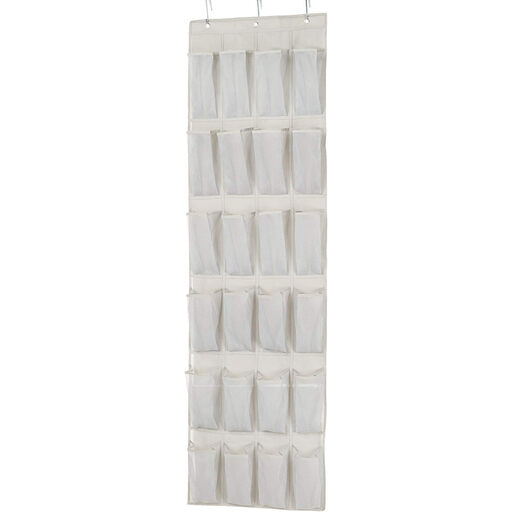
Why it's a great fit: Ideal for renters or those with very little floor space. This shoe organiser makes use of the often-wasted space on the back of a door or inside a wardrobe, creating instant order without any drilling. Perfect for lighter shoes like trainers, ballet flats, or sandals.
The breathable mesh fabric ensures excellent ventilation and prevents odours (avoids Flaw 2). Since it hangs, floor stability is not an issue (avoids Flaw 1).
Maximum space utilisation without taking up any floor area. Simple installation by hanging it over the door.
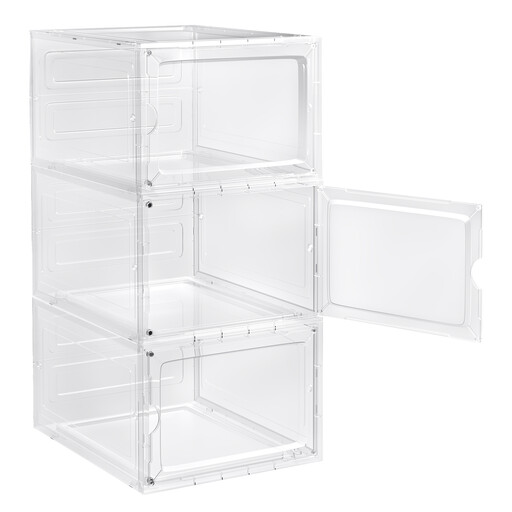
Why it's a great fit: For enthusiasts and collectors who want to not only store their trainers but also display them. The transparent boxes with a front flap provide a clear view of the collection and quick access without having to unstack them. Fits shoes up to size 46 (EU).
According to the manufacturer, the construction of ABS and hard PP is more stable than conventional folding boxes (avoids Flaw 1). The boxes are large enough for high-tops and larger shoe sizes (avoids Flaw 3).
A modular and expandable system that protects from dust while keeping shoes visible. Magnetic front door for easy access.
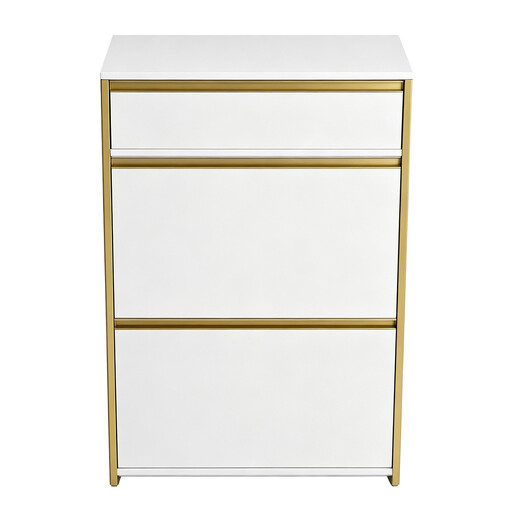
Why it's a great fit: For anyone seeking an aesthetic solution that blends seamlessly into their decor. This modern shoe cabinet looks like a sideboard, hiding shoe chaos behind closed doors. Ideal for the hallway or entrance area.
Made from high-density particle board and equipped with an anti-tip kit, the cabinet offers a stable structure (avoids Flaw 1). The internal shelves are adjustable and removable to accommodate taller shoes (avoids Flaw 3).
Combines storage space with a decorative function. The closed front ensures a permanently tidy appearance.
We've curated a comprehensive, up-to-date list of products that meet these strict selection criteria.
Good ventilation is crucial. When buying, look for models with integrated ventilation openings. Also, make sure shoes are completely dry before placing them in the cabinet. Regularly cleaning the cabinet and using odour absorbers like cedar blocks or special shoe deodorisers can also help.
A modular shoe rack is typically an open system of interlocking panels and connectors that can be flexibly assembled in various shapes and sizes. It offers good ventilation and quick access. Stackable shoe boxes are individual, enclosed containers that are placed on top of each other. They provide better protection from dust and moisture and are often the preferred choice for long-term storage or displaying collectibles.
The load capacity varies greatly depending on the manufacturer and material. Simple plastic shelves can bend under the weight of just two pairs of heavy winter boots. Sturdy shelves made of engineered wood or metal can support 5 kg or more. For stackable boxes, the stability of the frame is critical. Always read the product description and the manufacturer's specifications for maximum load capacity to avoid overloading and damage.