
Lieferung heute & morgen

Qualitätsgarantie

Willkommens-Angebote freischalten: KOSTENLOSE Lieferung | Bis zu 80 % RABATT | Kostenlose 30-Tage-JoyPlus-Testphase
App herunterladen
A messy entryway, overflowing piles of shoes in the hallway—it's a familiar problem in many homes. A well-designed shoe storage solution is more than just a piece of furniture; it's the foundation for an organised and inviting living space. But the market is flooded with options, and not all of them deliver on their promises.
As your Joybuy Product Recommendation Officer, I'll help you spot the typical pitfalls and find a solution that truly fits your available space, your shoe collection, and your interior design style.
Many buyers focus solely on price or appearance, overlooking crucial functional flaws. These three problems often lead to disappointment and the need to buy again:
To avoid making a bad purchase, you should check three core parameters before making a decision. These will help you identify a durable and functional solution.
The material is a key determinant of your shoe storage's longevity and appearance.
Choose the type that suits your habits and your space.
Measure your available space precisely before making a decision. The depth is the most critical dimension for a hallway shoe rack. A piece of furniture that is too deep can quickly become an obstacle. Also, check the internal dimensions of the compartments to ensure that even your largest shoes or boots will fit comfortably.
Here are some recommendations tailored to different needs and living situations.
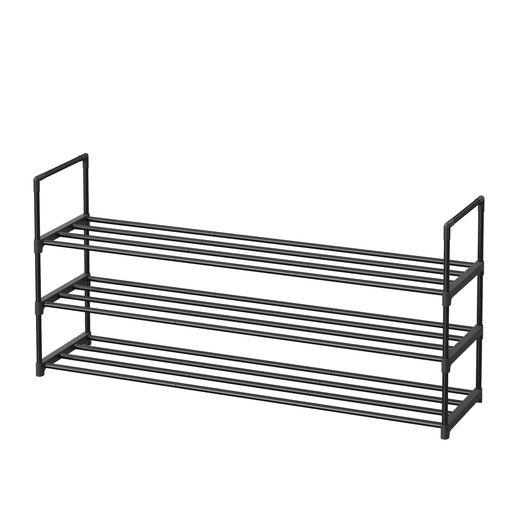
Why it's a great fit: Ideal for renters or those with limited space who need a flexible and unobtrusive solution. The open design feels light and won't overwhelm a small hallway.
The construction of metal tubes and high-quality connectors offers greater stability than simple plastic racks. The stackable design avoids the issue of improper dimensions, as the height can be adjusted to meet your needs.
Tool-free assembly and the ability to stack multiple racks to expand storage space vertically.
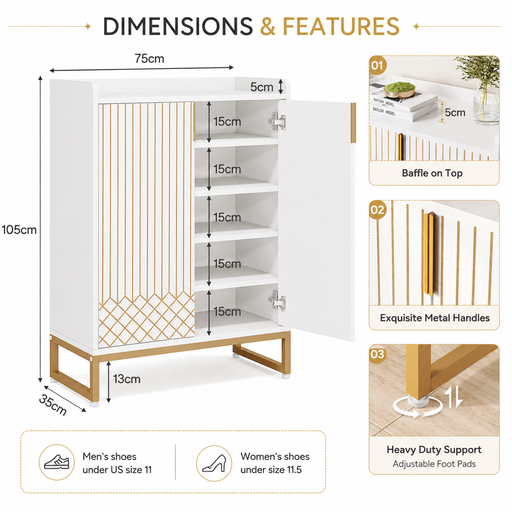
Why it's a great fit: For anyone who wants to hide a large shoe collection and turn their entryway into a stylish calling card for their home. Offers ample storage and a high-end look.
The closed construction with doors solves the problem of clutter and protects shoes from dust. The sturdy wooden structure with metal legs addresses the stability issue. The tiers provide space for up to 25 pairs of shoes, thus overcoming the capacity problem.
High capacity and a modern, closed design with elegant gold accents that blends seamlessly into living spaces.
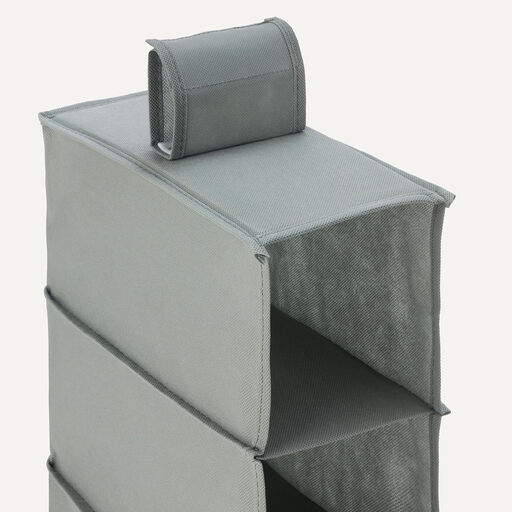
Why it's a great fit: Perfect for utilising vertical space in a wardrobe or on a clothes rail. It requires no floor space and is ideal for rental apartments, as no wall mounting is needed.
This system completely bypasses the problems of floor space and improper dimensions. It's designed for lighter shoes and makes use of often-wasted hanging storage. The collapsible design makes it easy to store when not in use.
Maximum space efficiency by using vertical space, no assembly required, and easy to store when needed.
We've compiled a complete, up-to-date list of products that meet these strict selection criteria and comply with current regulations.
1. Does a tall shoe cabinet need to be fixed to the wall? Yes, absolutely. For safety reasons, any piece of furniture that is taller than it is wide should be anchored to the wall to prevent it from tipping over. This is especially important in households with children. Most manufacturers include a corresponding anti-tip kit. Installation is simple and a crucial safety feature.
2. What should be the distance between shelves in a shoe rack? The ideal distance depends on your shoe collection. For flat shoes like trainers, sandals, or ballet flats, 15 to 20 cm is sufficient. For ankle boots, hiking boots, or high heels, you'll need closer to 25 to 30 cm. Models with adjustable shelves offer the greatest flexibility here.
3. How can you prevent odours in a closed shoe cabinet? Make sure your shoes are completely dry before placing them in the cabinet. Air out the cabinet regularly by leaving the doors open for a while. Special products like cedar blocks or shoe deodorisers can also help absorb moisture and neutralise odours. Some cabinets have built-in ventilation slits in the back panel, which is an added advantage.