
Lieferung heute & morgen

Qualitätsgarantie

Willkommens-Angebote freischalten: KOSTENLOSE Lieferung | Bis zu 80 % RABATT | Kostenlose 30-Tage-JoyPlus-Testphase
App herunterladen
By a Joybuy Product Recommendation Officer Published August 29, 2026
A cluttered hallway, overflowing wardrobes, and the constant search for a matching shoe—the problem of shoe storage is a familiar one in many households. The market offers a wealth of solutions, but not all of them live up to their promises. Before you make a decision, it's crucial to understand the common pitfalls that can lead to a bad buy. This guide will help you separate the good from the bad and find a functional, durable solution to bring order to your entryway.
Many products look practical at first glance but reveal their weaknesses only through daily use. Pay close attention to these three points to avoid disappointment:
To make an informed decision, you should evaluate three core parameters. These will determine the functionality and longevity of your future shoe storage solution.
The material is crucial for stability and durability. A simple metal shoe rack should have screwed connections or robust interlocking systems. For plastic systems, the type of material is important:
Always check the specified maximum load capacity per tier and look for solid construction of the connecting parts.
A good space-saving shoe storage solution should not only organise your shoes but also protect them. Sufficient ventilation is essential for daily use. Look for ventilation holes on the back of boxes or breathable materials in hanging organisers.
For collectors looking for an attractive sneaker storage solution, dust-proof, transparent boxes are an excellent choice. Models with tightly sealing doors protect valuable pairs from dust and environmental factors. Some products even advertise UV protection, which can prevent shoe materials from fading due to sunlight.
Your needs can change. A modular system grows with your shoe collection or adapts to new living spaces. Stackable shoe boxes or cube-style shelving systems that can be combined as desired offer maximum flexibility.
Before buying, measure not only the available space in your home but also your largest shoes. Compare the internal dimensions of the compartments with the length, width, and height of your boots or sneakers. A good shoe cabinet or shoe organiser should offer enough room for all your types of footwear.
Instead of making a one-size-fits-all recommendation, we've identified products tailored to specific profiles and needs.
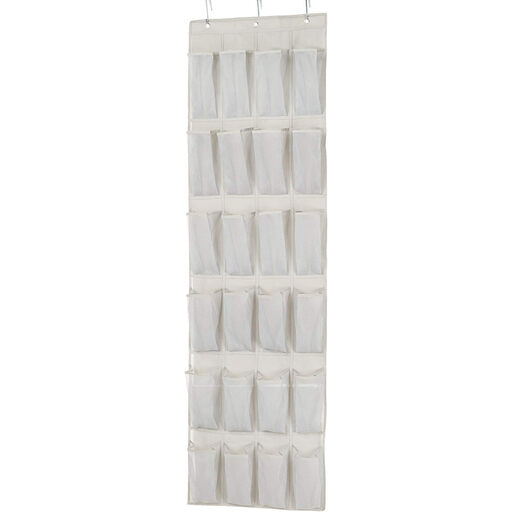
Why This Fits Their Persona: Ideal for renters or those with limited space in their hallway or bedroom. This system utilises the often-unused space on the back of a door, creating storage without taking up any floor space.
The breathable mesh fabric prevents odour build-up (Pitfall 2). Since it hangs on a door, it eliminates the problem of unstable, wobbly floor-standing racks (Pitfall 1).
Maximum space utilisation in a small footprint; tool-free installation; good ventilation for shoes.
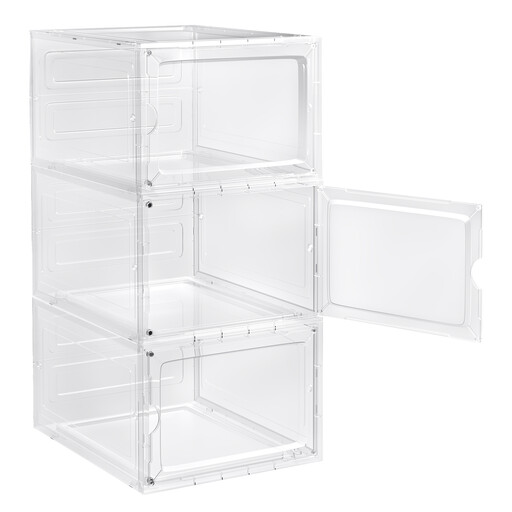
Why This Fits Their Persona: Perfect for anyone who wants to start with a small but expandable solution. It's ideal for protecting and organising a few favourite pairs, with the option to grow the system as needed.
The construction of ABS and hard PP is structurally sound, avoiding the pitfall of flimsy, cheap boxes (Pitfall 1). The front-facing door allows access without having to unstack the boxes.
Sturdy, modular interlocking system; transparent body with a front door for a quick overview and access; fits shoes up to size 11 (UK) / 12 (US).
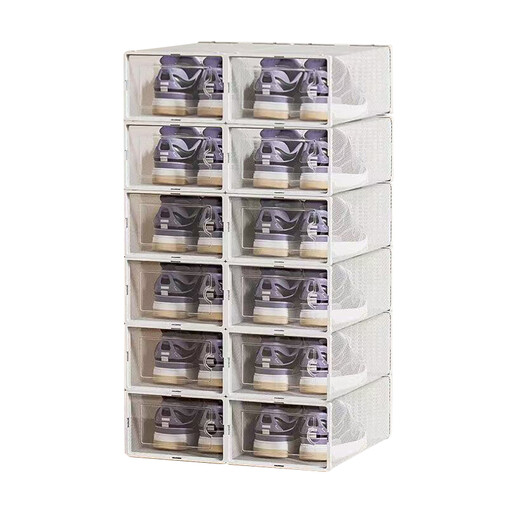
Why This Fits Their Persona: Designed for sneakerheads and collectors who want to not only store a large number of shoes but also display them in a dust-free, organised manner. The magnetic doors provide convenient access.
The generous internal dimensions are suitable for high-tops and larger shoe sizes (Pitfall 3). The robust construction allows for secure stacking to create a shoe wall (Pitfall 1).
Large set for building a complete shoe wall; magnetic, self-closing doors for a premium feel; clear design to showcase the collection.
We have compiled a complete, real-time list of products that fully satisfy these strict selection criteria and UK safety regulations.
The load capacity varies greatly depending on the material and construction. A simple fabric rack might only support 1-2 kg per tier, while a sturdy rack made of metal or ABS plastic can hold 5 kg or more per compartment. Always check the manufacturer's specifications for maximum load capacity to avoid overloading and instability. Distribute the weight evenly by placing heavier shoes on the lower tiers.
Not all shoe boxes are suitable for tall footwear. Standard boxes are often designed for trainers, low-cut shoes, or pumps. For boots, ankle boots, or high-tops, you'll need models with larger internal dimensions. Measure the height of your boots while they are standing upright and compare this with the internal dimensions of the box, which should be listed in the product description. Some manufacturers offer special, taller boxes specifically for boots.
The cleaning method depends on the material.