Organised shoe storage is the foundation of a tidy entryway. Selecting the right model depends on objective criteria such as available space, the number of shoes to be stored, and material properties. Whether an open shoe rack for quick access or a closed shoe chest for a cohesive look is the right solution depends on your individual needs. This article analyses the technical features of various systems and presents a selection of models to provide a basis for informed decision-making.
Selection Criteria for the Right Shoe Cabinet
The choice of a shoe cabinet should be based on an analysis of your space and functional needs. The following parameters should be considered.
Types of Shoe Storage: Rack vs. Cabinet
- Open Shoe Rack: This design allows for good air circulation for your shoes and provides quick access. Models designed as a narrow shoe rack are particularly suitable for tight hallways or alcoves. However, the open structure can create a more cluttered overall look.
- Closed Shoe Cabinet: A closed shoe cabinet protects its contents from dust and keeps them out of sight, contributing to a tidy and harmonious room aesthetic. Doors, flaps, or drawers conceal the shoes. With this option, it is important to ensure there are adequate ventilation openings on the back panel to minimise odour build-up and wear on the shoes.
- Shoe Chest: This is a mid-height, closed unit whose top surface can be used as an additional shelf for keys, mail, or decorative objects. It combines storage space with a practical surface.
Material and Construction
The choice of material affects the durability, maintenance, and weight of the furniture piece.
- Engineered Wood (MDF, Particleboard): Often melamine-coated, these materials offer a wide variety of finishes, such as a classic white shoe cabinet. They are low-maintenance but can be susceptible to damage from standing moisture.
- Metal: Metal frames are sturdy, durable, and often give the furniture an industrial or modern aesthetic. They are typically powder-coated or painted to prevent corrosion.
- Plastic: Modular interlocking systems made of plastic (e.g., polypropylene) are lightweight, offer flexible configuration, and are water-resistant. Their stability depends on the quality of the connectors and the thickness of the panels.
Size, Capacity, and Space Requirements
Before purchasing, accurately measure the intended location (width, height, depth). A shoe cabinet's capacity is usually stated as the maximum number of shoe pairs. This figure is an estimate, as it depends on the shoe size and type (boots vs. trainers). For limited spaces, tall and narrow models with a space-saving design are an efficient solution to utilise vertical space.
Our Top Picks for 2026
Based on the criteria mentioned, we present three models with different key features.
1. WOLTU Modular Shoe Cabinet with 6 Compartments
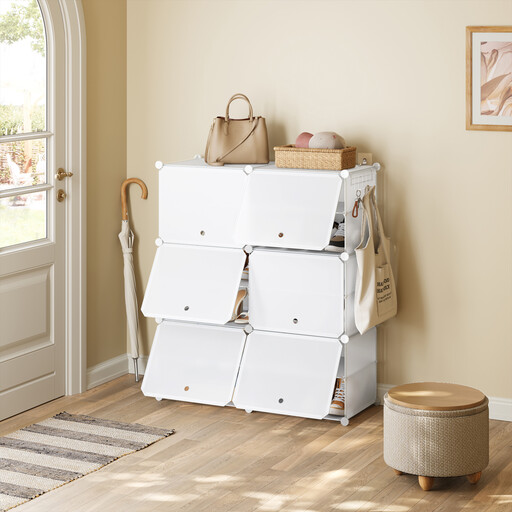
Why we recommend this product This model stands out for its outstanding flexibility. The modular design, consisting of plastic panels and a metal frame, allows for a configuration adapted to your available space, for example, in two or three rows. With a capacity of up to 24 pairs of shoes in 6 compartments, it is a highly space-efficient solution.
Pros
- Versatile Configuration: The interlocking system allows for various assembly options.
- High Capacity: Offers space for a large number of shoes.
- Additional Features: Side hooks can be used for hanging keys or bags.
- Easy to Maintain: The waterproof polypropylene panels can be easily cleaned with a damp cloth.
Who it's for This system is suitable for individuals and families looking for a customisable and expandable storage solution with a large capacity. It is ideal for use in hallways, under stairs, or in utility rooms.
2. Tribesigns 6-Tier Shoe Cabinet with Doors
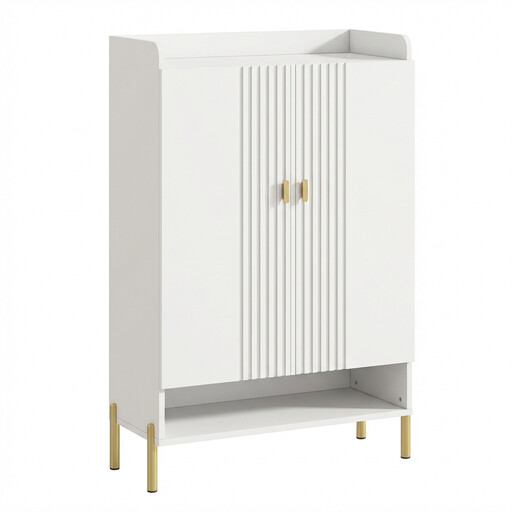
Why we recommend this product This closed shoe cabinet combines functionality with a modern design. The closed front in white with gold-tone accents ensures a clean look in a hallway shoe cabinet or living area. The adjustable shelves allow for flexible interior organisation.
Pros
- Enclosed Storage: Protects shoes from dust and provides a tidy appearance.
- Adjustable Shelves: The height of the compartments can be adapted to different shoe types (e.g., boots).
- Sturdy Construction: The combination of engineered wood and metal legs ensures stable footing.
- Extra Surface Space: The top can be used as a console table.
Who it's for Ideal for users who value a clean, stylish aesthetic and want to store their shoes out of sight. The design integrates well into modern interior design schemes.
3. WOLTU Shoe Rack, 8 Tiers, Narrow
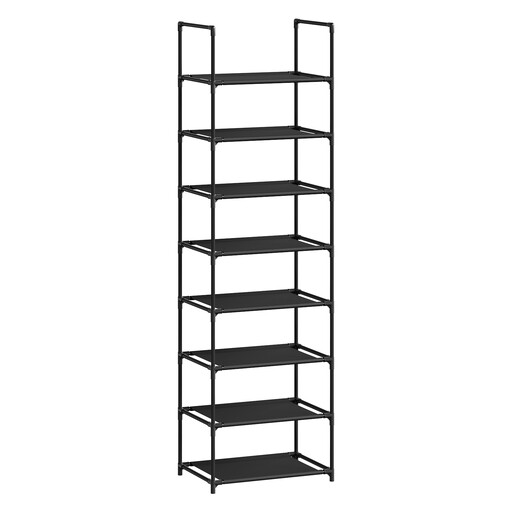
Why we recommend this product This shoe rack is an exceptionally space-saving design. With a width of just 41 cm, it makes optimal use of the room's height, offering space for up to 16 pairs of shoes on 8 tiers. The tool-free assembly makes setup straightforward.
Pros
- Minimal Footprint: The narrow and tall design is ideal for tight corridors and alcoves.
- Vertical Storage: Maximises storage capacity on a small footprint.
- Flexible Configuration: The rack can be split into two smaller, separate racks if needed.
- Lightweight and Sturdy: The frame made of metal tubes and the shelves of laminated non-woven fabric are lightweight yet durable (supporting up to 5 kg per tier).
Who it's for This model is the right choice for individuals with very limited space, such as in small flats or narrow entryways, who need a functional and discreet storage option.
Discover More Alternatives
If the models presented do not exactly meet your requirements for size, material, or design, a broader selection offers further possibilities. Different dimensions, colours, and designs can help you find the perfect solution for your unique home environment.
Discover more models in the Shoe Cabinet Rack category.
Frequently Asked Questions (FAQ)
1. How deep should a shoe cabinet be? The depth of a shoe cabinet is a crucial factor for its functionality. A standard depth of approx. 35–40 cm is sufficient to accommodate most shoe sizes (up to approx. UK 11 / US 12) straight. For particularly narrow hallways, there are space-saving tilt-out shoe cabinets with a depth of only 15–25 cm, where shoes are stored at an angle. Before buying, measure the longest shoes you plan to store to determine the required minimum depth.
2. What is better: an open shoe rack or a closed shoe cabinet? The decision depends on your priorities.
- Open Shoe Rack: Advantageous for air circulation, which is especially relevant after wearing shoes in wet weather. Shoes are quickly accessible. The disadvantages are visible clutter and susceptibility to dust.
- Closed Shoe Cabinet: Creates a tidy, uniform look and protects shoes from dust. A potential disadvantage is inadequate ventilation, which can lead to odour build-up. Look for models with integrated ventilation slits.
3. How many shoes fit in a shoe cabinet? The capacity varies greatly depending on the model and is usually specified by the manufacturer as a range of shoe pairs. This figure is typically based on average-sized low-top shoes. Bulky footwear like boots, hiking shoes, or high heels requires more space. Models with adjustable or removable shelves offer the flexibility to accommodate taller shoes, though this reduces the total capacity. Check the product description for specific details on shelf height and width.

