
Lieferung heute & morgen

Qualitätsgarantie

Willkommens-Angebote freischalten: KOSTENLOSE Lieferung | Bis zu 80 % RABATT | Kostenlose 30-Tage-JoyPlus-Testphase
App herunterladen
A cluttered entryway, overflowing piles of shoes in the hall—it's a familiar sight in many homes. Well-designed shoe storage is the key to a tidier, more welcoming home. However, the market is flooded with products that vary widely in quality and practicality. As your Joybuy Product Recommendation Officer, I'll help you navigate the common pitfalls and find a solution that truly fits your needs and your living space.
Many buyers focus on price or design, overlooking critical flaws that can quickly render a product useless. Here are the three most common mistakes to avoid:
To avoid a bad purchase, you should focus on a few crucial criteria. These parameters determine whether a shoe storage solution will bring you long-term satisfaction.
The longevity of your shoe storage depends directly on the material. Pay attention to the load capacity per shelf, which is often specified in kilograms (kg).
Measure the available space precisely before making a decision. Consider not only the width and height but, most importantly, the depth.
Consider how many pairs of shoes you need to store and what types of shoes you own.
Here are some recommendations tailored to different needs and living situations, all of which meet the criteria mentioned above.
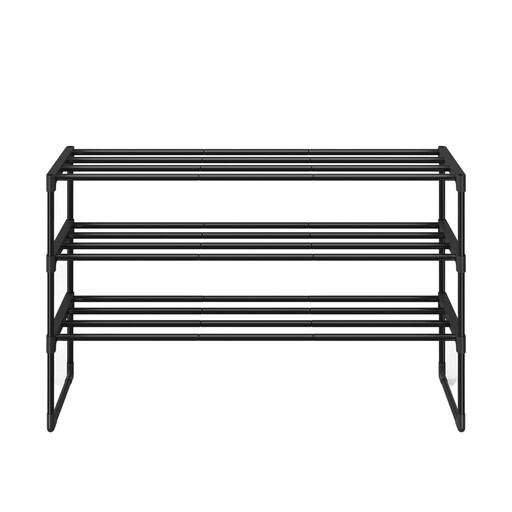
Why This Fits Their Persona: A straightforward and functional solution for anyone looking to create order quickly and affordably. Ideal for a first flat, a dorm room, or the basement, where functionality comes before design.
The construction of metal tubes and precisely fitting plastic connectors provides a solid base that won't give way under just a few pairs of shoes. It avoids the typical instability of very cheap models.
The tiers can be stacked or placed side-by-side as needed, offering high flexibility for different room sizes and growing shoe collections.
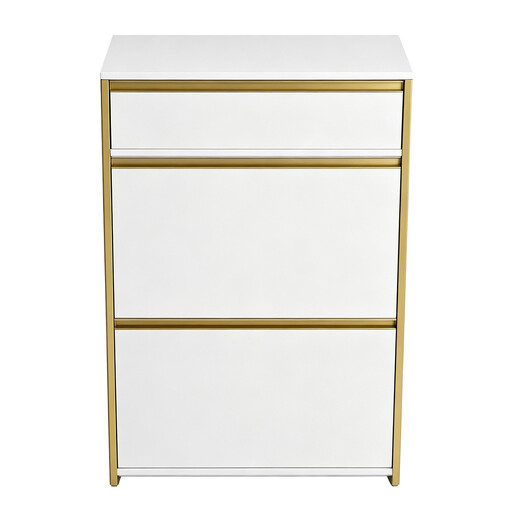
Why This Fits Their Persona: For those seeking shoe storage that blends seamlessly into a modern living environment. This piece of furniture is not just for storage but is also a decorative element for the hallway.
With a depth of just 24 cm, this shoe tipper is specifically designed for narrow hallways. It doesn't obstruct the walkway, solving the problem of bulky furniture.
The closed front creates a calm, tidy appearance. The adjustable compartments inside allow for storing various shoe types, from flat trainers to ankle boots.
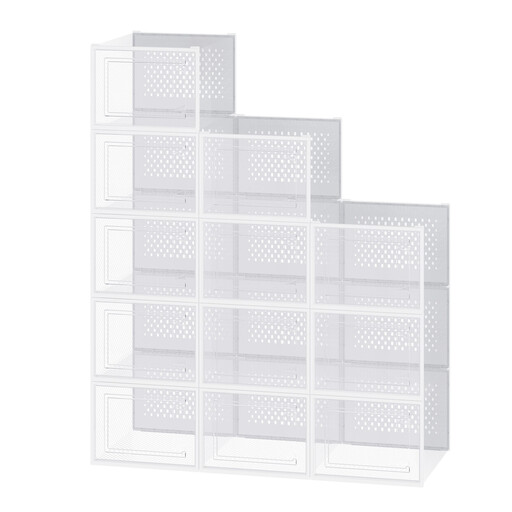
Why This Fits Their Persona: Perfect for sneaker lovers or anyone who wants to protect, organise, and display their shoe collection. The modular system allows you to build a custom "shoe wall."
Integrated ventilation holes ensure continuous air circulation. This prevents odour build-up and material damage—a crucial advantage over completely sealed boxes.
The transparent front door allows for a quick overview and access without having to disassemble the boxes. The secure stacking system ensures stability, even with taller setups.
We've compiled a complete, up-to-date list of products that fully meet these strict selection criteria and practical requirements for modern households.
It depends on your priorities. An open shoe rack offers excellent ventilation, which is especially beneficial after wearing shoes in wet weather. Shoes dry faster, and odours can't get trapped. A closed shoe cabinet or shoe tipper protects shoes from dust and creates a very neat, calm look in the hallway. If you opt for a closed system, look for models with integrated ventilation slots.
Measure the intended space accurately. For a narrow hallway, solutions with a depth of 17 to 25 cm, such as a narrow shoe rack or a shoe tipper, are suitable. A shoe bench typically requires a depth of at least 30 cm to provide a comfortable seating area. Also, plan for enough space in front of the furniture to open doors or flaps comfortably.
Always store shoes clean and dry. For high-quality leather shoes, using shoe trees is recommended to maintain their shape. Avoid storing them in direct sunlight, as this can fade colours and dry out materials. Good air circulation is crucial to ensure the longevity of your shoes.