
Lieferung heute & morgen

Qualitätsgarantie

Willkommens-Angebote freischalten: KOSTENLOSE Lieferung | Bis zu 80 % RABATT | Kostenlose 30-Tage-JoyPlus-Testphase
App herunterladen
Shoes can quickly pile up in the hallway, bedroom or wardrobe. The right shoe storage should do more than keep things tidy: it should also suit the space you have, the types of shoes you own and how often you wear them. But shoe cabinets, shoe racks, shoe boxes and modular options can differ considerably.
A capacity such as ‘20 pairs’ often refers to flat trainers, ballet flats or low-cut shoes. Boots, high heels and shoes with a higher shaft need more room. The actual capacity may also be lower if wide soles or larger shoe sizes make some compartments difficult to use fully.
Before buying, check:
Doors or shoe boxes keep dust out. However, storing damp shoes in an airtight space straight after wearing them can restrict air circulation. Ventilation openings or an open shoe rack are therefore worth considering if you wear your shoes regularly.
Storage does not replace drying your shoes thoroughly. Wet or very dirty shoes should be left to dry and cleaned before you put them away.
A narrow shoe cabinet makes efficient use of floor space, but its height may make it less stable than a low piece of furniture. For tall racks and cabinets, look for anti-tip fittings and follow the assembly instructions. In homes with children or pets, tall furniture should be secured to the wall if the fittings are provided.
Measure the available space, taking skirting boards, door clearance and room to move into account. In a hallway, depth and the width of the walkway are often more important than the overall height of your shoe storage.
A slim shoe cabinet around 20 to 25 cm deep may suit a compact entrance. Open racks usually need more depth, but make it easy to reach your shoes. Tall options such as a vertical shoe rack can provide plenty of storage on a small footprint, but must be stable.
PP plastic is moisture-resistant and can usually be wiped clean with a damp cloth. Metal frames can help make a unit more stable, while fabric or non-woven shelves are lightweight and flexible. Furniture made from wood-based materials has a neat, homely look; check the stated load capacity and make sure it is assembled correctly.
For shoe boxes made from PP or plastic, clear fronts are handy because you can see what’s inside. Also check that the doors close securely and that the boxes can be stacked safely.
Adjustable shelves let you accommodate different types of footwear. Look for details such as load capacity per compartment, the number of compartments and advice on distributing weight evenly.
Assembly requirements are another point to compare. Some shoe organisers slot together or fold out, while others need to be fully assembled. Don’t skip wall fixings for tall furniture. Illustrated instructions, numbered parts and included fittings can make assembly easier.
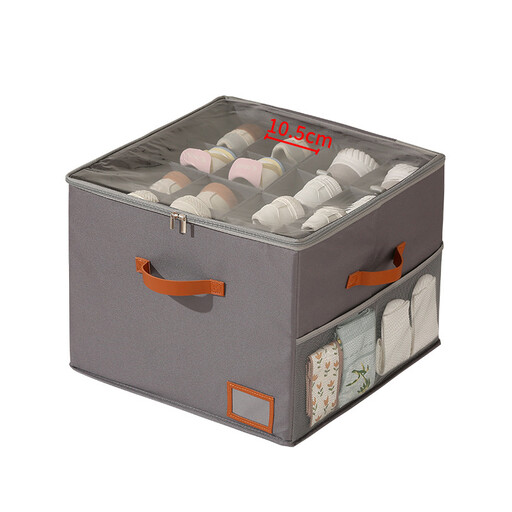
Why this product suits this profile: Its foldable design makes it a flexible shoe storage option for a wardrobe, bedroom or temporary use. According to the product description, the fabric design is breathable and lets you see what’s inside.
The visible front makes it easier to find the right shoes. Before buying, compare the product dimensions with your shoe size and the space available in each compartment.
Foldable design and fabric storage; the product description says it offers breathable storage that lets you see what’s inside.
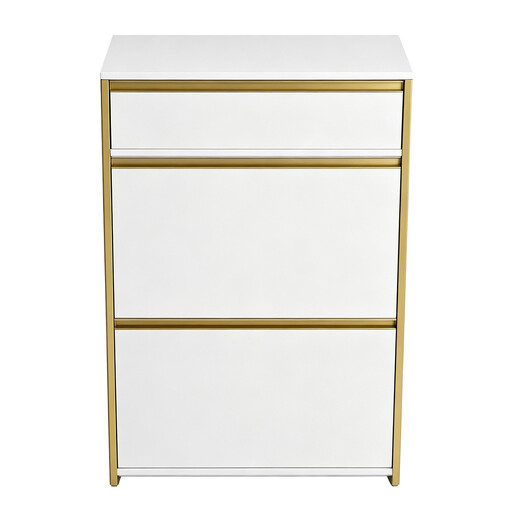
Why this product suits this profile: At 60 × 24 × 104.5 cm, this cabinet is designed for narrow hallways and entranceways. Adjustable, removable shelves let you customise the interior layout.
The stated external dimensions make it easier to plan for a recess. Given its height, use the anti-tip fitting provided as directed in the instructions.
Doors keep shoes out of sight, with adjustable shelves and space for up to 12 pairs, according to the product description.
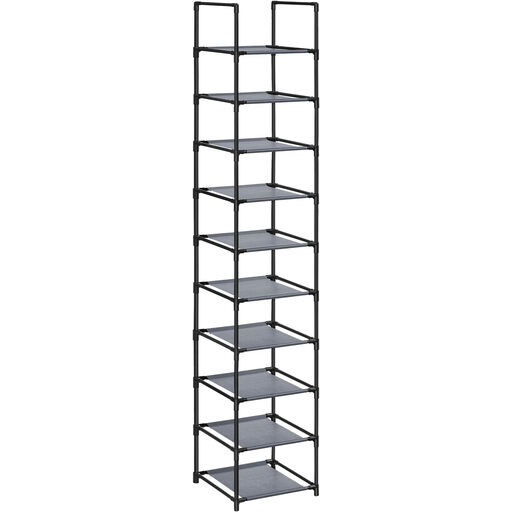
Why this product suits this profile: This vertical rack measures 33 × 33 × 173 cm and is designed to hold up to 30 pairs of shoes. It’s a good fit for households with lots of shoes and limited floor space.
Knowing the exact footprint makes planning easier. Distribute the weight evenly across the shelves, assemble the rack according to the instructions and secure it if needed.
Metal frame, ten tiers and non-woven fabric shelves; the product description says it’s suitable for a hallway, bedroom, wardrobe or entranceway.
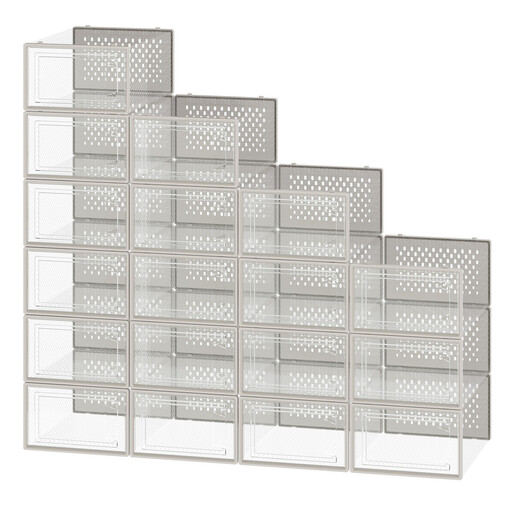
Why this product suits this profile: These stackable shoe boxes work well in wardrobes, on shelves and in small entranceways. Clear fronts make it easy to find what you’re looking for without opening every box.
Before buying, check the internal dimensions of 31.2 × 22.5 × 13.5 cm and the recommended shoe size of up to UK 11 against your own shoes.
18 PP boxes with clear fronts, stackable design and ventilation openings, according to the product description.
We’ve put together a complete, regularly updated list of products that meet these strict selection criteria and fully comply with the safety regulations in force in the EU.
A slim shoe cabinet, vertical shoe rack or narrow shoe boxes could all work in a narrow hallway. The key things to consider are the measured depth, door clearance and remaining walkway space. Anti-tip fittings are especially important for tall furniture.
It depends on how you plan to use them. Shoe boxes protect their contents from dust, and clear fronts make it easy to see what’s inside. An open shoe rack, on the other hand, allows more air circulation and gives you direct access to your shoes. Make sure damp shoes have enough time to dry first.
How long it lasts depends on the material, load, assembly and care. PP boxes are moisture-resistant and can be wiped clean. With fabric shelves, stick to the stated load capacity. Furniture made from wood-based materials needs to be assembled correctly and should not be exposed to high levels of moisture for long periods.