
Lieferung heute & morgen

Qualitätsgarantie

Willkommens-Angebote freischalten: KOSTENLOSE Lieferung | Bis zu 80 % RABATT | Kostenlose 30-Tage-JoyPlus-Testphase
App herunterladen
Shoes in the hallway, under the bed or scattered in your wardrobe can make it harder to choose what to wear each day and often take up more space than you expect. The right shoe storage should not only keep things tidy, but also suit your space, shoe sizes and habits.
However, some common marketing claims can lead to poor choices:
First, measure the available space in your hallway, wardrobe or bedroom. Remember to take into account:
For individual shoe boxes, the internal dimensions are particularly important. A model measuring 33,3 × 23,2 × 14,3 cm externally may suit many flat shoes and trainers. If you have larger feet, bulky soles or tall shoes, compare the actual shoe measurements with the manufacturer’s specifications.
Shoe boxes are often made from PP plastic, with PS plastic for front doors, textiles or reinforced cardboard structures. Plastic is wipe-clean and can be a good choice for transparent, dust-protected shoe storage. Fabric boxes are often lightweight and foldable, but need a sturdy shape and a sufficiently strong base.
When choosing a modular shoe rack, look for:
Do not use a shoe rack or shoe cupboard as a climbing frame. Keep products with small parts out of the reach of young children.
Transparent shoe boxes make it easier to find what you need, as you can see the contents from the outside. Front-opening boxes can be more convenient than ones you have to pull all the way out for each pair. Ventilation holes help air circulate, but do not remove the need to dry wet shoes thoroughly before storing them.
An open shoe rack in the hallway gives you quick access. In a wardrobe or for seasonal storage, closed shoe boxes, a shoe cupboard or a vertical organiser with compartments can often keep things better organised.
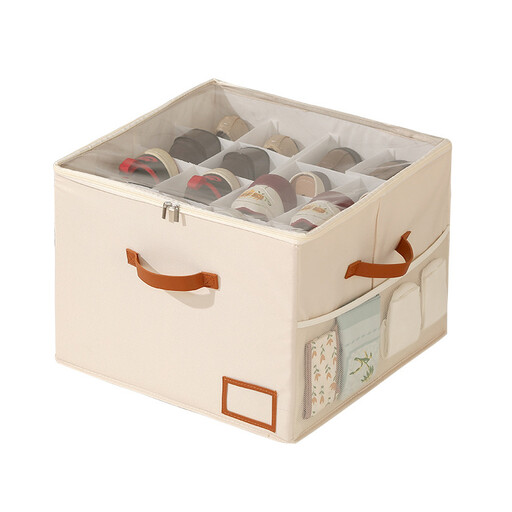
Why this product suits this profile: This foldable fabric box with a lid is designed for households looking for flexible shoe storage for a wardrobe, shelf or seasonal use.
The lid protects the contents from dust. Before buying, check that the internal dimensions and load capacity are suitable for your shoes and for stacking.
A foldable design with a lid keeps shoes enclosed and can be stored away neatly when not in use.
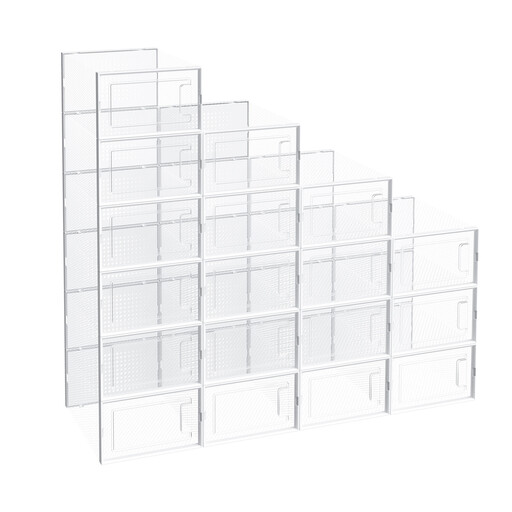
Why this product suits this profile: This set of 18 boxes is ideal for larger collections that need to be organised consistently in a wardrobe or entrance area.
The transparent fronts and front doors mean less time spent searching. Before setting them up, check that you have space for each box, which measures 35 × 25,2 × 19 cm.
18 individually usable, stackable boxes with transparent fronts and ventilation holes.
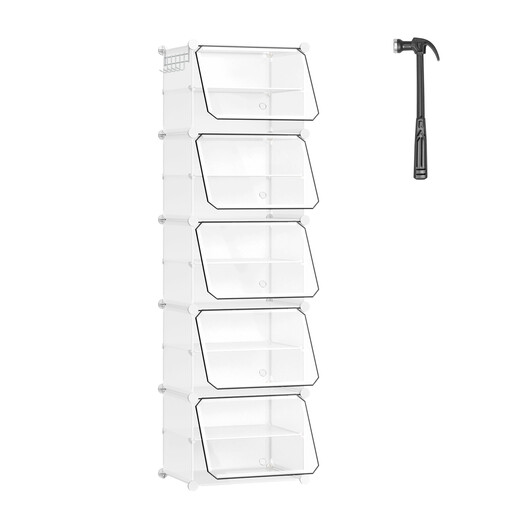
Why this product suits this profile: This modular system works well in hallways and wardrobes when you need fixed compartments, doors and extra hooks for keys or bags.
The modular design can be adapted to the space available. Make sure every clip is fully engaged, and do not overload the rack or use it as a climbing aid.
10 compartments, doors, hooks on the sides and a rubber mallet included for assembly.
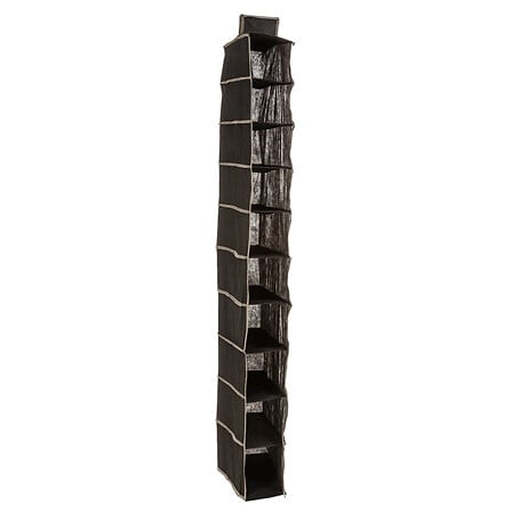
Why this product suits this profile: This vertical organiser is designed for narrow spaces and has ten compartments for flat shoes, loafers or court shoes.
The design makes use of height rather than floor space. According to the product description, each compartment should hold one pair, and heavy boots should be avoided.
10 compartments, lightweight PP plastic with a reinforced cardboard structure, and the option to hang it up or stand it upright.
We’ve put together a complete, regularly updated list of products that meet these strict selection criteria and the safety regulations in force in the EU.
Start by sorting your shoes by how often you wear them: keep frequently worn pairs at the front or in easy-to-reach compartments. Seasonal styles can go higher up or in closed shoe boxes. Label opaque boxes so you do not have to open each one to find what you need.
It is essential to check the measurements for tall shoes, boots or particularly large sizes. Transparent, stackable shoe boxes with front doors are a good choice for trainer collections. If you only need to store a few pairs in a narrow hallway, you could choose a slim shoe rack or a vertical organiser.
Make use of the room’s height with stackable shoe boxes, a tall shoe cupboard or a vertical shoe storage system. Before buying, compare the width, depth and height of the available space with the measurements of your shoes.
They are practical for many flat shoes and trainers. For boots, tall shoes or particularly bulky styles, check the internal height and length. Make sure wet shoes are completely dry before storing them.
Its lifespan depends on the material, assembly, load and how often it is used. Distributing weight evenly, ensuring all connectors are fully engaged and staying within the stated load limits can help it last longer. It is also worth checking regularly for cracks, bent parts or loose clips.