
Lieferung heute & morgen

Qualitätsgarantie

Willkommens-Angebote freischalten: KOSTENLOSE Lieferung | Bis zu 80 % RABATT | Kostenlose 30-Tage-JoyPlus-Testphase
App herunterladen
Shoes can quickly pile up in the hallway, under the bed or in your wardrobe. The right shoe storage solution should do more than keep things tidy: it should suit the size of your room, the number of pairs you own and the types of shoes you need to store. But shoe racks, shoe cabinets, shoe boxes and shoe organisers all have their differences.
A claim such as ‘holds 20 or 30 pairs of shoes’ often refers to a theoretical capacity. Trainers, heels, boots and shoe boxes all take up different amounts of space. So, if you want to store larger styles, a narrow shoe rack may hold fewer pairs than expected.
Check the following:
Stackable shoe boxes and modular shoe racks are versatile, but they need to be connected properly and placed on a level surface. For taller units, it may be worth securing them to the wall. In homes with children, make sure a shoe stand isn’t used for climbing or hanging from.
Look for:
A metal frame can provide a sturdy structure, while non-woven fabric, PP plastic and ABS have different care and practical qualities. An open metal shoe rack gives you quick access to your shoes, but offers less protection from dust than a shoe cabinet with doors or closed shoe boxes.
‘Foldable’ doesn’t mean ‘suitable for every type of shoe’, either. Soft boxes and hanging organisers are better suited to lightweight shoes and flat styles. Heavy boots shouldn’t be stored long-term in compartments that aren’t designed to hold them.
Before you buy, measure the width, depth and height of the space you have in mind. For shoe storage in the hallway, narrow, vertical designs are often more practical than wide racks. A 10-tier shoe rack measuring 33 × 33 × 173 cm makes use of your vertical space, but you’ll need enough clearance above it.
For your wardrobe, stackable shoe boxes or a compact shoe organiser may be a better fit. Check that doors, drawers and walkways will still be clear.
Enclosed shoe storage helps reduce direct exposure to dust. Shoes should still be clean and dry before you put them away. Ventilation openings can help air circulate, but they don’t replace thorough drying after wear.
A connector system can often be adapted to suit different rooms, but it needs to be assembled carefully. For a shoe cabinet with doors, check that all the connectors are fully clicked into place. Also check whether tools, connectors and assembly instructions are included.
If your shoe collection changes over time, a modular shoe rack or stackable shoe boxes could be a good option. If you’re looking for a permanent hallway solution, a shoe cabinet or open shoe stand may be easier to plan around.
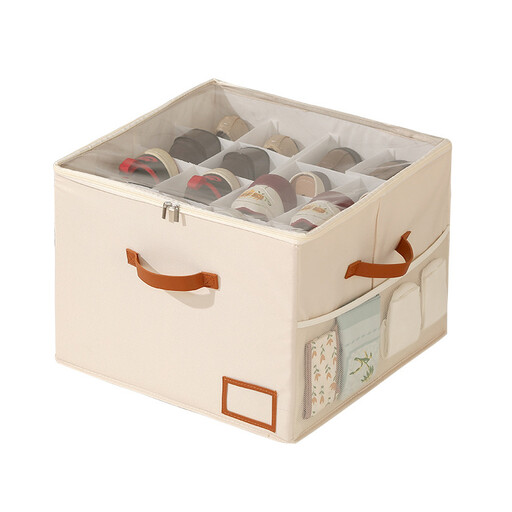
Why this product suits this profile: This foldable shoe box with a lid is a handy way to store individual pairs in your wardrobe or under a shelf.
The lid and stackable design provide enclosed storage instead of an open pile of shoes. Before you buy, check the internal dimensions against your shoes.
Foldable design with a lid; ideal for space-saving, enclosed storage.
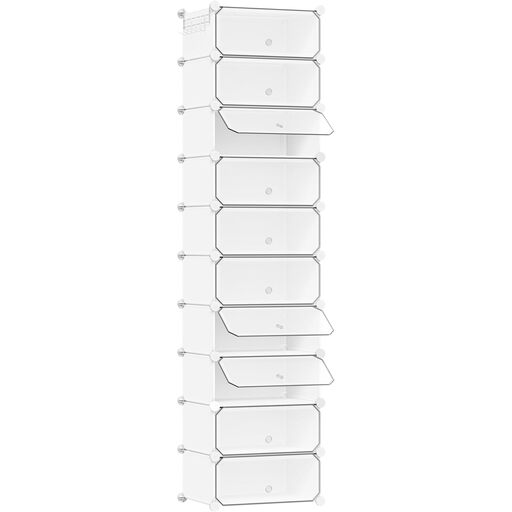
Why this product suits this profile: With ten compartments, doors and a metal frame, this modular system is a good option for households looking for organised storage in the hallway, bedroom or living room.
The enclosed compartments help limit direct exposure to dust. As it has a modular design, it needs to be assembled carefully; it isn’t designed for climbing.
Ten compartments with doors; PP panels, metal frame and ABS connectors; listed as holding up to 20 pairs of shoes.
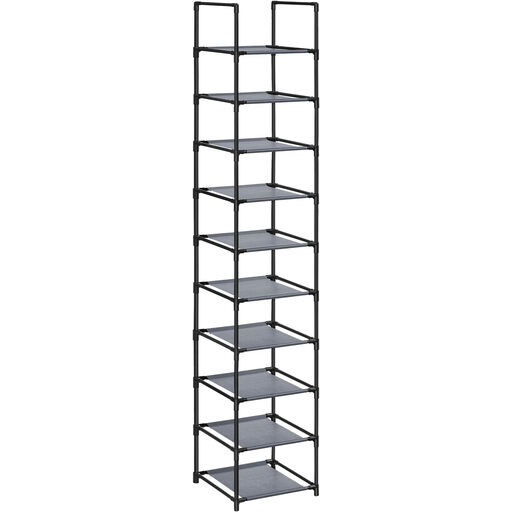
Why this product suits this profile: Its vertical design with ten tiers is ideal for families or anyone with lots of shoes to store in a small footprint.
The external dimensions of 33 × 33 × 173 cm make it easy to check how much space you’ll need. Adjust the stated capacity of up to 30 pairs to suit your shoe styles and the weight limits.
Metal frame and ten tiers; non-woven fabric shelves; designed for the hallway, entrance, wardrobe or bedroom.
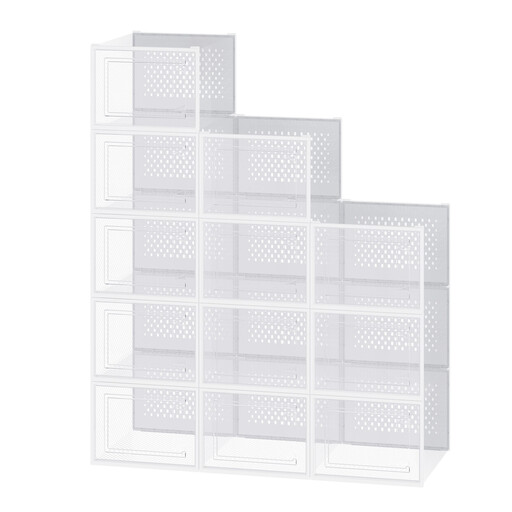
Why this product suits this profile: The transparent front doors make it easy to pick out individual pairs of trainers from your wardrobe or hallway.
The individual dimensions of 35 × 25 × 18,5 cm make it easier to plan realistically. Before you buy, check the length and height of your shoes.
Twelve PP plastic boxes with transparent fronts; stackable design and ventilation openings, according to the product description.
We’ve put together a complete, regularly updated list of products that meet these strict selection criteria and the safety regulations applicable in the EU.
It depends on the style of shoe. A smaller compartment is usually enough for flat shoes, while trainers, walking shoes and boots need more width and height. Compare the internal dimensions with the longest and tallest pairs in your collection. For shoe boxes, you should also check the dimensions of the front door and stacking connectors.
Place the unit on a level surface and follow the assembly instructions. Don’t overload tall models. If the manufacturer recommends securing the unit to the wall, use fixings that are suitable for your wall and the type of fixing required. Children shouldn’t climb on shoe racks or shoe cabinets.
No. Shoes need to fit into their compartments without putting pressure on the uppers, soles or fastenings. Make sure they’re clean and dry before storing them. If they’re damp or have just been worn, let them dry thoroughly before putting them in an enclosed box.