
Lieferung heute & morgen

Qualitätsgarantie

Willkommens-Angebote freischalten: KOSTENLOSE Lieferung | Bis zu 80 % RABATT | Kostenlose 30-Tage-JoyPlus-Testphase
App herunterladen
A cluttered entryway with shoes blocking the path is a common problem in many households. The right shoe storage not only creates order but can also visually enhance your hallway. This article serves as a practical guide to help you select a functional and suitable solution for your needs. We'll explore different types, materials, and sizes so you can make an informed decision.
To find the perfect piece of furniture, a few fundamental aspects should be considered. The choice depends on your available space, the number of shoes you own, and your personal preferences.
An open shoe rack offers the advantage that shoes are well-ventilated and quickly accessible. This is especially practical for pairs you wear daily. A model designed as a narrow shoe rack also fits into tight hallways and makes efficient use of the available space.
In contrast, a closed shoe cabinet ensures a very tidy appearance, as the shoes disappear behind doors. This protects them from dust and creates a calm, cohesive look in your entryway organization system. This option is particularly suitable if you desire a minimalist and orderly impression.
Before you decide on a model, count the number of shoe pairs you need to store. Also, consider different shoe types like boots or children's shoes, as they require more space.
Measure the available space in your hallway, bedroom, or dressing room accurately. Pay attention to depth, width, and height to ensure the new hallway furniture fits and does not block any doors or passageways.
Many modern solutions combine storage with additional functions. A storage bench is ideal for comfortably putting on and taking off your shoes while also providing space for several pairs. Such a hallway bench quickly becomes a central and practical element in your entryway.
A shoe cabinet often provides extra drawers for keys, gloves, or other small items in addition to shoe storage, contributing to a comprehensively organized hallway.
Here, we present a few models that stand out for their different features and are suitable for various requirements.
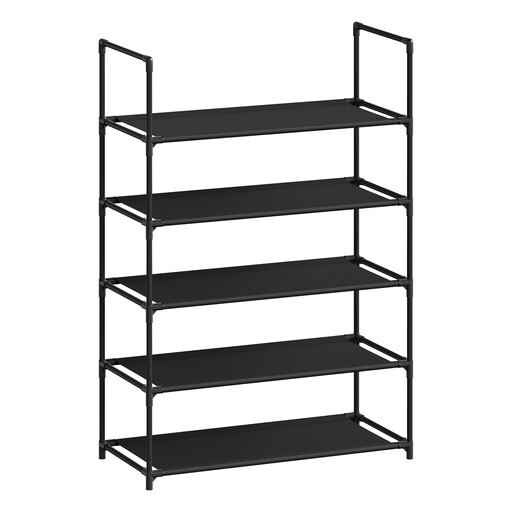
Why it stands out: With its slim design, this model makes optimal use of the room's height, offering space for up to 15 pairs of shoes on a small footprint.
Pros:
Who is it for? For individuals looking for a quick, straightforward, and space-saving solution for their daily shoe needs in tight spaces.
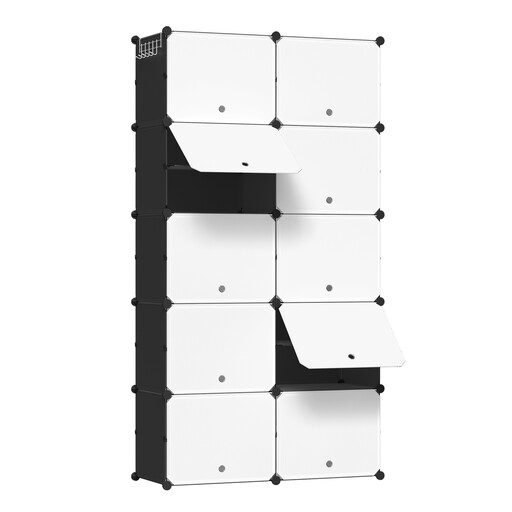
Why it stands out: This modular system offers high capacity and can be individually adapted to the available space and your needs.
Pros:
Who is it for? For families or individuals with a large shoe collection who prefer a flexible and expandable storage solution.

Why it stands out: The combination of brown engineered wood and a black metal frame gives this cabinet a modern yet inviting aesthetic.
Pros:
Who is it for? For users who value an appealing design and want a closed, dust-free storage solution for their shoes in a cozy atmosphere.

Why it stands out: This piece of furniture is an elegant combination of seating and generous storage, wrapped in a modern design with a velvet cover.
Pros:
Who is it for? For anyone who wants to create a comfortable seating option in the entryway for putting on and taking off shoes while also stowing various items out of sight.
Haven't found the right solution for you yet, or do you prefer a different color? Discover a wider selection of models in our Black Shoe Storage category and find the perfect organization system for your home.
The ideal storage method depends on your priorities. Open racks ensure good ventilation, which can prevent odor buildup. Closed cabinets protect from dust and create a tidy look. It is important that shoes are stored dry and clean to protect the material.
A shoe rack or shoe stand is an open structure where shoes are visible and directly accessible. A shoe cabinet or shoe chest is a closed piece of furniture with doors or flaps that conceals the shoes, thus ensuring a uniform appearance in the room.
This depends on the number of your shoes and the size of your hallway. For very narrow areas, there are special narrow shoe racks or tilting shoe cabinets that require very little depth. Measure the available space carefully and compare the dimensions with the product specifications to find the right solution.