
Lieferung heute & morgen

Qualitätsgarantie

Willkommens-Angebote freischalten: KOSTENLOSE Lieferung | Bis zu 80 % RABATT | Kostenlose 30-Tage-JoyPlus-Testphase
App herunterladen
A cluttered entryway with shoes blocking the path is a common problem in many households. The right shoe storage not only creates order but can also define the character of your hallway or dressing room. However, the selection is vast, ranging from slim cabinets and hanging shelves to multifunctional benches.
This article serves as a guide. It introduces various types of shoe storage solutions and highlights their specific features. The goal is to offer an objective foundation, enabling you to find the perfect piece of furniture for your needs and your living space.
Before making a decision, consider a few fundamental aspects. The following points will help you narrow down the options and make a functional choice.
The decisive factor is the space you have available for your hallway and entryway. Measure the intended spot precisely—width, depth, and height. Narrow corridors require a space-saving solution. A slim shoe cabinet or a so-called tip-out shoe cabinet, often only 17 to 25 cm deep, makes optimal use of the space without blocking the walkway. Another option is to mount a wall-mounted shoe rack to keep the floor area completely clear.
Consider what functions the furniture should serve beyond simple storage. A shoe bench with seating, also known as an entryway bench, offers comfort when putting on and taking off shoes. Models with a drawer create additional storage for keys, gloves, or shoe care products. The design should match the rest of your interior. A wooden shoe rack lends a warm, natural touch to the room, while a shoe cabinet in white looks modern and bright, blending discreetly into many decor styles.
Estimate how many pairs of shoes you need to store. Also, take into account the different types of shoes. Tall boots, bulky hiking boots, and flat sandals have different space requirements. Look for models with adjustable or removable shelves. This allows you to flexibly adapt the cabinet's interior to your shoe collection and easily store even bulkier models.
Based on functionality, design, and space utilisation, we have compiled a few models that cover different needs.
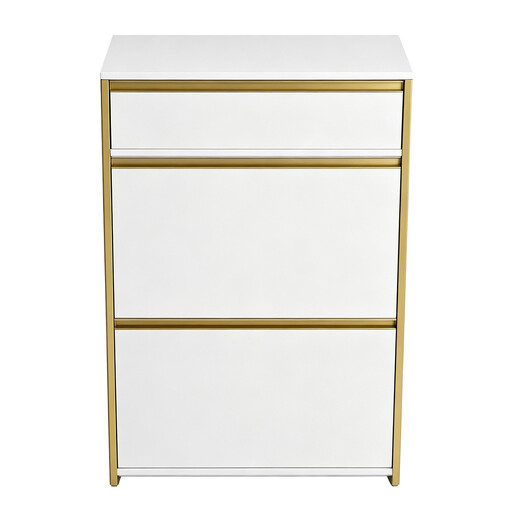
Why it stands out This model combines a very shallow depth with an elegant design. It's designed as a multifunctional piece of furniture that not only holds shoes but also other everyday items, while also serving as a decorative element in the room.
Advantages
Who is it for? For those looking for a stylish and extremely space-saving solution for a narrow entryway. The white and gold design pairs well with modern and minimalist decor styles.
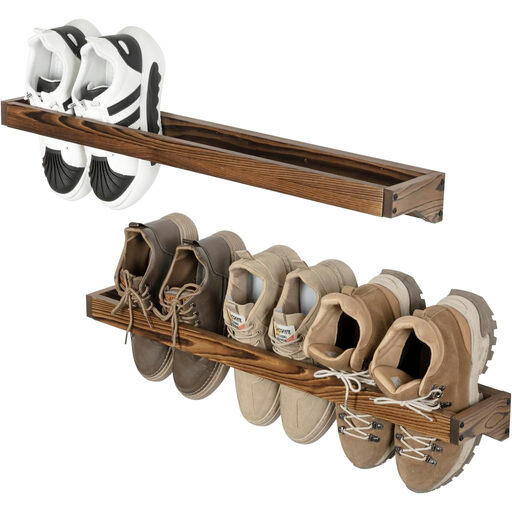
Why it stands out Mounting this wall-mounted shoe rack is an effective way to keep the floor completely clear. Its solid wood construction with a torched finish gives it a distinctive rustic character.
Advantages
Who is it for? For users who prefer off-the-floor storage and appreciate a farmhouse, industrial, or rustic decor style. It is particularly well-suited for nooks, wardrobes, or the area under a coat rack.
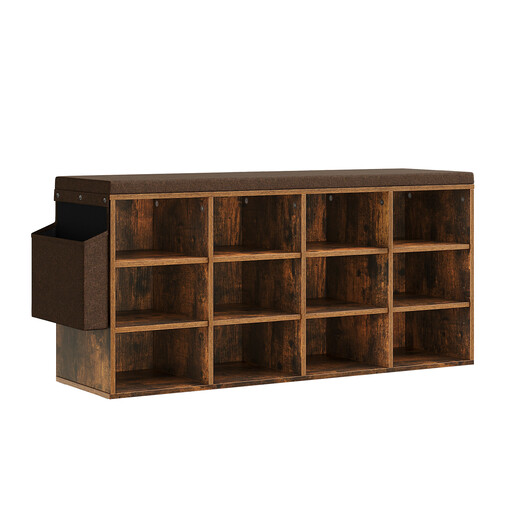
Why it stands out This shoe bench with seating is a prime example of a multifunctional piece of furniture. It combines high storage capacity with a comfortable place to sit and flexibly adapts to different shoe types thanks to its adjustable compartments.
Advantages
Who is it for? For anyone looking for a practical all-in-one solution for their entryway. The bench is ideal for families or individuals with a larger shoe collection who value a tidy yet comfortable wardrobe area.
Haven't found the right solution yet, or are you looking for a specific combination, such as one with an integrated mirror? Such pieces of furniture offer the advantage of letting you check your outfit one last time before leaving the house.
Explore our extended selection of multifunctional furniture for the entryway. ? See more models in the Shoe Bench with Mirror and Storage category here.
1. What is better, an open shoe rack or a closed shoe cabinet? Both options have specific pros and cons. An open shoe rack provides good ventilation for shoes and allows for quick access. A closed shoe cabinet, on the other hand, protects shoes from dust and creates a calmer, more organised look in the hallway and entryway. The choice depends on your personal priorities regarding tidiness and ventilation.
2. How much space does a shoe cabinet need? The space required varies greatly. Tip-out shoe cabinets are particularly space-saving, with depths often between just 17 and 25 cm. Standard shoe cabinets or a shoe bench with seating typically require a depth of 30 to 40 cm. It is essential to measure the available space accurately before purchasing.
3. How can I store tall boots? Shoe storage solutions with flexible compartments are suitable for tall boots. Look for models where the shelves are removable or height-adjustable, like the featured WOLTU shoe bench. Alternatively, boots can also be stored lying down in larger, deeper compartments.