
Lieferung heute & morgen

Qualitätsgarantie

Willkommens-Angebote freischalten: KOSTENLOSE Lieferung | Bis zu 80 % RABATT | Kostenlose 30-Tage-JoyPlus-Testphase
App herunterladen
Shoes in the hallway, bedroom or wardrobe can quickly take up more space than you expect. The right shoe storage should keep things tidy, make your shoes easy to reach and fit the space you have. But product images and marketing claims don’t always tell you whether a shoe cabinet will actually fit in your hallway or whether stackable shoe boxes will suit your shoe sizes.
Before you buy, it’s worth checking for three common pitfalls:
Before you buy, measure the space at least three ways: width, depth and height. In a hallway, make sure there’s still enough room to pass through. An open shoe rack gives you quick access, but works best in a relatively dust-free space. Closed shoe cabinets and shoe boxes protect their contents better from dust, but may take up more depth, depending on the design.
These options work particularly well in small spaces:
For hanging storage, check the rail’s weight capacity. If a piece of furniture comes with an anti-tip restraint, secure it to the wall as instructed.
The usable size of each compartment matters more than the product’s external dimensions. Check that the compartments are large enough for your longest shoes. According to the product details, each JOYFURNOS shoe box measures 35 × 25.2 × 19 cm. The product description also recommends checking your shoe size against the box dimensions before buying.
Standard compartments are often unsuitable for tall boots or heeled shoes. A specialist boot storage solution with more height may be a better fit. Browse suitable options in the boot shoe storage box category.
PP plastic is easy to wipe clean and is used for many shoe boxes. Fabric or cardboard storage is lightweight and flexible, but should be kept away from moisture. For MDF or chipboard furniture, check the details on stability, cleaning and wall fixing.
Useful things to check:
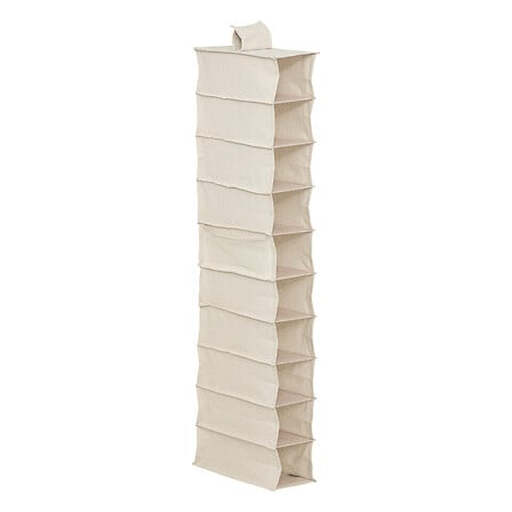
Why this product is a good fit: This hanging organiser makes use of vertical space in a wardrobe or hallway, with 10 individual compartments and an extra side pocket.
The dimensions are 15.5 × 29.5 × 128 cm, and the number of compartments is specified. It’s designed for lightweight shoes, so heavy boots shouldn’t be stored in it.
10 compartments, a lightweight design and an extra pocket for socks or shoe-care accessories.
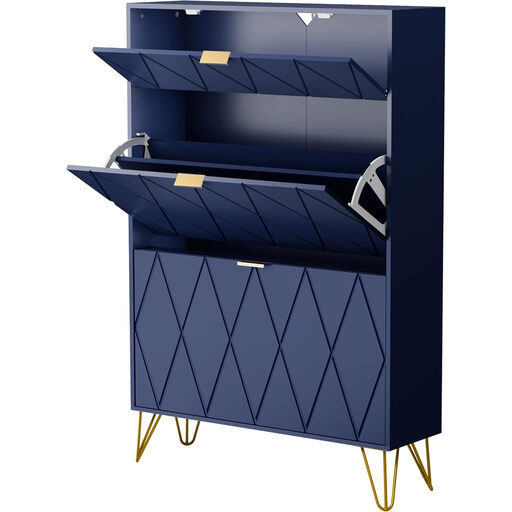
Why this product is a good fit: This closed shoe cabinet combines two drop-down compartments with a drawer. At 24 cm deep, it’s designed for narrow hallways.
The product details give dimensions of 80 × 24 × 120 cm, a maximum load of 10 kg and specify that the cabinet must be secured to the wall with an anti-tip restraint.
Closed drop-down compartments, metal legs, a drawer and space for up to 16 pairs of shoes, according to the product description.
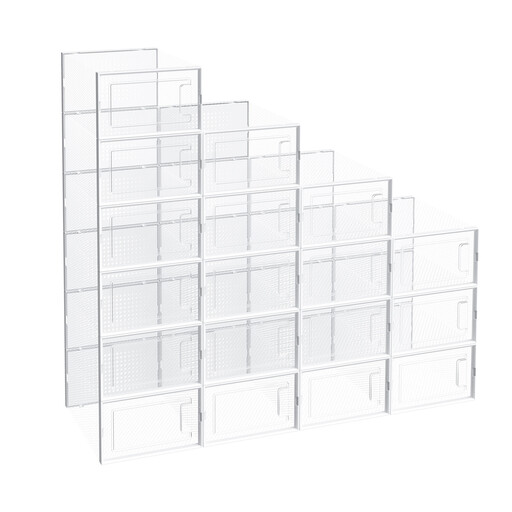
Why this product is a good fit: These 18 stackable boxes are ideal for households with lots of pairs. Arrange them to suit your space in a wardrobe or entrance hall.
The dimensions of each box are 35 × 25.2 × 19 cm. Before buying, check that your shoe size and shoe shape will fit these internal dimensions.
Transparent front doors, a stackable design, PP plastic and ventilation holes, according to the product description.
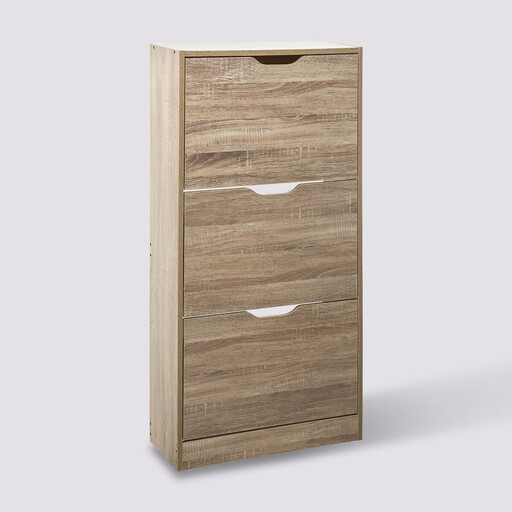
Why this product is a good fit: This unit has six shelf levels, drop-down compartments and a drawer for a permanent shoe storage solution.
The external dimensions of 60 × 23.3 × 119.5 cm and the stated capacity of up to 18 pairs of shoes make it easier to plan your storage space.
Chipboard construction, drop-down compartments, six shelf levels and FSC information in the product details.
We’ve put together a complete, regularly updated list of products that meet these strict selection criteria and fully comply with the safety regulations in force in the EU.
Start by measuring the available wall or alcove width, and allow for skirting boards, doors and enough room to pass through. In narrow hallways, shallow or vertical designs are often more practical than wide, open shoe racks.
No. The right box size depends on your shoe size, shape and height. Trainers often fit in standard boxes, while boots and shoes with high shafts need more internal height. Before you buy, compare the dimensions with your longest and tallest pair.
Put shoes you rarely wear in closed boxes or compartments, and let worn shoes dry before storing them. Don’t overload hanging organisers or furniture. Wiping everything down regularly and sorting shoes by season or use will help you keep things tidy.