
Lieferung heute & morgen

Qualitätsgarantie

Willkommens-Angebote freischalten: KOSTENLOSE Lieferung | Bis zu 80 % RABATT | Kostenlose 30-Tage-JoyPlus-Testphase
App herunterladen
Shoes in the hallway, entrance or bedroom take up less floor space when your storage suits the shape of the room and the number of pairs you own. A slim shoe cabinet can keep the floor clear, while a shoe rack or stackable shoe storage boxes make flexible use of the space you have.
However, product photos and general capacity claims don’t always help you make the right choice. Before buying, check for these three common pitfalls:
In small hallways, depth is often more important than overall width. A shoe cabinet that’s 24 cm deep may take up less of your walking space than a deep rack. Drop-down doors usually open forwards, so you’ll need to allow extra room. If you’re considering an open shoe rack, also check that nearby doors and drawers can open freely.
A vertical storage solution makes use of the room’s height. The JOYFURNOS rack measures 33 × 33 × 173 cm, has ten tiers and, according to the product information, can hold up to 30 pairs of shoes. For tall furniture, an anti-tip fitting is recommended if one is supplied or the manufacturer advises using one.
A metal frame can provide a sturdy structure for an open rack. Fabric or coated shelves are lightweight and can be wiped clean with a slightly damp cloth. However, take care not to overload them.
Furniture made from MDF or chipboard offers closed compartments and a uniform finish. Check the details on moisture resistance, load capacity and care. A raised base can also be useful in an entrance, as it reduces direct contact between the cabinet and the floor. Even water- and scratch-resistant surfaces shouldn’t be left exposed to moisture for long periods.
Make sure the compartments are suitable for the types of shoes you own. High shoes, ankle boots and boots won’t fit in every drop-down compartment. Removable or adjustable shelves give you more flexibility.
For wall-mounted storage, wall type, suitable wall plugs and load capacity all matter. The wall plugs supplied won’t necessarily suit every wall. You may need different fixings for plasterboard, solid brick or concrete. Secure a chest of drawers or shoe cabinet with an anti-tip fitting to the wall as instructed.
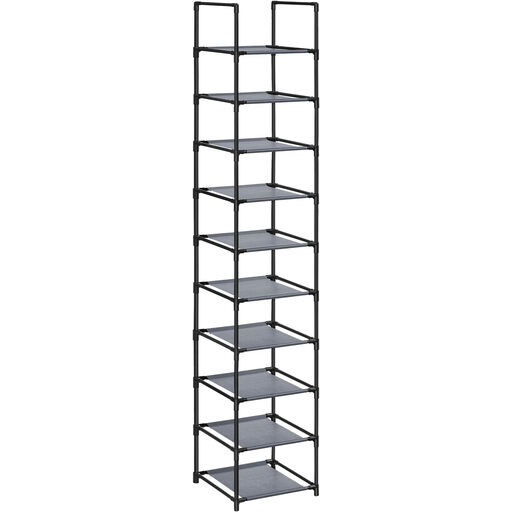
Why it suits this need: This vertical shoe rack takes up just 33 × 33 cm of floor space, making it a good fit for a hallway, bedroom or wardrobe with limited floor area.
The exact external dimensions make it easier to plan where it will go. Its ten tiers keep shoes neatly organised without the need for a deep cabinet.
Metal frame, ten tiers and wipe-clean fabric shelves; assembly required, with instructions provided.
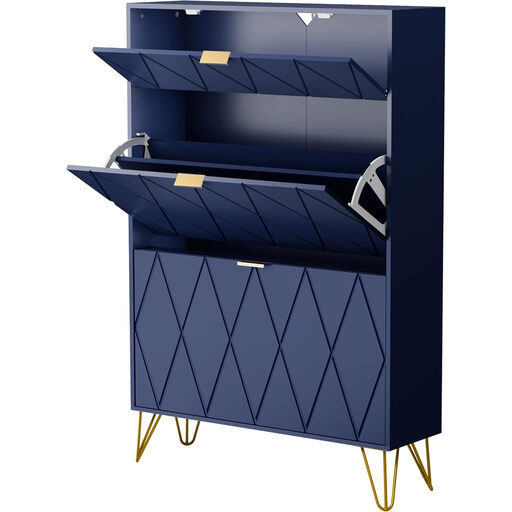
Why it suits this need: The enclosed design is just 24 cm deep, making it a good fit for a tidy entrance and helping to protect shoes from dust.
The product information gives dimensions of 80 × 24 × 120 cm, a maximum load of 10 kg and specifies that an anti-tip fitting is required.
Two drop-down compartments, a top shelf and metal legs; MDF finish stated to be water- and scratch-resistant.
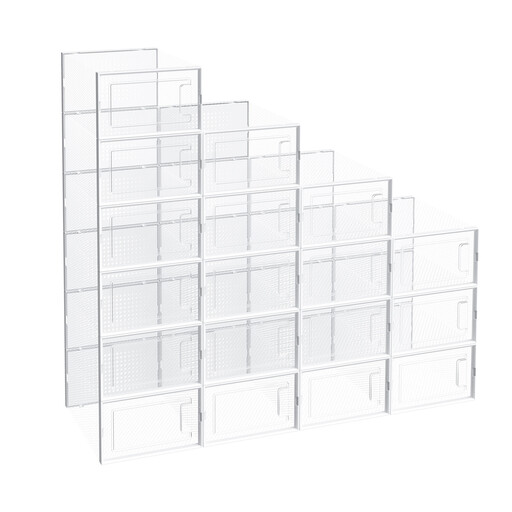
Why it suits this need: These boxes are ideal for households that want to organise shoes pair by pair, keep them visible and stack them when needed.
Each box measures 35 × 25.2 × 19 cm, so you can check whether they’ll fit in your existing storage. The transparent front makes it easy to see which shoes are inside.
18 PP plastic boxes with front doors, a stackable design and ventilation holes; according to the product information, they fit shoes up to UK size 11.
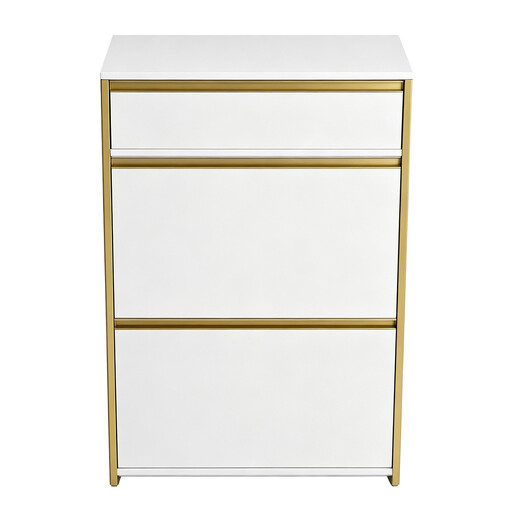
Why it suits this need: Adjustable shelves and an extra drawer make it useful for shoes as well as smaller household items.
At 60 × 24 × 104.5 cm, its external dimensions are compact. The flexible interior layout reduces the risk of compartments being too low for different types of shoes.
Adjustable, removable shelves, a drawer and a top shelf, with a stated capacity of up to 12 pairs.
We’ve put together a complete, regularly updated list of products that meet these strict selection criteria and fully comply with the safety regulations in force in the EU.
For narrow hallways, consider a slim shoe cabinet, a vertical shoe rack or a wall-mounted solution. The key things to check are the actual depth, how far the drop-down doors open and whether you can secure the furniture to prevent it tipping over.
Sort the boxes by how often you use the shoes or by shoe type. Transparent fronts make it easier to find the right pair. Before you buy, compare the internal dimensions with the length and height of your shoes, especially if you own boots or large trainers.
How long it lasts depends on the material, load, assembly and care. Don’t overload fabric shelves or plastic boxes. For cabinets, stick to the stated load capacity, check the screw fittings from time to time and avoid exposing the furniture to moisture where possible.