
Lieferung heute & morgen

Qualitätsgarantie

Willkommens-Angebote freischalten: KOSTENLOSE Lieferung | Bis zu 80 % RABATT | Kostenlose 30-Tage-JoyPlus-Testphase
App herunterladen
A shopping trolley can make transporting groceries much more convenient – provided its design suits the way you intend to use it. For older people, city dwellers without a car and anyone with limited physical strength, it is not just a large compartment and a low price that matter. The wheels, frame, handle height and folded dimensions all determine how comfortable the trolley is to use day to day.
A shopping trolley with a large capacity may look appealing at first glance. However, the stated volume says little about how much weight the frame, base and wheels can actually support. A large compartment may hold plenty of goods, but that does not mean it can automatically be filled with heavy bottles and drinks.
That is why you should look for a specific maximum load in kilograms. If this information is missing, it is difficult to assess the trolley’s load-bearing capacity. Heavy products should also be placed at the bottom and as close to the wheel axle as possible.
A stair-climbing shopping trolley can help you overcome individual steps thanks to its special wheel arrangement. However, it is not a replacement for a level ramp and is not automatically suitable for every staircase width, high kerb or uneven surface. Before buying, check whether the design is suitable for your entrance and the route to the supermarket.
A foldable shopping trolley should not merely be capable of folding in theory. What matters is an easy-to-understand folding mechanism, a stable base when opened and folded dimensions that genuinely fit in your cellar, hallway or boot. A removable bag can also be useful if you want to clean or fill it separately.
For a durable shopping trolley, three specifications are particularly important:
A sturdy shopping trolley cannot be judged by its material alone. Also check whether the bag is securely attached to the frame and whether the wheels are sufficiently far away from the base of the bag.
A shopping trolley with wheels should suit your everyday route. Two larger wheels are common for smooth pavements and supermarket floors. Smaller or more complex wheel designs may make manoeuvring easier, but they are not automatically designed for cobblestones or high kerbs.
Look for:
With a supermarket trolley, the turning circle is also relevant. A compact trolley is easier to turn in narrow aisles. For larger weekly shops, however, a 60-litre shopping trolley may be the better choice.
An ergonomically shaped handle can make the trolley more comfortable to use. The key is for the handle height to suit your height and for the trolley not to keep tipping forwards when pulled. Also check the product dimensions when open, as well as the weight of the empty trolley.
Removable or wipe-clean bags are practical when it comes to cleaning. For textile materials, follow the manufacturer’s care instructions. A shopping trolley is intended for carrying goods, not children or pets.
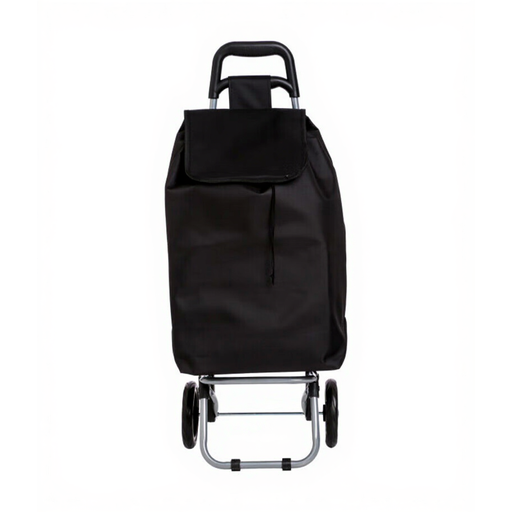
Why this product suits this profile: The compact two-wheeled design is suitable for regular shopping trips on flat urban routes. The dimensions of 35 × 27,5 × 91 cm make it easier to assess how much space it requires.
The removable bag can be detached from the steel frame for filling and cleaning. The manufacturer recommends distributing the weight evenly and using it on standard surfaces.
Steel, satin and PP construction; removable satin bag; designed for smooth everyday routes.
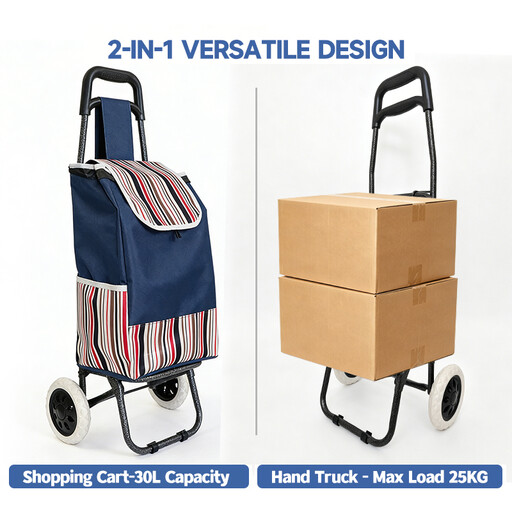
Why this product suits this profile: The carbon steel frame and folding design appeal to households looking for a well-structured, space-saving shopping trolley.
The product description explicitly mentions the carbon steel frame and highlights foldability as a space-saving feature. Nevertheless, check the specific load rating before use.
Carbon steel frame; foldable design; created for space-conscious storage.
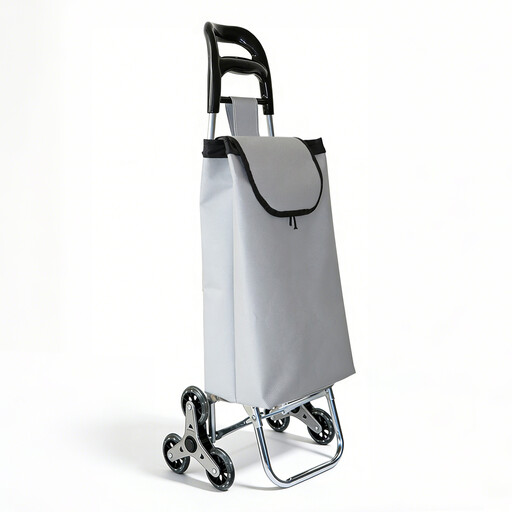
Why this product suits this profile: The large, foldable design with an ergonomic handle is intended for bigger shops and users who move their trolley regularly.
The product name mentions an ergonomic handle, a large design and a construction intended for climbing stairs. Before buying, these features should be compared with the route you actually use.
Ergonomic handle according to the product name; large, foldable design; identified as a stair-climbing model.
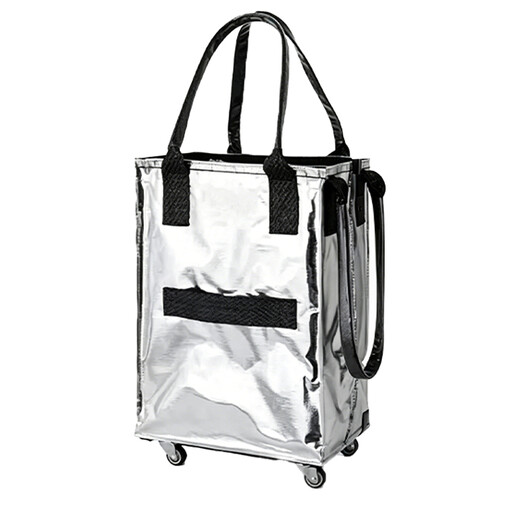
Why this product suits this profile: The stated capacity of approximately 60 litres and maximum load of 35 kg are suitable for regular, larger shopping trips.
Unlike unclear capacity claims, the product description states both approximately 60 litres and a maximum load of 35 kg. The load limit must not be exceeded.
Approximately 60-litre capacity; maximum load of 35 kg according to the product information; woven bag.
We have put together a complete, regularly updated list of products that fully meet these strict selection criteria and the safety regulations applicable in the EU.
To keep your shopping trolley in good working order for as long as possible, avoid using it permanently at its maximum load. Regularly remove sand and dirt from the wheels and axles. A damp cloth is sufficient for many frames; textile bags should be cared for according to the manufacturer’s instructions.
On stairs, move the trolley carefully and keep the load as evenly distributed as possible. High kerbs, potholes and very uneven ground can place additional strain on the wheel mounts and frame. Before every shopping trip, check that the bag, base and fittings are securely connected.
A handle that is easy to reach, a manageable empty weight, smoothly running wheels and a stable base are all important. A stair-climbing model may be suitable for individual steps, but it should be chosen based on your specific living situation. A high load capacity alone does not automatically make a trolley easier to handle.
Compact bags are often sufficient for smaller shops. If you shop for several days at a time or transport drinks, you may benefit from a model with a larger capacity. A 60-litre shopping trolley offers more storage space, but it also requires sufficient room in your hallway, cellar or vehicle. The key is finding the right combination of capacity and permitted load.
Its lifespan depends on the load, the surface, care and the quality of the wheel fittings. Avoid overloading it, do not regularly pull the trolley over high edges, and check the wheels and seams. If you notice visible damage, do not continue carrying heavy loads in the trolley.