
Lieferung heute & morgen

Qualitätsgarantie

Willkommens-Angebote freischalten: KOSTENLOSE Lieferung | Bis zu 80 % RABATT | Kostenlose 30-Tage-JoyPlus-Testphase
App herunterladen
A shopping trolley can make it easier to carry groceries, drinks or parcels in your day-to-day life. However, models vary considerably in capacity, weight, wheels and folding mechanism. A seemingly cheap shopping trolley won’t necessarily suit your needs: stairs, kerbs, narrow hallways and public transport all have different requirements.
A large bag may seem practical at first. What matters, though, is whether the frame and base are designed to handle the load you have in mind. A wheeled shopping bag may offer plenty of space, but it could tip over or be awkward to pull if the weight isn’t evenly distributed.
So, check the following:
A 25-litre bag is suitable for smaller shops, while a shopping trolley with a larger bag may be better for bigger shopping trips. Always consider the actual capacity alongside the load limit.
A folding shopping trolley can fold away in different ways. Some models fold flat, while others mainly reduce in width. Before buying, check the folded dimensions and the amount of storage space available in your car, hallway or cupboard.
The folding mechanism is worth checking, too. A fiddly fastening can be impractical for everyday use. If you’re looking at a folding transport trolley, make sure it’s clear whether assembly is required and whether the wheels or bag can be removed for cleaning.
Two small wheels are often suitable for supermarket aisles and smooth pavements. Larger wheels or a multi-wheel system may work better on cobbles, high kerbs or unsurfaced paths. A wheeled shopping trolley for getting around town won’t necessarily be suitable for camping or beach paths.
Check the following:
Think about the weight of a typical shop: drinks, tinned food and washing detergent put much more strain on a shopping trolley than bread or lightweight packaging. The stated maximum load is a technical limit and shouldn’t be exceeded regularly. For crates of drinks or parcels, a folding hand trolley is usually more suitable than a traditional shopping trolley with a thin fabric bag.
A lightweight shopping trolley is easier to lift out of the boot and store on public transport. Every kilogram counts when you regularly have to climb stairs with an empty trolley. At the same time, a very lightweight frame shouldn’t be mistaken for one with a high load capacity.
An adjustable handle can be useful if several people will be using the trolley. Check that the locking mechanism feels secure and that the handle suits your height. With a 2-in-1 shopping trolley, it should also be clear how to switch between the bag and the transport platform.
Oxford fabric and coated textiles are often used because they can be cleaned with a damp cloth. However, “water-repellent” doesn’t automatically mean waterproof. In heavy rain, it’s worth giving delicate shopping extra protection.
Steel frames generally offer a different level of stability from aluminium frames, but they’re often heavier. Also check the seams, base, axles and connection points. For a camping trolley or off-road hand trolley, the wheels and frame should be designed for the surfaces you plan to use it on.
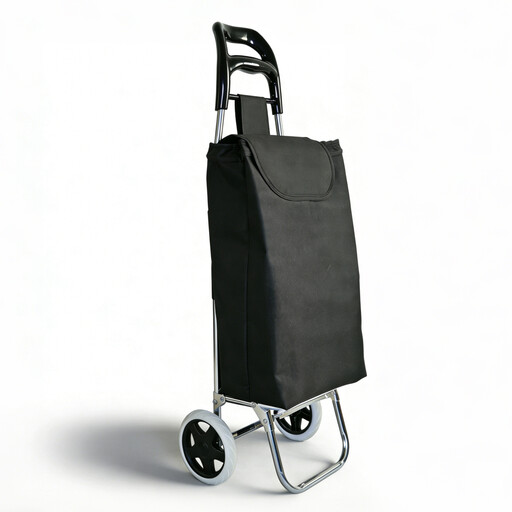
Why it suits this profile: Weighing just 1.15 kg and with a 25-litre bag, this model is designed for smaller shops, students and getting around town. According to the product details, the frame can also be used without the bag as a hand trolley carrying up to 20 kg.
The load limits for the bag and hand trolley are listed separately. This makes it easier to judge whether the model is suitable for shopping or carrying individual parcels.
Weighs 1.15 kg, with a 25-litre Oxford fabric bag and 2-in-1 use with EVA wheels.
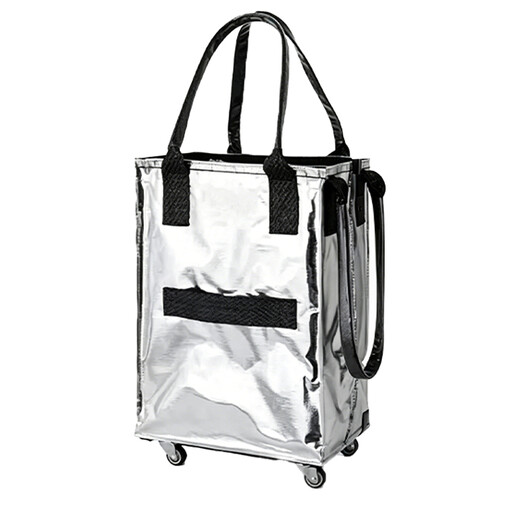
Why it suits this profile: According to the product details, this shopping trolley offers around 60 litres of capacity and can carry up to 35 kg. It’s designed for shoppers who need more space for trips to the market or supermarket.
The capacity and maximum load are clearly stated. Even so, heavy items should be placed at the bottom and spread evenly.
Around 60 litres of bag capacity and a stated maximum load of 35 kg.
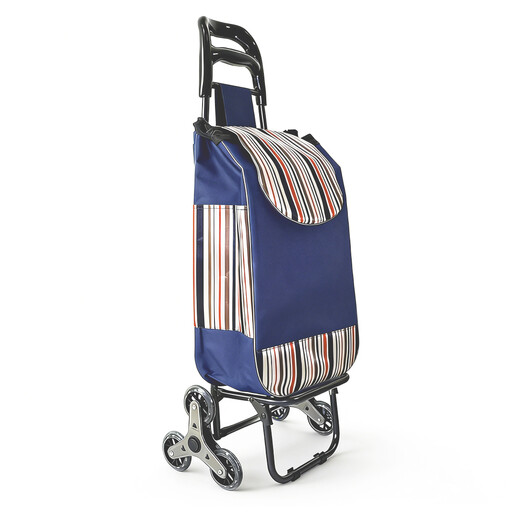
Why it suits this profile: According to the product description, this model has six PU wheels and a 38-litre bag. Its design is suited to routes with kerbs, stairs and uneven pavements.
The wheel system is clearly described, rather than being promoted with vague claims about all-terrain use. The bag can also be detached from the frame.
A 38-litre bag, a 30 kg hand trolley function and a folding frame with a six-wheel system.
We’ve put together a complete, regularly updated list of products that meet these strict selection criteria and fully comply with the safety regulations in force in the EU.
Its lifespan depends on the load, surfaces, care and storage. Avoid overloading it, tackling high kerbs and leaving it somewhere damp for long periods. Regularly check the wheels, axles, seams and folding joints. Depending on the model, parts such as the wheels may be replaceable.
A shopping trolley with a seat combines carrying and seating functions, but it needs a sturdier frame and may be heavier. Before buying, check the permitted seat load, locking mechanism and stability. Only use the seat as directed by the manufacturer.
A traditional shopping trolley usually has no ongoing energy costs. You may need to pay for replacement wheels, a new bag or repairs to damaged joints. When choosing a model, it’s worth checking whether spare parts are available and reading the care instructions from the supplier.