
Lieferung heute & morgen

Qualitätsgarantie

Willkommens-Angebote freischalten: KOSTENLOSE Lieferung | Bis zu 80 % RABATT | Kostenlose 30-Tage-JoyPlus-Testphase
App herunterladen
A shopping trolley can make it much easier to carry groceries, drinks and personal belongings. However, models vary considerably in load capacity, wheel design, storage space and folded dimensions. If you focus only on a large capacity in litres or eye-catching advertising claims, you could end up with a trolley that tips over in the stairwell, takes up too much room in the boot or is difficult to steer when heavily loaded.
This buying guide explains which shopping trolley specifications really matter and which model may suit different everyday needs.
A shopping trolley with a 60-litre capacity offers plenty of storage space, but may have a lower permitted load than a folding cart with a smaller interior. The capacity in litres describes volume, not weight. So always check these separately:
A 25 kg shopping trolley is suitable for a typical grocery shop and smaller amounts of drinks. For crates of drinks or heavy supplies, look for models rated for 30 kg or more. Never exceed the maximum load.
A stair-climbing shopping trolley usually has three wheels on each side. This rotating arrangement can help when navigating steps, kerbs and uneven paving. Even so, pull the trolley slowly and carefully on stairs, following the instructions for use.
With a six-wheel model, it’s also important to check whether the wheels are made from abrasion-resistant PU, plastic or another material. Wider wheels tend to roll differently on cobbles or gravel than narrow wheels designed for the supermarket.
A folding shopping trolley should not only fold down, but also have folded dimensions that suit the space where you intend to store it. Check:
A folding cart or folding utility wagon is often suitable for camping, picnics and the garden. For everyday shopping, a compact wheeled shopping trolley is often easier to store.
The stated “30 kg shopping trolley” capacity is a maximum load limit, not necessarily a comfortable weight to pull over a long period. The heavier the load, the more important a sturdy frame, a strong axle and even weight distribution become.
For light everyday shopping, a lightweight trolley with a 20 to 25 kg load capacity is often enough. If you want to carry bottles of water, crates of drinks or parcels, choose a model with a higher load limit and a suitable frame. With a 2-in-1 shopping trolley, you can remove the bag to turn it into a wheeled hand cart for boxes or crates.
Several models use durable 600D Oxford polyester. A water-repellent coating can protect the contents from light rain and splashes, but it is not a substitute for a fully waterproof closure.
A protective cover, zipped pocket or side pockets can also be useful on a wheeled shopping bag. An insulated bag may be handy for frozen food. However, insulation won’t keep the temperature constant indefinitely, so follow the manufacturer’s advice for longer journeys.
Two large wheels are easy to manoeuvre in the supermarket and on level pavements. Six wheels with a stair-climbing mechanism can be helpful on steps, but take up more space and require a different pulling technique. Four swivel wheels, as found on a large folding camping wagon, make it easier to turn in open spaces.
A shopping trolley with a capacity of 75 litres or more is suitable for big shops, but may be less convenient in narrow hallways. For the daily journey between home and the supermarket, a smaller model is often more practical.
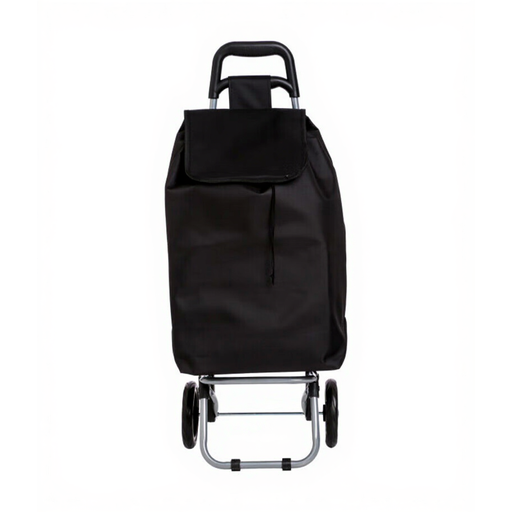
Why this product suits this profile: This two-wheeled trolley is designed for typical trips to the market or supermarket and comes with a removable bag.
The product description specifies the material, dimensions and intended use on standard surfaces. The model is expressly not designed for very uneven terrain.
Removable satin bag, steel frame and compact dimensions of 35 x 27,5 x 91 cm.
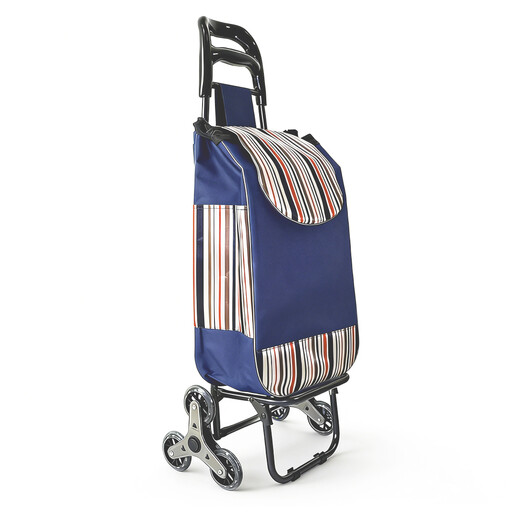
Why this product suits this profile: This model combines a 38-litre shopping bag with a removable frame that can be used as a hand cart.
The 30 kg load capacity and 2-in-1 design are listed separately. This makes it easier to judge whether the bag or hand cart is suitable for the load you need to carry.
Six PU wheels, 600D Oxford bag, protective cover, rear zipped pocket and a flat-folding design.
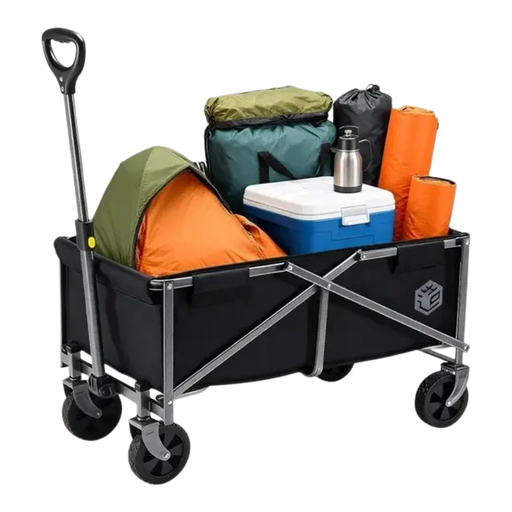
Why this product suits this profile: This folding cart is designed for larger loads, camping, picnics, market stalls and carrying bulkier items.
The specifications list both the 75-litre basket capacity and a maximum load of 100 kg. The load must be distributed evenly; the wagon is not designed to be used as a seat or step.
600D Oxford fabric, 360-degree swivel wheels, one-piece design that needs no assembly and a folding frame.
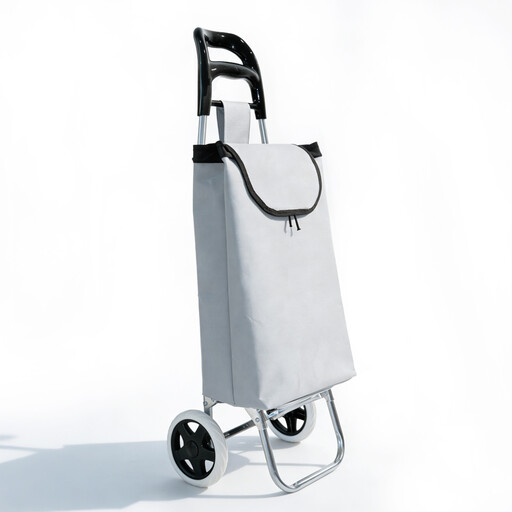
Why this product suits this profile: Its low weight makes it easier to carry, store and take with you in the car or on public transport.
The trolley’s own weight of 1.15 kg and the hand truck’s maximum load of 20 kg are listed separately. This makes the balance between portability and load capacity clear.
25-litre Oxford bag, protective cover, ergonomic handle and quiet EVA wheels.
We’ve put together a complete, regularly updated list of products that meet these strict selection criteria and fully comply with the safety regulations in force in the EU.
For individual or smaller shops, 25 to 38 litres is usually enough. A 60-litre shopping trolley or a 75-litre camping wagon offers more room for a big shop, but also takes up more space and may be harder to pull when fully loaded.
Its lifespan depends on the load, surface, storage and care. Regularly checking the wheels, seams, handle and folding mechanism can help you spot wear early. It would not be realistic to give a general lifespan without knowing how the trolley will be used or the manufacturer’s conditions.
It depends on the trolley’s weight, handle height, staircase width and how comfortable the user is handling it. The six wheels can help it negotiate steps, but it still needs to be pulled carefully and loaded evenly. Before buying, compare the trolley’s own weight and maximum load with how you plan to use it.