Less sugar matters more than shortbread
You’re looking for a biscuit with a clearly stated sugar reduction for your TV night, and are happy to choose a butter biscuit instead of shortbread.


If a clearly stated sugar reduction matters more to you than the type of biscuit, a butter biscuit labelled accordingly could be an option – but it isn’t shortbread. If you specifically want shortbread for your TV night, check its nutritional information separately: the shortbread products mentioned here can’t be considered lower in sugar based on their type alone.
You’re looking for a biscuit with a clearly stated sugar reduction for your TV night, and are happy to choose a butter biscuit instead of shortbread.
You specifically want shortbread, and will decide how much to serve for the evening based on the pack size and nutritional information.
You need to check the ingredients on the specific pack before choosing, particularly for wheat, milk or egg. The Federal Ministry of Agriculture, Food and Regional Identity explains the labelling requirements for the 14 most common allergens.
A good fit if: A clearly stated sugar reduction matters more to you than shortbread.
The trade-off: Leibniz Butterkeks weniger Zucker is a different type of biscuit; REWE lists 12 g of sugar per 100 g for the 150-g version.
A good fit if: This is the type of biscuit you specifically want for your TV night.
The trade-off: The name of the biscuit alone doesn’t tell you whether it has less sugar; check the information for the specific product.
| Criteria | What to check | Who it matters to |
|---|---|---|
| Sugar reduction | Look for a specific reduction claim and compare sugar and energy per 100 g. | If I want to choose less sugar specifically for my TV night, a clear claim matters more to me than choosing shortbread. Around 50% of consumers would put sugar reduction first. |
| Shortbread | Check the biscuit description and nutritional information for the version you’re considering. | I specifically want shortbread for my TV night, and will then decide how much to serve. The type of biscuit would be the top buying priority for around 30% of consumers. |
| Ingredients and allergens | Read the ingredients list and allergen information on the specific pack. | Before choosing between the types of biscuit, I need to know whether the ingredients are suitable for me. This check would come first for around 20% of consumers. |
How sweet something tastes isn’t a reliable guide to its sugar content. Lebensmittelklarheit explains that a reduced-sugar claim requires at least a 30% reduction.
Use the wording as a prompt to check, then read the sugar content per 100 g and the ingredients list.
Shortbread describes a type of biscuit, not a sugar reduction claim. REWE lists 16 g of sugar per 100 g for Feine Welt Shortbread Fingers; by contrast, the Leibniz biscuit with a stated sugar reduction is a butter biscuit.
Before you buy, decide whether the type of biscuit or a specific sugar reduction claim matters more to you.
Ingredients vary from product to product. REWE lists wheat, butter, egg and milk among the ingredients in Leibniz Butterkeks weniger Zucker.
Before eating, check the ingredients and allergen information on the pack you’ve actually bought.
A butter biscuit option if a stated sugar reduction matters more to you than shortbread.
The Shortbread Fingers are a specific option for shoppers who care about the type of biscuit.
The brand offers a range of shortbread shapes for shoppers who choose by type of biscuit first.
Here you can compare a butter biscuit with a stated sugar reduction and a butter shortbread. Your decision should still be based on the information for each specific pack.
 No image available
An option for your TV night if a stated sugar reduction matters more than shortbread. REWE lists 12 g of sugar and 422 kcal per 100 g for this Leibniz version; it’s a butter biscuit, not shortbread.
 No image available
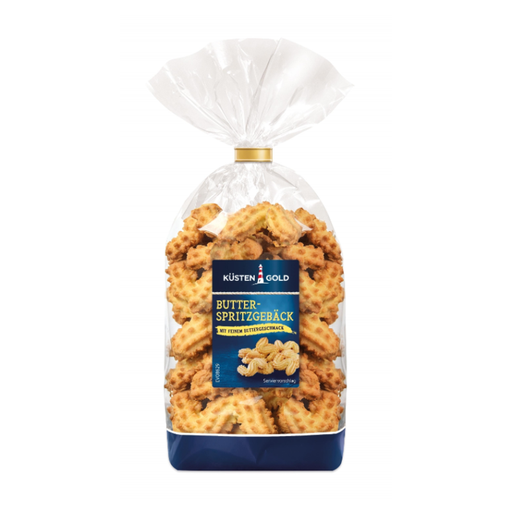
An option if you specifically want butter shortbread for your TV night. The pack contains 200 g; check the nutritional information on the specific pack to assess its sugar content.
No. A reduction claim doesn’t mean the product has a low energy content overall. Lebensmittelklarheit explains the sugar reduction required; to assess a specific biscuit, also check the sugar and energy per 100 g in the nutrition table.
No. “Less sweet” isn’t the same as a claim about sugar content. Look for a specific reduction claim and check the sugar per 100 g.
What matters is the allergen information for the specific product, not just the type of biscuit. REWE lists wheat, butter, egg and milk for Leibniz Butterkeks weniger Zucker; before eating, check the information on the pack you’ve actually bought.