Who needs to make this decision?

Housemates dealing with shower humidity

If moisture gets into the living area after people share a shower, remove it in the bathroom first wherever possible. The German Environment Agency recommends keeping the bathroom door closed while ventilating.

People using a cool shared living space

If the living area stays cool at times, the stated operating temperature and the design of the specific appliance are important factors when choosing. Trotec and Wood’s offer desiccant models for these conditions.

People using a busy shared living space

In a shared room, operating noise, safe cable routing and clear responsibility for emptying the tank all need to work together. The consumer advice service Verbraucherzentrale and Meaco highlight the importance of monitoring humidity and routing cables safely.

What should you consider when choosing?

Ventilate and measure in the bathroom first

Suitable if: humidity mainly occurs after showering and you want to check first whether you can remove it in the bathroom.

Bear in mind: Everyone needs to follow the bathroom routine consistently; additional humidity may still need to be dealt with.

Desiccant dehumidifier

Suitable if: the shared living space stays cool for extended periods and you need to manage humidity there despite following the bathroom routine.

Bear in mind: Regenerating the desiccant uses electricity and releases heat; the amount of water removed still depends on the surrounding conditions.

Compressor dehumidifier

Suitable if: the shared living space is heated and you can compare the performance figures for a specific model at your room temperature.

Bear in mind: The actual dehumidifying performance may decrease as the room temperature falls.

Investigate the source of the damp

Suitable if: walls stay damp or mould has already appeared.

Bear in mind: A dehumidifier can remove moisture from the air, but it cannot fix structural damp.

Concern What to check when buying Who is this important to?
Lingering humidity Use a hygrometer to check humidity levels before and after the bathroom routine; if you need an appliance, look for an adjustable target humidity. If I want to know whether humidity remains in the living area after showering, I want to measure it rather than guess. For around 33% of consumers, checking for lingering shower humidity is the top priority.
Cool room Compare the usual room temperature, stated operating range, recommended room size and test conditions for the litres-per-day performance figure. If my shared living space stays cool, I want to know whether the specific appliance is rated for that temperature. For around 27% of consumers, suitability for a cool room comes first.
Quiet and safe operation Check the noise rating and operating mode; follow the instructions for positioning and cable routing for the specific model. If several people use the room, I want to be able to run the appliance without disrupting conversations or shared walkways. For around 20% of consumers, quiet and safe operation is a priority.
Emptying and power consumption Check the tank capacity, full-tank shut-off, whether a drainage hose is possible, power consumption and planned running time for the specific model. If several people use the appliance, I want to agree who will empty the tank and whether there is a suitable drain. For around 20% of consumers, straightforward emptying and predictable operation are particularly important.

Avoid common mistakes

  • Relying on a dehumidifier instead of ventilating the bathroom

    If the bathroom door is open, the peak in humidity may spread through the rest of the home first. An appliance in the living area will not prevent this spread.

    Remove the moisture in the bathroom first wherever possible, then monitor humidity levels in the shared living space.

    Avoidable spreading of moisture can mean running the appliance for longer, while the humidity problem in the home remains.

  • Comparing litres-per-day figures without checking the test conditions

    The actual amount of water removed depends on temperature, humidity and any further moisture entering the room. For example, De’Longhi states that the DNS65 removes 6 l/24 h at 30 °C and 80% relative humidity.

    Compare the test conditions, operating range and recommended room size for each specific appliance.

    If the conditions in your shared living space differ, you may base your purchase on a performance level the appliance cannot achieve there.

  • Choosing a tank or continuous drainage without agreeing who is responsible

    According to the manufacturer, the Wood’s WDD80 has a 2-l tank and a hose connection. A hose is only useful if there is a suitable route to a drain.

    Agree in advance who will empty the tank and whether a hose can be routed safely to a drain.

    A small tank may need emptying more often if the appliance is used frequently; without a suitable drain, operation may be interrupted.

Brands to consider

Meaco

The German range page features DD8L desiccant dehumidifiers for cooler conditions, alongside Arete compressor models; the two model families are not interchangeable.

  • Meaco says the DD8L Pro is app-compatible and comes with a three-year warranty.
  • These details do not prove that it is suitable for a specific level of humidity or provide an independent comparison of noise and power consumption.

Trotec

Trotec describes the TTR 57 E as a desiccant dehumidifier for rooms up to 20 m² or 50 m³.

  • Trotec lists a 5-l tank, up to 9 l/24 h and operation from 1 °C.
  • The maximum room size and stated dehumidification rate do not replace checking the conditions in your particular shared living space.

Wood’s

According to the manufacturer, Wood’s WDD range is designed for small, cool rooms; the WDD80 can be used with its tank or hose connection.

  • Wood’s lists a 2-l tank, a hose connection and operation down to 0 °C for the WDD80.
  • Frequent dehumidification may mean emptying the tank more often; a suitable drainage route is needed to use a hose.

De’Longhi

The Tasciugo AriaDry Light DNS65 is another option, but its performance figures should be checked against the conditions in which you’ll use it.

  • For the DNS65, De’Longhi lists 34 dB(A), 520 W input power and 6 l/24 h at 30 °C and 80% relative humidity.
  • Without matching test conditions, these figures cannot be used to make a direct comparison of noise or efficiency with other models.

EcoAir

EcoAir describes the DD1 Classic as an electric desiccant dehumidifier. The product details listed are from the UK manufacturer’s website.

  • EcoAir lists up to 7.5 l/day at 20 °C and 60% relative humidity, plus a hose for continuous drainage.
  • Before buying, check that the specific version is suitable for where you plan to use it.

Dehumidifiers at Joybuy

These Joybuy appliance options are intended to help manage lingering humidity in living spaces. If the room is cool, check the stated temperature range for the specific model before choosing.

Comfee’ MDDO-10DEN7 dehumidifier

Comfee’ MDDO-10DEN7 dehumidifier

May be worth considering if the stated room size and humidity control suit your needs.

Up to 10 l/day; 2.5-l tank with full-tank alarm and shut-off; Smart mode at 45–55%; Sleep mode at 36 dB(A); stated as suitable for rooms up to around 40 m³ (16 m²).

View at Joybuy
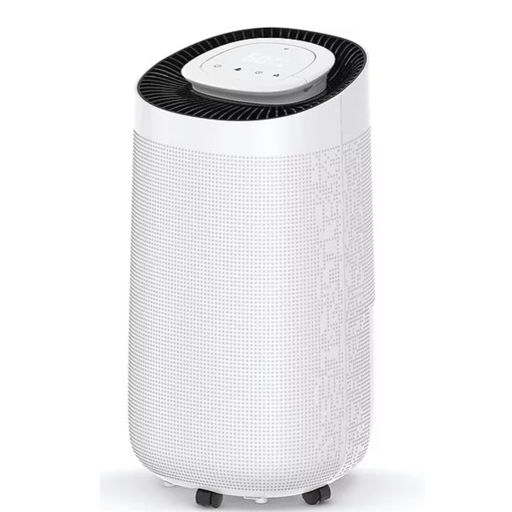
Komodo Humi+ 16 L dehumidifier

Komodo Humi+ 16 L dehumidifier

May be worth considering for a living space if the stated dehumidification rate and emptying options suit how you’ll use it.

Up to 16 l/day; 3.2-l tank with full-tank shut-off; a drainage hose and room humidity display are listed.

View at Joybuy
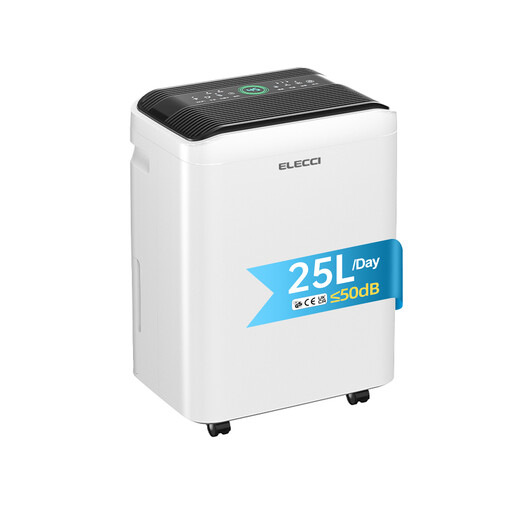
ELECCI 25L/D dehumidifier

ELECCI 25L/D dehumidifier

May be worth considering if the room is within the stated floor area and there is a suitable drainage route.

Up to 25 l/day; 4.8-l tank; continuous drainage with hose; automatic defrost; stated as suitable for rooms up to 50 m²; real-time humidity display.

View at Joybuy
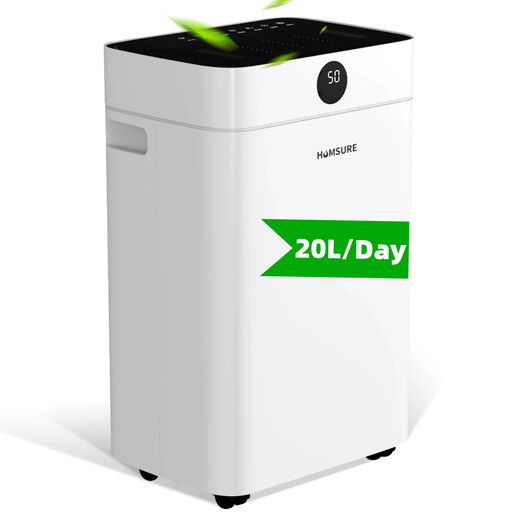
HUMSURE 20L/Day dehumidifier

HUMSURE 20L/Day dehumidifier

May be suitable if the stated room size is right and there is a suitable route for the drainage hose.

Up to 20 l/day; 2.8-l tank with full-tank shut-off; adjustable target humidity from 40–80%; stated as suitable for rooms up to 50 m²; gravity-fed hose drainage.

View at Joybuy
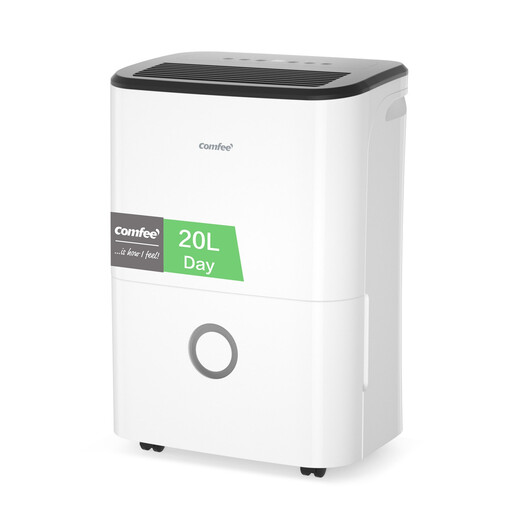
Comfee’ MDDF-20DEN7 dehumidifier

Comfee’ MDDF-20DEN7 dehumidifier

May be worth considering for a larger living space if the stated room size and automatic humidity control suit your needs.

Up to 20 l/day; 3-l tank with full-tank shut-off; Smart mode at 45–55%; stated as suitable for around 100 m³ (40 m²). A hose for continuous drainage is not included.

View at Joybuy

Frequently asked questions

What should I do straight after showering?

First, ventilate the bathroom to clear the peak in humidity, keeping the bathroom door closed. The German Environment Agency also recommends wiping down wet walls and floors; then monitor humidity levels in the living area.

How do I compare the appliances’ power consumption?

For a specific model, you can multiply its power consumption in kilowatts by the actual running time and your price per kilowatt-hour. A target-humidity setting can affect how long the appliance runs; De’Longhi lists an input power of 520 W for the DNS65, not the consumption of every desiccant dehumidifier.

How can I position a dehumidifier safely in a shared living space?

Follow the instructions for the specific model. Meaco requires the DD8L Zambezi to be placed on a stable, level surface, warns against standing water and damaged cables, and says to route the cable to avoid a trip hazard; these manufacturer instructions apply to the model named.

What do litres-per-day figures mean?

They should only be assessed alongside the stated test conditions, because temperature, humidity and moisture entering the room affect the actual amount of water removed. So compare the conditions for the specific models with those in your shared living space.

Does a CE mark mean an appliance has been independently tested?

No. According to the German Federal Network Agency, the manufacturer uses the CE mark to declare, on its own responsibility, that the appliance meets the applicable requirements; it is not an independent quality rating.