
Lieferung heute & morgen

Qualitätsgarantie

Willkommens-Angebote freischalten: KOSTENLOSE Lieferung | Bis zu 80 % RABATT | Kostenlose 30-Tage-JoyPlus-Testphase
App herunterladen
A new shower system can elevate your bathroom's form and function. However, the market is flooded with tempting offers that don't always deliver on their promises. From trendy finishes that become unsightly after a few months to "universal" systems that don't fit standard plumbing connections – the pitfalls are numerous. As your Joybuy Product Recommendation Officer, I'll help you identify the crucial features and make an informed decision that suits your needs and your bathroom's setup.
Before you invest, you should be aware of the most common marketing promises and their potential downsides.
To avoid these pitfalls, focus on the following technical features. They are the key to a durable and functional shower system.
The shower valve is the heart of your system. A distinction is made here between surface-mounted and concealed models.
The material is just as critical. A valve body made of solid brass is the most robust choice, as it is corrosion-resistant and durable. Cheaper models often use zinc alloys or plastic, which have a shorter lifespan. For finishes, a PVD (Physical Vapour Deposition) coating offers significantly higher scratch and abrasion resistance than a simple paint finish.
Modern shower systems offer more than just water.
A height-adjustable shower rail offers comfort for all family members, no matter how tall or short. Some systems also offer drill-free installation by using adjustable wall brackets that can be adapted to existing drill holes. This is an especially attractive option for renters who want to avoid damaging tiles.
Here are some recommendations tailored to specific user profiles and their requirements.
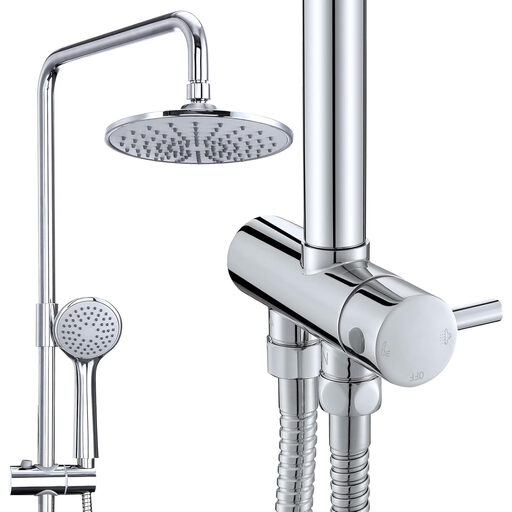
Why it's a good fit: Ideal for anyone who wants to keep their existing shower valve and only upgrade the overhead and hand showers. Perfect for rental properties or quick modernisations.
This system is explicitly sold "without a valve." It bypasses the "universal fit" trap by being clearly designed to supplement an existing installation.
The main components are made of SUS304 stainless steel, a durable and corrosion-resistant material. The installation can use existing drill holes, allowing for a drill-free setup without making new holes.

Why it's a good fit: A complete surface-mounted system in a modern matte black finish that combines high-end design with quality materials. Ideal for those who want to make an aesthetic statement without compromising on durability.
It avoids the trap of a short-lived trendy finish because the valve body is crafted from solid brass and the black finish is described as corrosion-resistant. This suggests a higher quality than simple painted models.
The system combines a large 250 mm rain shower head with a hand shower. The solid brass construction promises a long lifespan. The recommended water pressure is clearly stated in MPa, ensuring transparency.
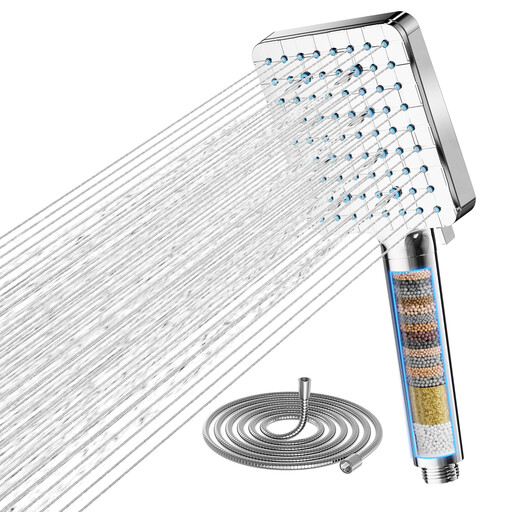
Why it's a good fit: A targeted solution for households in regions with hard water. This shower head with hose and filter can be easily connected to any existing valve to improve water quality.
This product doesn't make vague wellness claims but instead clearly states its function: a shower head with an anti-limescale filter. The 20-stage filtration system with KDF and calcium sulfite is a specific technical feature.
The combination of filtration and pressure-boosting technology makes it a dual-purpose solution: it improves water quality while also providing a high-pressure shower feel, even with low line pressure.
We have compiled a complete, up-to-date list of products that fully meet these strict selection criteria and industry standards.
1. What is the difference between a shower system and a shower set? A shower system (also called a shower column) typically refers to a complete unit consisting of an overhead shower (often a rain shower), a hand shower, a shower rail, and a valve or diverter. A shower set is often simpler and may only consist of a shower head with a hose and a holder.
2. How can I tell if a shower system is suitable for low water pressure? Look for terms like "high pressure," "pressure-boosting," or "low-pressure compatible" in the product description. Some manufacturers also specify the minimum required water pressure in bar or MPa (e.g., "suitable from 0.5 bar"). Technologies like air-injection or specially shaped nozzles are also a good indicator.
3. How often should a limescale filter in a shower head be replaced? Most manufacturers recommend replacing the filter cartridge every 3 to 4 months. The exact lifespan depends heavily on the water hardness in your area and the frequency of use. A noticeable drop in water pressure is a clear sign that the filter needs to be changed.