
Lieferung heute & morgen

Qualitätsgarantie

Willkommens-Angebote freischalten: KOSTENLOSE Lieferung | Bis zu 80 % RABATT | Kostenlose 30-Tage-JoyPlus-Testphase
App herunterladen
Want to enjoy the feeling of a luxurious rain shower without having to remodel your entire bathroom? A shower system without a faucet is a practical and cost-effective solution for upgrading an existing shower. These systems connect directly to your current shower or tub faucet, replacing only the old shower rail and shower head.
This article serves as your guide. It explains the key selection criteria and introduces various models to help you choose the right system with confidence.
Before you decide on a model, several technical and design aspects should be considered. A thoughtful choice ensures the new system not only looks great but also fits your bathroom's functional needs.
The biggest advantage of a retrofit shower column is its straightforward installation. Most of these systems are designed to connect to a standard G1/2-inch connection, which is found on nearly all shower faucets in Europe and North America. Before purchasing, check if the included connection hose can be attached directly to your faucet. Some models also offer adjustable wall brackets, allowing you to use existing drill holes and avoid further damage to your tiles.
The choice of material affects both the durability and the aesthetic of the shower system. Common materials include:
Besides the classic chrome finish, the matte black rain shower is gaining immense popularity, adding modern, elegant accents. For a particularly exclusive ambiance, consider finishes in gold or copper. Whether you prefer a round design or a striking square shower system depends on the overall style of your bathroom.
A height-adjustable shower set is essential so that everyone in the household can use the shower comfortably. Pay attention to the adjustment range of the shower rail. The size of the overhead shower head significantly defines the shower experience. A large rain shower set with an overhead shower of 20 cm or more in diameter creates a wide, gentle stream of water reminiscent of a warm summer rain. An additional shower rail with a hand shower offers flexibility for daily use.
Here is a selection of shower systems that, thanks to their specific features, are suitable for different requirements and interior styles.
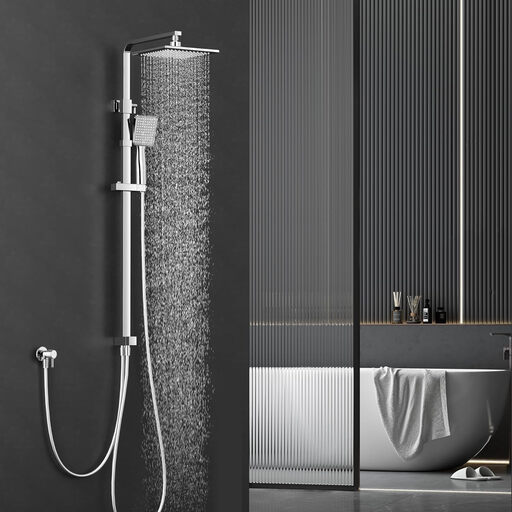
What makes it stand out: This model is a classic all-rounder for a straightforward upgrade. With its chrome-plated surface and square design, it blends seamlessly into most bathrooms. The installation is designed for retrofitting and, according to the manufacturer, requires no additional drilling if existing wall brackets can be used.
Advantages:
Who it's for: Ideal for renters and homeowners looking for a quick, affordable, and functional upgrade to their shower without making structural changes. Pairs well with existing chrome fixtures.

What makes it stand out: This system makes a clear design statement with its matte black finish and extra-large overhead shower. It is designed for anyone looking to transform their bathroom into a modern, spa-like retreat.
Advantages:
Who it's for: Perfect for design-conscious users who want to create a visual highlight in their bathroom and value a large-area, spa-like shower sensation.
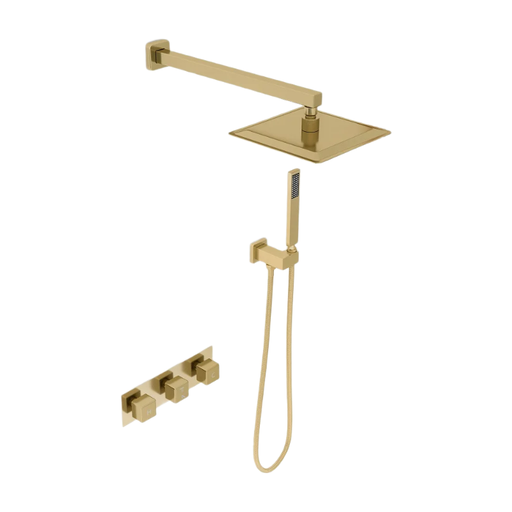
What makes it stand out: This set is an all-in-one solution for demanding renovation projects. It is made of solid brass with an elegant, brushed gold finish. Unlike pure retrofit sets, this model also includes the necessary concealed mixing valve, which requires professional installation.
Advantages:
Who it's for: Suitable for homeowners planning a major bathroom renovation who want a durable and visually outstanding shower solution and are prepared for the necessary expert installation.
The selection of shower systems is diverse, offering the right model for every taste and installation scenario. If you'd like to explore more designs, finishes, or features, discover more shower system options here in our collection.
A shower system without a faucet is a set consisting of a shower rail, an overhead shower, and usually an additional hand shower. It is connected to an existing, separate shower faucet (mixer tap or thermostat). It serves to upgrade the shower hardware without replacing the water control unit.
Some models are designed with sliding wall brackets that can be adjusted to fit existing drill holes. This significantly minimizes installation effort. However, a completely drill-free installation is rare, as a secure attachment, especially for heavy overhead showers, requires stable anchoring in the wall.
As a rule of thumb, the overhead shower should be mounted about 20 to 30 cm above the head of the tallest person who regularly uses the shower. This ensures that the water stream can spread out optimally, creating a pleasant shower experience. A height-adjustable shower set provides the necessary flexibility here.