
Lieferung heute & morgen

Qualitätsgarantie

Willkommens-Angebote freischalten: KOSTENLOSE Lieferung | Bis zu 80 % RABATT | Kostenlose 30-Tage-JoyPlus-Testphase
App herunterladen
A new shower system can enhance an existing shower both functionally and aesthetically. However, everyday usability depends on more than design alone. Before buying, homeowners and tenants should check whether the connections, wall clearances, installation method and water performance are suitable for the existing bathroom.
A wide overhead shower distributes water across a larger area. This can be pleasant, but depending on the model and the desired spray pattern, it requires an adequate water supply. Terms such as “High Pressure” or “Rainfall” do not automatically describe the actual performance at every household connection.
You should therefore check:
A wall-mounted shower is not automatically compatible with every existing drill hole. Particularly with a shower column, you should check the upper and lower mounting points, the distance to the water connection and the overall height. A height-adjustable shower bar can make retrofitting easier, but it does not replace checking the wall and connections.
In rented apartments, you should also clarify whether new holes may be drilled. Systems that use existing brackets or are supplied without an additional thermostatic fitting may be more practical when modernising an existing installation.
“Stainless-steel look” does not necessarily mean that all components are made of stainless steel. In a shower set, for example, the shower head, hand shower, diverter and hose may be made from different materials.
You should therefore look for specific material information:
Many shower components use a G1/2-inch connection. This is a widely used standard, but it does not guarantee that every combination will fit without further checks. Inspect the threads, seals, wall connections and existing fitting.
A shower system without a thermostat is supplied without a thermostatic mixer. It is therefore primarily suited to bathrooms where a compatible fitting is already installed or will be fitted separately. The benefit is greater flexibility when configuring the system, but compatibility must be verified before purchase.
A square rain shower measuring, for example, 20 × 20 cm requires sufficient clearance from the wall and the user. With a height-adjustable shower bar, the specified adjustment range should be compared with the users’ height and the position of the existing connections.
The hose length is also relevant:
With many shower heads, silicone nozzles can be cleared of limescale by gently rubbing them. Aggressive or abrasive cleaning products can damage chrome and black finishes.
If a manufacturer specifies a particular water saving, this should be treated as a manufacturer’s claim. According to the product description, the HOMELODY system may reduce consumption by up to 30% through its micro-nozzle technology. Actual consumption depends, among other factors, on water pressure, shower duration and the selected setting. Comparing the flow rate in litres per minute is more meaningful than a general designation such as “water-saving”.
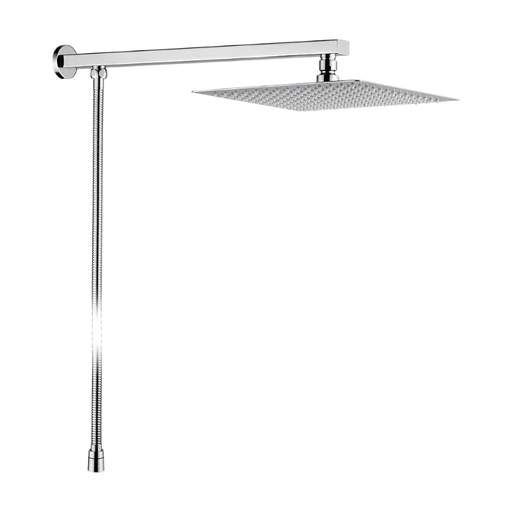
Why it suits this profile: This set combines a square overhead shower, a wall arm and a 1.5-metre hose. It is suitable for users looking for a straightforward upgrade with a chrome finish.
The product description clearly specifies the material, shape, installation method and hose length. The 196 flexible silicone nozzles are designed for manual limescale removal.
Stainless-steel construction, square shower head, chrome finish, wall mounting and silicone nozzles.
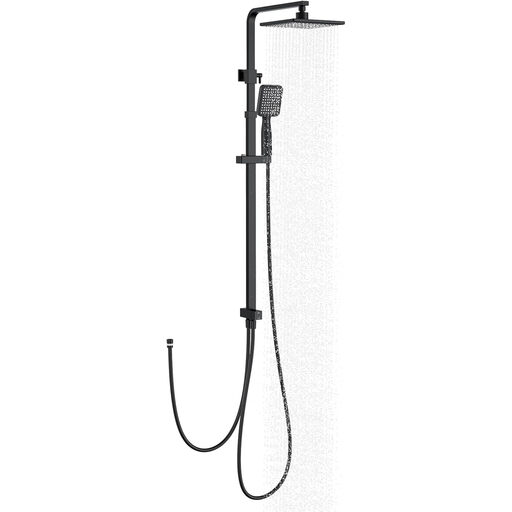
Why it suits this profile: This shower system is intended for bathrooms where an existing thermostatic solution is to remain in use and a black, height-adjustable design is preferred.
The set is explicitly offered without a thermostatic fitting. This makes it clear before purchase which existing components can continue to be used.
Adjustable shower column from 730 to 1,153 mm, 20 × 20 cm rain shower, 150- and 50-cm stainless-steel hoses, plus G1/2 connections according to the product description.
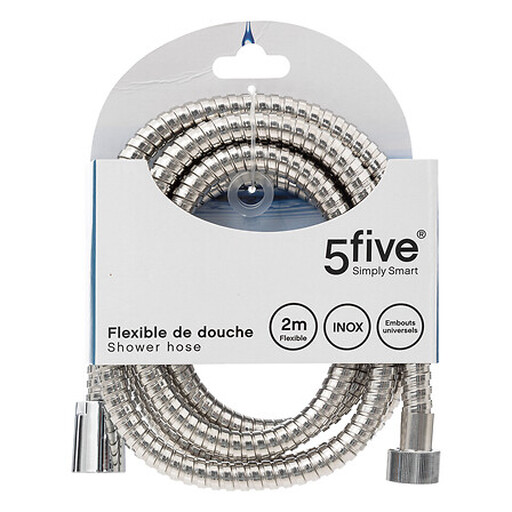
Why it suits this profile: The 200 cm stainless-steel shower hose provides additional freedom of movement and can serve as a replacement part for compatible standard connections.
The length and material are clearly specified. Nevertheless, the hose should not be sharply kinked, stretched or treated with corrosive cleaners.
200 cm length, stainless-steel and PVC construction, silver finish, flexible design and universal connections according to the product description.
Before ordering and installing, the following checks are recommended:
The complete selection includes further products organised by material, features, hose length and installation method for bathroom upgrades.
This depends on the connection size, thread, wall clearance and the design of the particular set. G1/2 is a commonly used standard, but it should be compared with the existing installation. With a shower system without a thermostat, a suitable mixer or thermostatic fitting must also already be installed.
There is no reliable one-size-fits-all answer. Service life depends on water hardness, frequency of use, installation, material quality and maintenance. Regular limescale removal, avoiding aggressive cleaning products and keeping the shower hose free from tension can help maintain functionality. If you notice cracks, leaks or damaged threads, the affected component should be replaced.
This cannot be determined by size alone. The decisive factors are flow rate, water pressure, usage time and any flow restrictors. A larger overhead shower may require more water at the same pressure; technical specifications in litres per minute allow for a more objective comparison. Manufacturer claims about potential savings, such as those made for the HOMELODY model, relate to the specific design and cannot automatically be applied to every installation.