Batch cooks preparing larger quantities
If you’re preparing chicken for several meals, the maximum working quantity matters more than a large stated capacity alone.


For larger quantities of cooked chicken, a food processor with a chopping blade and pulse function is an obvious choice; for small portions, a compact chopper may be enough. However, bowl capacity doesn’t tell you how much chicken you can process – you’ll need to check the filling limits in the instructions for the specific model. If you want longer strands rather than chopped pieces, KitchenAid describes a method using the paddle attachment on a suitable stand mixer.
If you’re preparing chicken for several meals, the maximum working quantity matters more than a large stated capacity alone.
Whether you want chopped pieces or longer strands will influence your choice between a chopping blade and a suitable paddle attachment.
A compact appliance can save storage space when you’re making smaller quantities; preparing a larger batch may mean working in several stages.
A good fit if: you’re chopping small portions and have limited worktop space.
The trade-off: You may need to work in several batches to prepare a larger quantity.
A good fit if: you regularly prepare several portions and want to control the size of the chopped pieces.
The trade-off: A larger bowl takes up more space and doesn’t tell you how much chicken you can process.
A good fit if: you want longer strands for pulled chicken; KitchenAid describes using cooked, skinless and boneless chicken with a flat beater or pastry beater.
The trade-off: This is a different preparation method from chopping with a blade attachment.
| What matters | What to check when buying | Who is this important to? |
|---|---|---|
| Working quantity per batch | Check the instructions for filling limits for solid ingredients; look for a chopping blade rather than just slicing or grating discs. | If I’m preparing chicken for several meals, I want to avoid making more batches than necessary. Around 33% of consumers prioritise the working quantity per batch. |
| Chopped pieces or longer strands | Decide on the texture you want before choosing an appliance; with a food processor, check that the specific model has a chopping blade and pulse function. | If the texture determines whether the chicken works for my dish, it’s my top priority. Around 27% of consumers put texture first. |
| Cleaning and hygiene | Read the cleaning instructions for the bowl, blade, lid and seals. The German Federal Institute for Risk Assessment notes that germs can be transferred via hands, appliances and work surfaces. | If I want a cleaning routine that’s easy to follow, I need to be able to clean all the parts that come into contact with food thoroughly. Around 20% of consumers prioritise cleaning. |
| Worktop space and portion size | Check the appliance dimensions, the space it needs when in use and where you’ll store its accessories; don’t compare appliances for small portions with larger models on motor power alone. | If my kitchen has limited storage and I usually prepare small portions, a compact appliance is important to me. Around 20% of consumers prioritise space-saving storage. |
Bowl capacity and the permitted filling quantity for solid ingredients aren’t the same thing. A stated usable capacity for liquids also doesn’t apply to cooked chicken.
Check the filling limits and operating instructions for the specific model before deciding on batch sizes.
A chopping blade and a paddle attachment are used for different preparation methods. KitchenAid’s instructions for shredding refer to a stand mixer, not a food processor with a blade.
First decide whether you want small pieces or longer strands, then choose your appliance and attachment.
Motor power alone doesn’t tell you how much solid food the appliance can process or which attachments are included.
Compare filling limits, chopping blades, pulse controls, cleaning requirements and the space the appliance needs.
The Easy Chop CHP61.100WH and MultiPro Go FDP23.130GY models offer different appliance sizes and capacities.
The PurEase FP3131WH is a food processor with a chopping blade and a 2.1-l bowl.
The MultiTalent 3 MCM3401M is an example of a larger compact food processor.
The 5KFP0719EBM food processor has a 1.7-l bowl and a pulse function; the brand also describes a separate method for shredding with a stand mixer.
This selection from Joybuy includes choppers and food processors for chopping food. For cooked chicken, check the permitted filling quantity and instructions for the specific model.
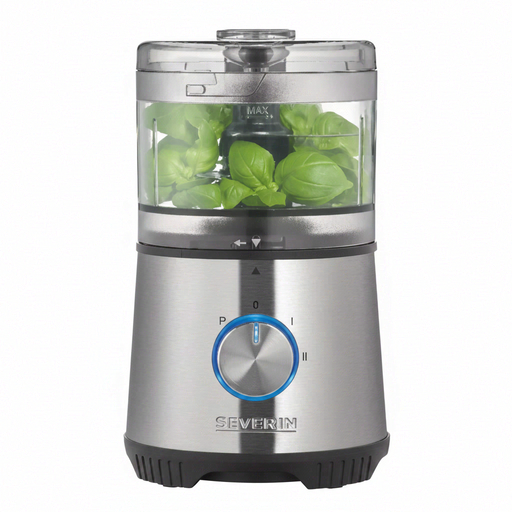 No image available
For anyone looking to chop cooked chicken in a food processor; the actual filling quantity depends on the instructions.
400 W; brushed stainless steel and black finish.
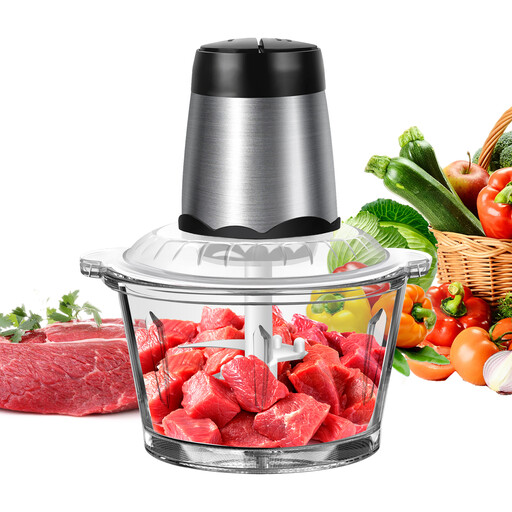 No image available
Described as a meat chopper; check the permitted filling quantity and operating instructions before processing a larger batch.
2-l glass bowl and stainless steel blades.
 No image available
For anyone who wants to choose between several bowl sizes when preparing food; bowl capacity doesn’t indicate the permitted filling quantity for chicken.
350 W; three stackable bowls with capacities of 2,5 l, 2,2 l and 1,8 l, plus a triple-curved stainless steel blade system. According to the product details, the pulse function is limited to a maximum of 30 seconds per cycle.
 No image available
The two bowls are designed for preparing different quantities; check the model instructions for the permitted filling quantity for chicken.
Two glass bowls with capacities of 2 l and 0,6 l. According to the product details, the bowls and lids aren’t heat-resistant; avoid temperature changes of more than 50 °C.
 No image available
For anyone looking to use a meat chopper to prepare food; plan your work around the specified operating intervals.
2-l bowl, 300 W and stainless steel blades. The instructions specify a maximum of 40 seconds’ continuous operation, followed by a break of at least 2 minutes; after three cycles, allow the appliance to cool for 15 minutes. Do not process bones, ice or frozen food.
No. Having a chopping blade doesn’t guarantee this texture. KitchenAid describes making longer strands from cooked, skinless and boneless chicken using the paddle attachment on a suitable stand mixer; this method is for a different type of appliance.
Clean all parts that come into contact with food according to the instructions for the specific model, and keep utensils for raw and cooked food separate. The German Federal Institute for Risk Assessment notes that germs can be transferred via hands, work surfaces and appliances. Approval for individual parts to go in the dishwasher doesn’t automatically mean the whole appliance is dishwasher-safe.
The German Federal Institute for Risk Assessment recommends cooling leftovers to below +7 °C within a few hours, storing them in the fridge and eating them within two to three days. You can divide larger quantities between several shallow dishes to help them cool; the appliance won’t extend their shelf life.
No. The stated bowl capacity isn’t the permitted filling quantity for chicken. Check the limits for solid ingredients and the operating instructions in the manual for the specific model.
If an appliance is subject to EU rules requiring CE marking, the manufacturer uses the CE mark to declare, on its own responsibility, that the product complies with those rules. Germany’s Federal Network Agency notes that the marking is neither a mark of origin nor an independent quality test.