
Lieferung heute & morgen

Qualitätsgarantie

Willkommens-Angebote freischalten: KOSTENLOSE Lieferung | Bis zu 80 % RABATT | Kostenlose 30-Tage-JoyPlus-Testphase
App herunterladen
A side-by-side fridge freezer offers separate compartments for chilled and frozen food, wide shelves and often additional convenience features. For large families, multi-person households or regular bulk shops, such a large fridge freezer can be a practical choice. However, its generous dimensions and extensive range of features can also lead to common purchasing mistakes.
A fridge freezer with a capacity of 500 litres or more needs sufficient space in your kitchen. It is not just the appliance’s width, height and depth that matter, but also:
The usable layout is also important. For example, a 544-litre model may offer 347 litres of fridge space and 197 litres of freezer space. If you mainly store fresh food, you may need a different ratio from a household that keeps a large supply of frozen products.
A fridge freezer with a water dispenser may require either an integrated water tank or a mains water connection. A tank makes installation easier, but it must be refilled and cleaned regularly. With a mains water connection, you should check the necessary structural requirements and how the pipework will be routed.
A fridge freezer with an ice dispenser also requires regular care. Water containers, the dispensing area and the ice maker should be cleaned according to the operating instructions. For products with a mains water connection, check before buying whether a suitable connection is available.
The EU energy label ranges from A to G. Buyers should also compare the stated annual consumption in kilowatt-hours. With large appliances, the absolute energy consumption may be higher than that of a smaller fridge freezer, even when the appliance has an impressive specification.
For example, the Hisense RS3P558NEFE is listed with 317 kWh per year and energy efficiency class E. The Hisense RS3P558NEFD is listed with 254 kWh per year and class D. These figures are based on standardised conditions; actual consumption depends, among other things, on room temperature, how full the appliance is, the temperature setting and how often it is used.
A side-by-side fridge freezer with No Frost eliminates the need to defrost the relevant compartments manually. This is particularly convenient if the freezer is opened frequently. A multi-airflow fridge freezer distributes cold air through several air channels. This can help maintain a more even temperature across the shelves.
However, No Frost does not replace cleaning. Door seals, the interior and air vents should be kept free from dirt and debris.
For open-plan kitchens or rooms next to bedrooms and home offices, the noise level in decibels is important. Among the models listed here, a quiet fridge freezer produces around 35 to 39 dB, for example. Compare this figure directly with the specifications of other appliances.
A side-by-side fridge freezer with an inverter compressor adjusts compressor output to meet cooling demand. Manufacturers often associate this technology with reduced operating noise and smoother operation. However, it does not guarantee a specific level of energy consumption or a particular service life.
In addition to annual energy consumption, the freezing capacity in kilograms per 24 hours and the climate class are relevant. A climate class such as SN, N, ST or T indicates the ambient temperature range in which the appliance may be operated. This is important for kitchens that become very warm in summer or have less consistent room temperatures.
You should also check for:
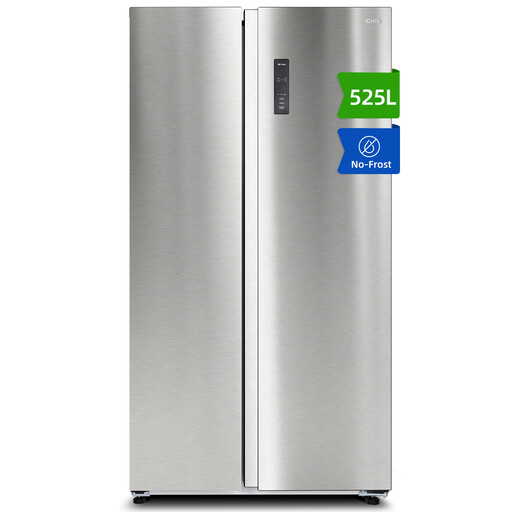
Why this product suits this profile: This model combines 525 litres of usable capacity with No Frost, multi-airflow and touch controls. It is suitable for households looking for plenty of space and essential convenience features without needing a fixed water connection.
The product specifications state No Frost, 37 dB and an inverter compressor. This means you can check the defrosting requirements, noise level and compressor technology in detail before buying.
525 litres of total capacity, 333 litres of fridge space, 192 litres of freezer space and a reversible door.
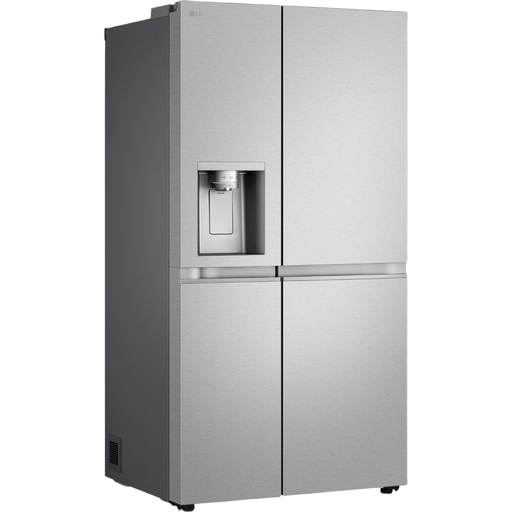
Why this product suits this profile: With 623 litres, energy efficiency class B, annual consumption of 175 kWh and a noise level of 32 dB, this appliance is aimed at households that compare energy and noise figures particularly carefully.
The stated energy and noise figures are shown alongside the convenience features, so you do not have to judge the appliance on its design alone.
Total No Frost, DoorCooling+, inverter compressor, water and ice dispenser, plus app compatibility.
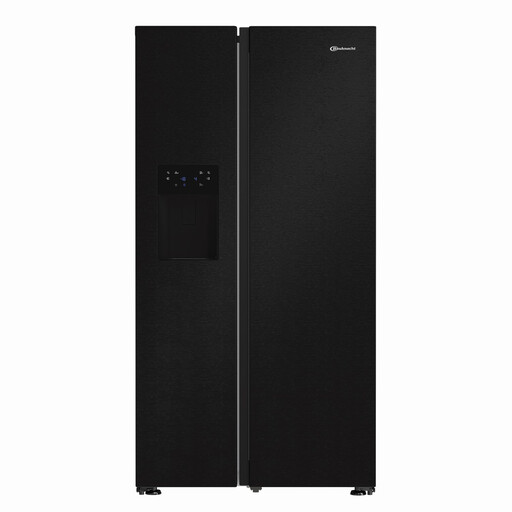
Why this product suits this profile: With 578 litres, an integrated water tank, and water and ice dispensing, this model is designed for households that regularly reach for chilled drinks and ice.
The integrated tank means a mains water connection is not required. However, cleaning and maintaining the tank and dispensing area remains part of regular use.
Dual Cool Total No Frost, 37 dB, energy efficiency class D and 203 litres of freezer capacity.
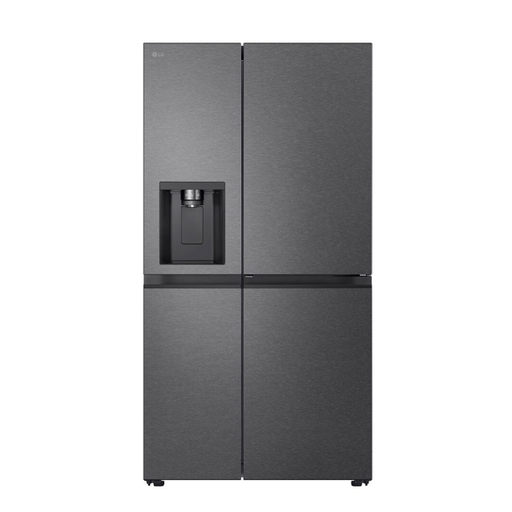
Why this product suits this profile: With 641 litres of total capacity, a 420-litre fridge compartment and an integrated 4-litre water tank, it offers plenty of room for bulk shops and drinks.
The water tank does not require a fixed connection. Nevertheless, you should allow for the appliance’s width of 913 mm and depth of 735 mm in your kitchen before buying.
Water and ice dispenser, multi-airflow, Smart Inverter compressor and a noise level of 36 dB.
We have put together a complete, regularly updated list of products that fully meet these strict selection criteria and the safety regulations applicable in the EU.
Before delivery, measure the space where the appliance will be installed. Most models require an earthed 220- to 240-volt socket and sufficient ventilation. Extension leads and multi-socket adaptors should be avoided in accordance with the relevant safety instructions.
For efficient operation:
A black side-by-side fridge freezer can look noticeably different from models with stainless-steel or silver fronts. However, design and cleaning requirements should come after the key technical specifications when making your choice. Fingerprints, door opening and the available installation space are practical considerations for everyday use.
Many models are around 90 to 91 centimetres wide and approximately 178 to 179 centimetres high. They also need additional room for ventilation, door opening and delivery. The specific clearances are given in the installation instructions provided by the relevant manufacturer.
Running costs depend mainly on the stated annual consumption in kWh, your electricity tariff and how the appliance is used. A simple calculation is: annual consumption in kWh × electricity price per kWh. When comparing appliances, choose models with a similar capacity and similar features.
There is no reliable way to give a standard service life. It depends, among other things, on operating conditions, maintenance, ventilation and how the compressor is used. The availability of spare parts, warranty terms and the manufacturer’s service information are important factors.