
Lieferung heute & morgen

Qualitätsgarantie

Willkommens-Angebote freischalten: KOSTENLOSE Lieferung | Bis zu 80 % RABATT | Kostenlose 30-Tage-JoyPlus-Testphase
App herunterladen
A side-by-side refrigerator, often called an American-style refrigerator, is the epitome of convenience and generous storage space for many households. However, purchasing such a large appliance is not without its pitfalls. Certain marketing promises often turn out to be costly extras with no practical benefit, while fundamental design flaws can complicate daily life. Before you make a decision, you should be aware of the most common sources of error to avoid a poor investment.
Two common problems are overloaded "smart" features that drive up the price but are rarely used in everyday life, and imprecise noise level specifications. An appliance declared as quiet on paper can still be perceived as disruptive in an open-plan kitchen due to high-frequency sounds from the compressor.
To find the right side-by-side refrigerator, you should focus on objective, technical features that have a direct impact on usability, longevity, and operating costs.
The stated total usable capacity in litres is only half the story. A large refrigerator is useless if the interior layout is inflexible. Pay attention to height-adjustable shelves, flexible door compartments, and the usability of the drawers.
A critical point is the dimensions. Measure not only the final installation location but also the entire delivery path to it: door frames, stairwells, and narrow hallways. A freestanding model also requires sufficient space on the sides and at the back for ventilation to operate efficiently.
A side-by-side refrigerator runs 24 hours a day. The energy efficiency class (on a scale from A to G) is therefore a crucial cost factor over the entire lifespan of the appliance. Models with an inverter compressor dynamically adjust their performance to the cooling demand, which reduces energy consumption and often leads to quieter operation.
Total No Frost technology, which prevents ice build-up in the freezer compartment, is standard today. Differences in cooling performance are evident in more advanced systems:
A double-door refrigerator with an ice and water dispenser offers great convenience. Here, you must make a fundamental decision:
Instead of making a one-size-fits-all recommendation, we have identified models tailored to specific needs and household types.
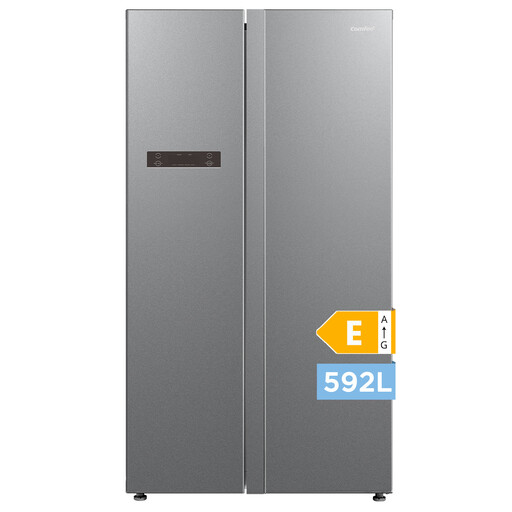
Why This Fits Their Persona: This model focuses on a family's core requirements: a very large usable capacity of 592 litres and solid technical features. It is ideal for weekly grocery shopping and bulk storage.
It deliberately avoids expensive smart functions, focusing instead on proven technologies like Total No Frost and an inverter compressor, which offer genuine added value in terms of efficiency and low maintenance.
Very high capacity of 592 litres. The Multi-Air-Flow system ensures even cooling on all levels.
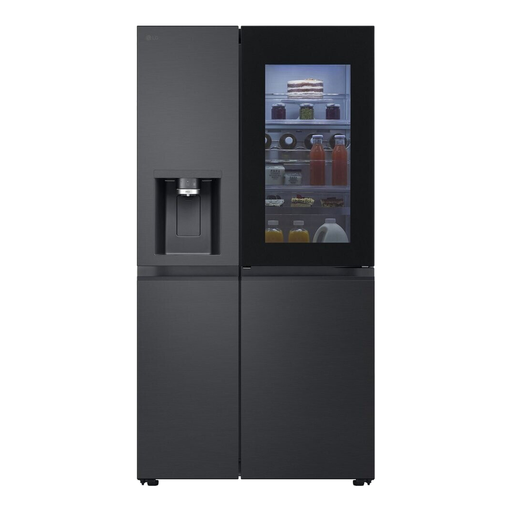
Why This Fits Their Persona: This model combines an elegant, modern design in black with innovative features that offer real value. Ideal for tech-savvy users who appreciate aesthetics and smart everyday helpers.
The "smart" functions here are not just gimmicks. InstaView (knock to see inside) reduces cold air loss, and the Craft Ice Maker for spherical ice is a unique feature. The smart refrigerator with Wi-Fi connectivity via the ThinQ app enables useful remote control and diagnostics.
InstaView Door-in-Door, Craft Ice Maker, and UVnano technology to disinfect the water dispenser. At 35 dB, it is a very quiet appliance.
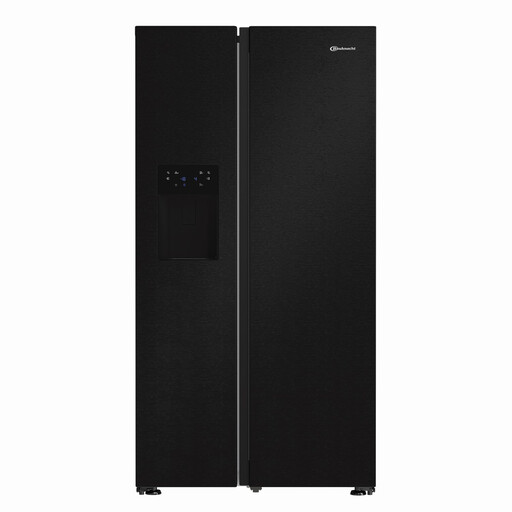
Why This Fits Their Persona: For users who prioritise optimal food storage and quiet operation. This appliance focuses on advanced cooling and freshness technologies.
It solves the dilemma between convenience and installation: The ice and water dispenser is supplied by an integrated water tank, making a complex plumbed-in connection unnecessary and keeping placement flexible.
Dual Cool Total NoFrost with two separate cooling circuits prevents odour transfer. The FreshShield technology ensures optimal humidity in the vegetable crisper.
We have compiled a complete, up-to-date list of products that fully meet these strict selection criteria and UK safety regulations.
In addition to the appliance's dimensions (typically around 91 cm wide and 178 cm high), plan for extra space for ventilation. Manufacturers generally recommend at least 5 cm of clearance on the sides and back, and about 10 cm at the top. Also, consider the space needed to fully open the doors, especially if the unit will be placed in an alcove or next to a wall.
This depends on your priorities and your kitchen's layout.
For an appliance that is constantly running, the energy efficiency class has a significant impact on your electricity bill. The difference between two classes, for example E and D, can mean savings of several hundred pounds over the years. An appliance with a better energy efficiency class may be more expensive to purchase, but it often pays for itself through lower electricity consumption over its lifespan. Look at the annual consumption in kilowatt-hours (kWh) indicated on the energy label to have a direct basis for comparison.