
Lieferung heute & morgen

Qualitätsgarantie

Willkommens-Angebote freischalten: KOSTENLOSE Lieferung | Bis zu 80 % RABATT | Kostenlose 30-Tage-JoyPlus-Testphase
App herunterladen
A Side-by-Side refrigerator, often called an American-style refrigerator, is the epitome of convenience and modern kitchen design for many families and homeowners. With generous storage space, practical ice and water dispensers, and an imposing presence, the choice might seem simple. However, the market is flooded with appliances whose advertised features often cost more in practice than they are worth. Before you make a decision, it's crucial to understand the most common pitfalls to avoid a poor investment.
As your Joybuy Product Recommendation Officer, I will help you define objective criteria for your selection.
To make an informed decision, you should focus on three core parameters that determine the real-world utility and longevity of your appliance.
The total usable capacity, often quoted at over 500 litres, is an important but not the only criterion. The layout and accessibility are what truly count.
Before buying, measure not only the niche in your kitchen but also all doorways and hallways on the delivery path. A freestanding unit also often requires side clearance from the wall to allow the doors to open completely.
These two technologies are standard in high-quality appliances today and will save you a great deal of work and hassle.
The compressor is the heart of any refrigerator. An inverter compressor continuously adjusts its power to meet the actual cooling demand, rather than just switching between "On" and "Off" like conventional models. The advantages are clear:
Here are some models that represent a considered choice for different needs and households, based on objective features.
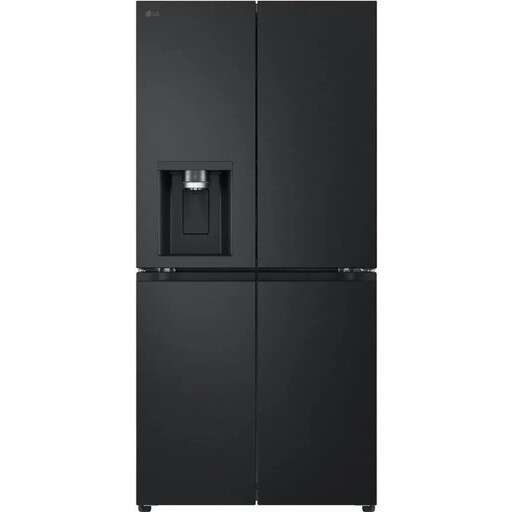
Why This Fits Their Persona: The modern French Door refrigerator design in black, with its flat doors and InstaView technology, fits perfectly into a design-focused kitchen. The LG ThinQ app offers useful remote control and diagnostic functions that simplify daily life.
The smart features focus on genuine value, like remote control and notifications, rather than just being gimmicks. The UVnano technology in the water dispenser is a clear, hygienic advantage.
InstaView Door-in-Door reduces cold air loss. The inverter compressor ensures quiet and efficient operation. The water dispenser with a 4-litre tank does not require a plumbed-in connection.
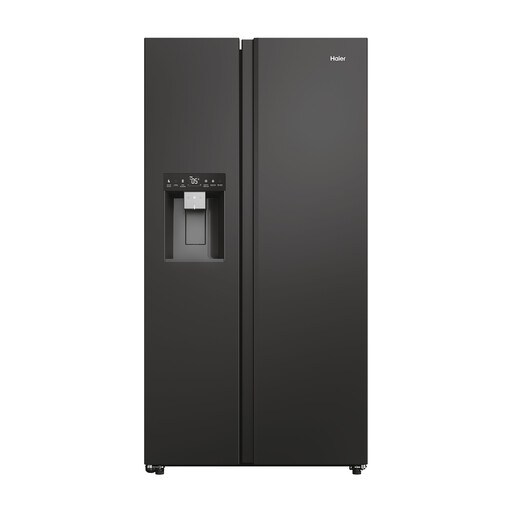
Why This Fits Their Persona: With an enormous usable capacity of 601 litres, this appliance is ideal for families who do bulk shopping. The Energy Efficiency Class D rating is a compelling case for moderate running costs in a unit of this size.
This model concentrates on core functions: ample space, good energy efficiency, and proven technologies like Total No Frost and an inverter compressor. The focus is on practical benefits rather than costly extras.
Very large capacity combined with a good energy efficiency class for its size. The hOn app allows for smart control of essential functions.
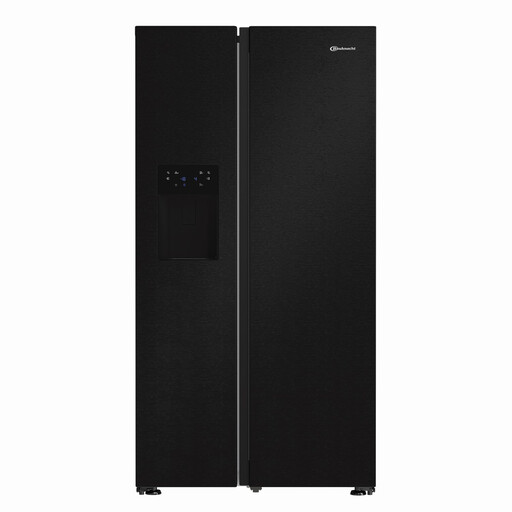
Why This Fits Their Persona: For anyone who wants the convenience of a water and ice dispenser but doesn't have or want to install a fixed water line. This model offers maximum placement flexibility, ideal for rental properties or kitchens without suitable connections.
It solves a common but often overlooked installation problem. Instead of committing to a plumbed-in connection, the integrated water tank offers a straightforward, ready-to-use solution.
The fridge-freezer with ice cube dispenser operates via an internal tank. The ElegantFit design allows for a gapless installation directly against the wall, which saves space and is visually appealing.
We have compiled a complete, up-to-date list of products that fully meet these strict selection criteria and relevant safety standards.
A classic Side-by-Side refrigerator has two tall, narrow doors, with one leading to the fridge and the other to the freezer section. A French Door refrigerator has two doors on top for a wide refrigeration area and one or more pull-out drawers below for the freezer. The choice depends on personal preference and the type of food you store most often.
No. While many models require a fixed water connection for automatic ice and water dispensing, there are numerous appliances with an integrated water tank. These models offer more flexibility in placement, as they can be positioned anywhere in the kitchen, independent of a water line. The tank simply needs to be refilled manually.
Pay attention to two factors: the noise level indicated in decibels (dB) and the type of compressor. A value below 40 dB is considered quiet. Models with an inverter compressor are often the better choice, as they adapt their performance and run continuously at a low level, which is perceived as less disruptive than the abrupt starting and stopping of conventional compressors.