
Lieferung heute & morgen

Qualitätsgarantie

Willkommens-Angebote freischalten: KOSTENLOSE Lieferung | Bis zu 80 % RABATT | Kostenlose 30-Tage-JoyPlus-Testphase
App herunterladen
A side table is often the unsung hero of furniture, adding crucial functionality and style to a room. Whether it's a spot for your evening drink, a practical laptop table for the sofa, or a modern nightstand, its uses are diverse. However, with countless designs, materials, and features available, finding the right model can quickly become overwhelming.
This guide is here to help you navigate the options. We'll outline objective criteria to assist your selection and present a curated list of models that are well-suited for various home environments due to their specific features.
To make the right choice, you should consider three key aspects: material and style, form and function, and the available space and need for storage.
The material determines not only the appearance but also the durability and maintenance of your table. A metal side table, for example, fits seamlessly into industrial or modern design concepts and is typically very durable and easy to clean. Combinations of metal frames with wood- or marble-effect tabletops offer an elegant contrast and can create stylish focal points. Pay attention to surface treatments, such as powder coatings, which protect against scratches and rust.
The shape of your side table should be guided by its primary use.
Before choosing a small table for the living room, measure the available space carefully. The table's height should ideally be level with or just below your sofa's armrest to ensure easy reach. A side table with storage, whether through a second shelf or integrated compartments, helps keep remotes, magazines, and other small items neatly organized, leaving the top surface clear.
Based on the criteria above, we have compiled a few models that stand out for their design and specific functions.
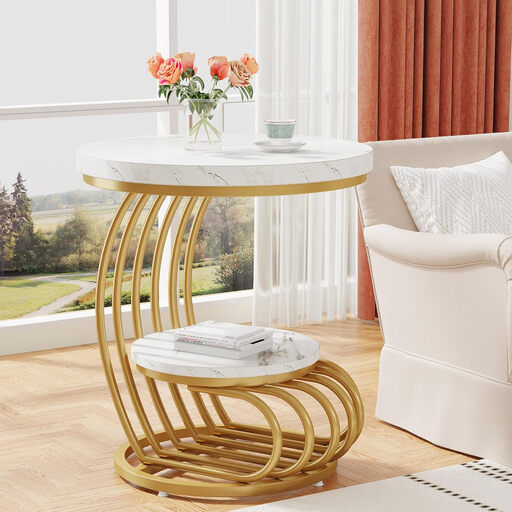
Why it stands out: This model combines a white marble-effect tabletop with a curved, gold-coloured metal frame. The design is both modern and luxurious, making the table a decorative element in any room.
Advantages:
Who is it for? For those looking to add an elegant accent to their living room or bedroom. It works perfectly as a modern nightstand or a stylish sofa table next to a couch with a high armrest.
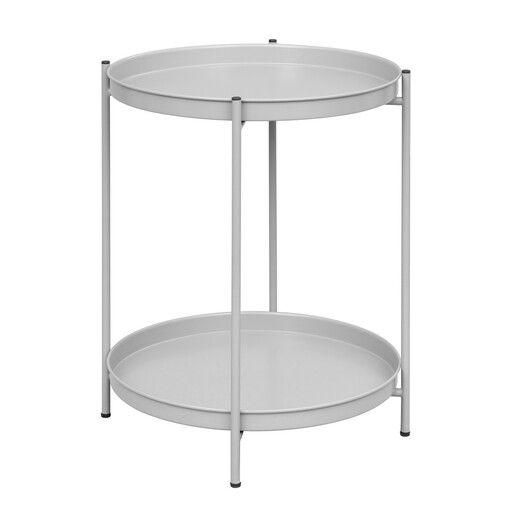
Why it stands out: The standout feature of this table is its high degree of flexibility. It consists of a metal frame and two round trays that can be easily removed, turning the side table into a serving tray whenever needed.
Advantages:
Who is it for? For users who appreciate a pragmatic and flexible solution for small apartments. It is suitable as a small coffee table, a nightstand, or even as a plant stand on the balcony.

Why it stands out: Its C-shape is specifically designed to maximize space. The frame slides effortlessly under sofas, armchairs, or beds, bringing the tabletop directly within reach.
Advantages:
Who is it for? For anyone who prioritizes functionality and frequently works, eats, or relaxes on the sofa. An extremely practical piece of furniture for professionals and students in compact apartments.
The models featured here cover a range of functional needs. However, if you are looking for more specific designs, such as other gold metal side tables, you can find a diverse selection in our broader category, which includes various styles and materials.
A side table is generally taller and smaller than a coffee table. It is placed to the side of seating furniture like sofas or armchairs. A coffee table is lower and is positioned centrally in front of the seating area. A small coffee table represents a hybrid form that often combines both functions in smaller living rooms.
As a rule of thumb, the top of the side table should be at the same height as the sofa's armrest or a few centimetres below it. This allows for comfortable and ergonomic use of the surface without having to stretch or bend over.
Materials with smooth, non-porous surfaces are the easiest to maintain. These include powder-coated metal, glass, or laminated particleboard (as seen in the featured Woltu models). They can usually be wiped clean with a damp cloth and are resistant to most liquids.