
Lieferung heute & morgen

Qualitätsgarantie

Willkommens-Angebote freischalten: KOSTENLOSE Lieferung | Bis zu 80 % RABATT | Kostenlose 30-Tage-JoyPlus-Testphase
App herunterladen
A side table complements a sofa, bed, armchair or workspace, but can quickly become an obstacle in smaller rooms. Buyers often choose based on colour and style first, only checking later whether the table height, floor space or load capacity is suitable for everyday use. This can lead to common buying mistakes: the table is too low beside the sofa, the surface is not large enough for a laptop and drink, or the castors move unintentionally when something is placed on the table.
A modern side table can stand out with its metal frame, unusual colour or distinctive shape. For everyday use, however, dimensions, stability and surface care are the most important factors. A delicate metal side table may fit perfectly into a minimalist living room, but that does not automatically mean it offers enough space for several items.
The tabletop should be within easy reach beside the sofa without blocking the walkway. With a coffee table or living-room table, the height in relation to the seat is also important. A tabletop that is too low is impractical for use beside a sofa, while a table that is too high can obstruct sightlines and restrict freedom of movement.
Alongside width and height, depth is crucial. A C-shaped side table can be slid beneath the sofa using its base. To do this, you need to measure the distance between the floor, the underside of the sofa and the seat beforehand.
A small table is not automatically suitable for heavy equipment, sitting on or leaning against. Check the maximum load specified by the manufacturer and distribute items as evenly as possible. MDF or engineered-wood panels should be protected from prolonged exposure to moisture. Metal frames are easy to care for, but can scratch delicate flooring if suitable glides are not fitted.
For a bedside table, a height roughly level with the top of the mattress or bed is usually ideal. This keeps a lamp, alarm clock and smartphone within easy reach. In the living room, the side table’s height should correspond to the armrest or seat height.
Check the following before buying:
A side table for small rooms should not only be compact, but also easy to move or slide beneath furniture.
A side table with shelf provides extra space for books, remote controls or decorations. Multiple levels increase usability, but require more floor space. A model with an open lower shelf is suitable for frequently used items, while a side pocket can hold magazines or cables, for example.
Nesting tables are useful for flexible room layouts. The individual tables can be used together as a larger surface or separately in different areas. Before buying, check whether the graduated sizes and base construction suit your existing furniture.
Assembly is another factor to consider. Check whether the product is delivered ready assembled or whether self-assembly is required.

Why this product suits the profile: The round tabletop, with a diameter of 40 cm, and the 40 cm height make it suitable for compact spaces in the living room, bedroom or hallway.
The stated dimensions and maximum load of 10 kg make it easier to check whether the table is suitable for its intended use. The surface is wipe-clean, but should be protected from standing moisture.
Compact round shape; metal frame and MDF tabletop with a primer foil finish.
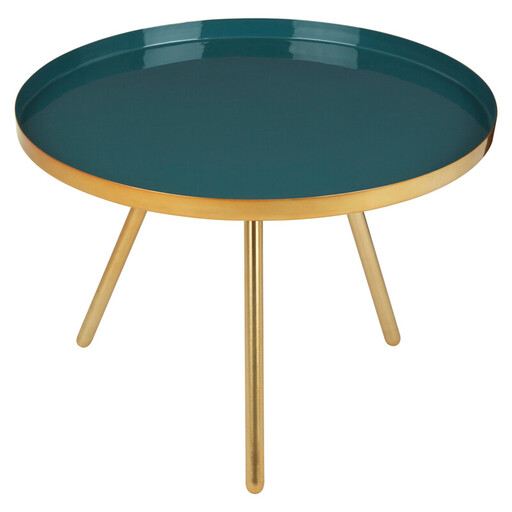
Why this product suits the profile: The round tabletop measures 68 × 68 cm and the height is 40 cm. This model combines a green enamel top with a gold-coloured iron frame, making it suitable as an accent, coffee or side table.
The manufacturer’s stated capacity of 8 kg provides a clear limit for books, drinks and decorative objects. According to the product information, the smooth surface can be cleaned with a damp cloth.
Iron construction; supplied assembled; open three-leg design and wipe-clean enamel surface.
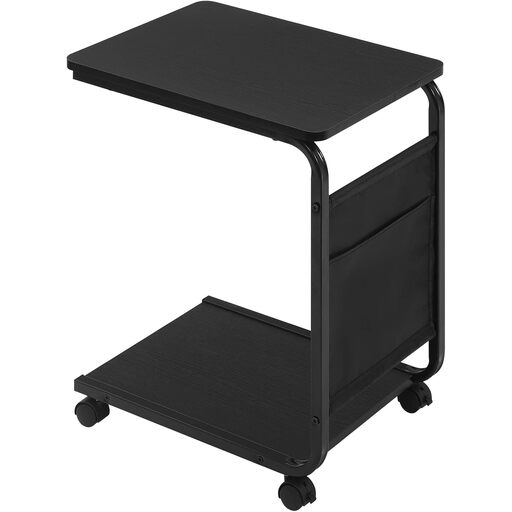
Why this product suits the profile: The C-shaped design, measuring 50 × 35 × 62 cm, can be pushed up to a sofa or bed. Two shelves, a side pocket and four castors support use as a laptop table, sofa table or bedside table.
According to the product information, the maximum static load is 4.5 kg. Two of the four nylon castors have brakes; these should be applied when working or placing hot drinks on the table.
C-shaped design; two shelves, side pocket and four 360-degree castors with two locking brakes.
In the living room, a model with a wipe-clean surface and enough storage space is practical. A coffee table is usually positioned centrally and should not restrict walkways. A small table beside an armchair, on the other hand, can be narrower.
In the bedroom, the right height, shallow depth and stable construction are important. As a bedside table, the model should not make access to the bed more difficult because of protruding castors or sharp edges. In the office, a C-shaped side table can be a flexible addition for a laptop or documents. In the hallway, a compact design that leaves the walkway clear is recommended.
We have put together a complete, regularly updated list of products that fully meet these strict selection criteria and the safety regulations applicable in the EU.
The tabletop should be roughly level with the armrest or slightly below it. The key is ensuring that drinks, books or a lamp are within easy reach. Measure the seat height and armrest before buying rather than relying solely on product images.
That depends on how it will be used. A lower load capacity is often sufficient for a remote control, book and drink. For a laptop, monitor or several heavy items, you must observe the stated maximum load for both the upper and lower shelves. A side table should never be used as a seat or step.
Castors make it easier to move the table between the sofa, bed and workspace. However, they can affect stability. Models with locking brakes can be secured when needed. On a side table with castors, the brakes should be applied during use, and the castors should be checked regularly to ensure they move freely.