
Lieferung heute & morgen

Qualitätsgarantie

Willkommens-Angebote freischalten: KOSTENLOSE Lieferung | Bis zu 80 % RABATT | Kostenlose 30-Tage-JoyPlus-Testphase
App herunterladen
A sideboard is more than just a storage unit. It defines a room's character, creates order, and serves as a display surface. But the selection is vast, and not every model lives up to its product photos. Before you make a decision, it's crucial to understand the common pitfalls that can lead to disappointment and unnecessary expense.
As your Joybuy Product Recommendation Officer, I'm here to help you separate the wheat from the chaff. In this guide, we'll focus on the objective criteria that truly matter and steer clear of typical marketing traps.
To avoid buyer's remorse, you should focus on verifiable facts. Three core aspects are crucial for the longevity and practicality of your new piece of furniture.
The material determines stability and lifespan. While MDF (Medium-Density Fibreboard) offers a good balance of price and stability, furniture with a steel frame or bodies made entirely of metal are often more robust and less susceptible to moisture.
Always check the specifications for the maximum load capacity of the top surface and individual compartments. This is especially important if the piece will be used as a TV stand for a large television or for storing heavy items like books or dishes. Insufficient load-bearing capacity will inevitably lead to sagging shelves.
Measure the available space precisely before you order. Consider not only the width and height but, most importantly, the depth.
Think carefully about what you want to store. The choice between open compartments, doors, and drawers directly impacts organization and user convenience.
Here are a few models that, based on their specifications, are well-suited for specific user profiles.
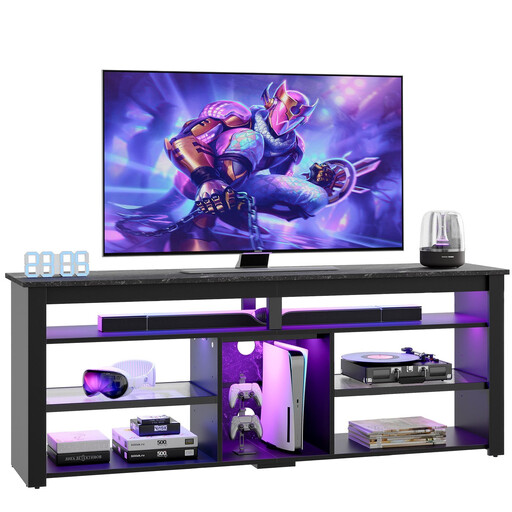
Why it's a great fit: This lowboard is tailored to the needs of gamers and movie fans. It offers dedicated open compartments for consoles and receivers, which prevents the devices from overheating.
It solves the functionality problem of many media units with open compartments and a construction rated by the manufacturer to support TVs up to 70 inches and a load of 80 kg.
Integrated, remote-controlled RGB LED lighting with a variety of modes, as well as adjustable acrylic shelves.
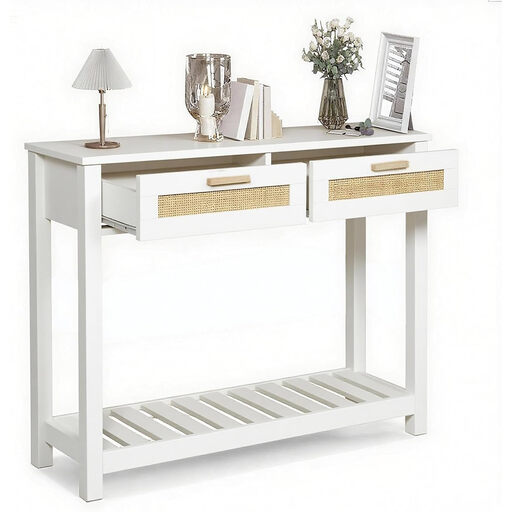
Why it's a great fit: Ideal for entryways or tight corridors. The design combines closed storage in drawers with an open shelf for tidy yet accessible organization.
It solves the dimension deception by being explicitly designed as a narrow solution with a depth of just 30 cm, ensuring it won't block walkways. The included anti-tip kit enhances safety.
The combination of two drawers for small items and a lower shelf offers a versatile storage layout in a small footprint.
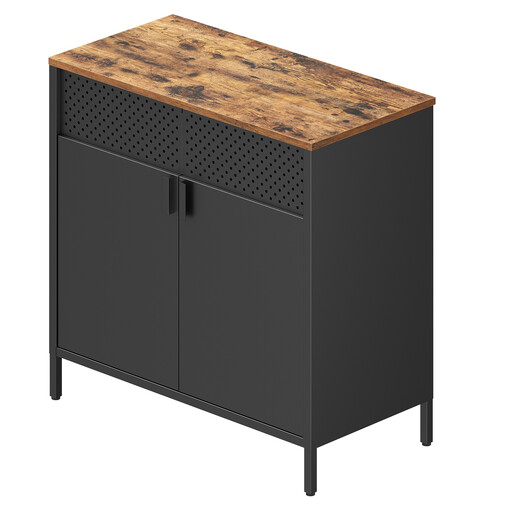
Why it's a great fit: This sideboard is a versatile all-rounder for the living room, dining room, or office. Its minimalist, modern design complements many interior styles.
It addresses the material trap with a steel body that the manufacturer states is moisture-resistant and easy to clean. The adjustable shelf ensures functional flexibility.
The perforated metal design of the door provides good ventilation for the interior and gives the cabinet an industrial character. The maximum static load capacity of the top is rated at 50 kg.
We have compiled a complete, up-to-date list of products that fully meet these strict selection criteria and all relevant safety regulations.
Although the terms are often used interchangeably, there are traditional differences. A sideboard is typically long and low, often with a mix of cabinet doors and drawers. A chest of drawers is usually taller and narrower, consisting primarily of drawers. A credenza is historically found in the dining room for storing dishes; it often resembles a sideboard but may have taller legs.
The ideal height depends on your seating height. The centre of the television screen should be roughly at eye level when you are sitting on the sofa. For most living rooms, a lowboard with a height between 40 cm and 60 cm is a good choice.
It is strongly recommended, especially for taller or narrower pieces of furniture, to anchor them to the wall using the provided anti-tip kit. This is an important safety measure to prevent tipping, particularly in households with children or pets. Many manufacturers include the necessary mounting hardware. Check the product description for the inclusion of such a kit.