
Lieferung heute & morgen

Qualitätsgarantie

Willkommens-Angebote freischalten: KOSTENLOSE Lieferung | Bis zu 80 % RABATT | Kostenlose 30-Tage-JoyPlus-Testphase
App herunterladen
A new sideboard can transform a room, creating much-needed storage while serving as a stylish statement piece. But the selection is vast, and not every model lives up to its promises. Weaknesses often only become apparent after a few months of use. As your Joybuy Product Recommendation Officer, I'll help you identify the common pitfalls and make an informed decision that suits your needs and your living space.
Many buyers focus on design and price, overlooking crucial quality features. This often leads to disappointment. Pay special attention to these three points:
To avoid these problems, you should check three core parameters before buying. These largely determine the longevity and functionality of your new piece of furniture.
The foundation of any good cabinet is its material. Most are made from MDF (Medium-Density Fibreboard) or particleboard. MDF boards are generally denser and more stable. However, the finish is crucial. A high-quality melamine coating or a meticulous paint finish protects the wood from moisture and scratches. This is especially important for a white sideboard, where discolouration and scratches are quickly visible, or for an oak-effect sideboard, whose grain needs to be protected.
Sturdy construction isn't a luxury; it's a necessity. Look for these features:
A good storage cabinet adapts to your needs, not the other way around. Adjustable shelves are a must-have for this. They allow you to customise the interior for tall books, dishes, or storage boxes. A thoughtful combination of open compartments, doors, and a cabinet with drawers offers the best solution for various items—from decor and table linens to the small odds and ends that create clutter.
To make your search easier, we have selected a few models based on these objective criteria for different user profiles.
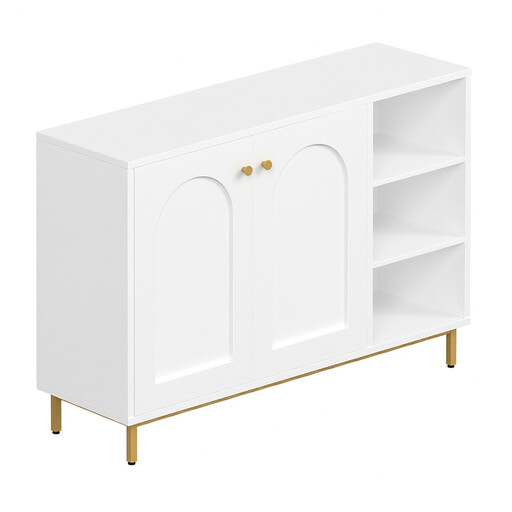
Why This Fits Their Persona: Ideal for users seeking a compact and moisture-resistant solution for a bathroom, hallway, or small kitchen. The elegant white and gold design visually enhances the space without appearing bulky.
The moisture-resistant MDF material and raised feet (12.5 cm) counter the problems of poor surface quality and instability in damp environments.
Adjustable shelves for a flexible interior layout; specifically designed for damp rooms.
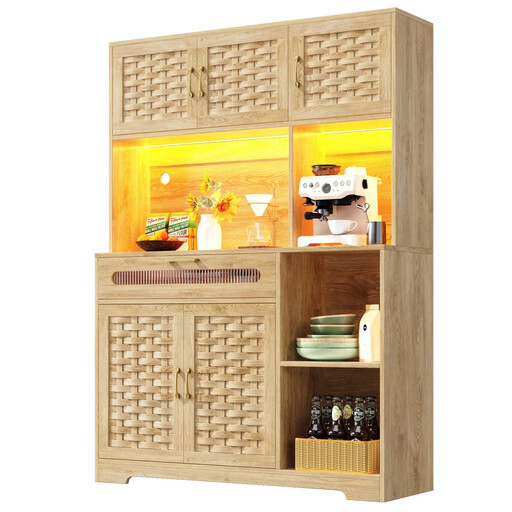
Why This Fits Their Persona: Perfect for anyone looking for a functional piece of furniture with modern technology and a distinctive design. This tall multi-purpose cabinet becomes a focal point in the kitchen or dining room.
The solid MDF construction and included anti-tip kit ensure stability. The damped hinges prevent loud slamming and are a testament to high-quality craftsmanship.
Integrated, app-controlled LED lighting; doors with a unique rattan-effect finish.
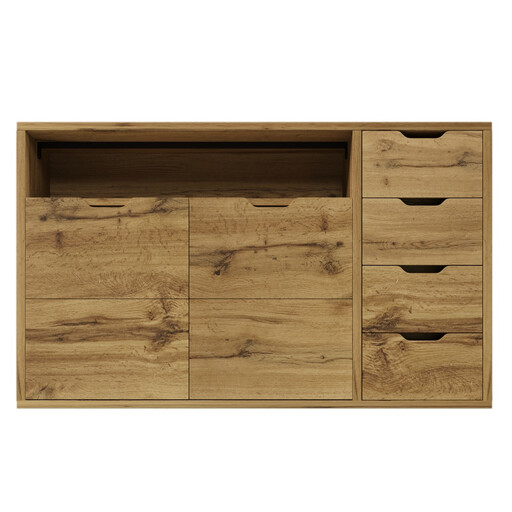
Why This Fits Their Persona: For households that need a classic and spacious credenza for the living room or hallway. The combination of doors, drawers, and an open compartment provides maximum organisation.
The height-adjustable shelves solve the problem of an impractical interior layout. The soft-close hinges and the included anti-tip kit address the issues of stability and quality.
Generous storage space with a width of 150 cm; flexible layout with 4 drawers, 2 doors, and adjustable shelves.
We have compiled a complete, up-to-date list of products that fully meet these strict selection criteria and German safety regulations.
1. How do you ensure a sideboard is stable and won't tip over? The most important step is to use the included anti-tip kit to secure the furniture to the wall. This is essential, especially in households with children. Also, make sure the sideboard stands on a level surface. For uneven floors, small wedges or adjustable furniture feet can help level the piece.
2. What is the difference between a sideboard, a chest of drawers, and a credenza? Although the terms are often used interchangeably, there are traditional differences. A sideboard is typically long and low, often with cabinet doors and few or no drawers, and is usually found in the dining or living room. A chest of drawers (or dresser) is generally taller and narrower and consists mainly of drawers (cabinet with drawers). A credenza is very similar to a sideboard but is classically used in the kitchen or dining room for serving food and storing dishes. Today, the lines between them are blurred.
3. How do you properly care for a sideboard's surface? For most coated surfaces (e.g., on a white sideboard or one with an oak finish), a soft, slightly damp cloth is sufficient. Do not use harsh cleaners or abrasive agents, as they can damage the protective layer. Always wipe up spills immediately to prevent moisture from seeping into the joints.