
Lieferung heute & morgen

Qualitätsgarantie
App herunterladen
Kategorien
A sideboard is a versatile piece of furniture, primarily used for storage, that is distinguished by its characteristic shape: it is wider than it is tall. This definition sets it apart from highboards (taller than they are wide) and lowboards (very low, often used as a TV cabinet). Choosing the right model depends on your specific requirements for storage space, material, design, and functionality. This article analyses the technical criteria that play a role in the decision-making process.
The decision to purchase a sideboard should be based on an analysis of objective parameters. These include material properties, construction features, and functional equipment.
The longevity and aesthetic of a sideboard are largely determined by the material used. Common materials include:
The practicality of a sideboard is defined by its construction.
Modern sideboards often offer technical enhancements that increase user convenience.
The following models have been selected for their specific technical specifications and functional designs.
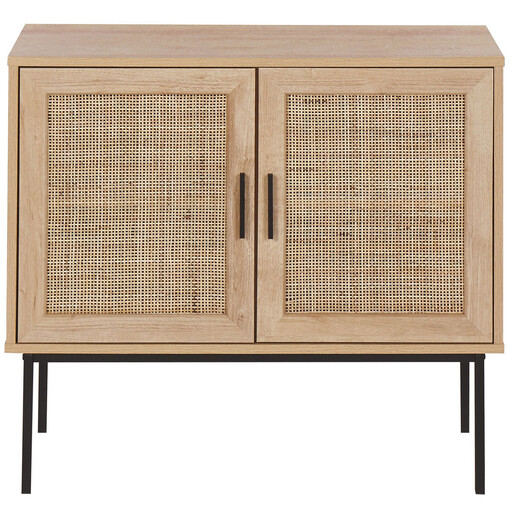
Why we recommend this product: This model combines an engineered wood construction with a natural rattan weave front. This material combination is not only visually appealing, but the rattan doors also allow for light air circulation inside, which can be beneficial for storing textiles or electronics. The solid rubberwood legs ensure a stable footing and provide floor clearance, which simplifies cleaning.
→ See product: Beliani Rattan 2 Door Sideboard
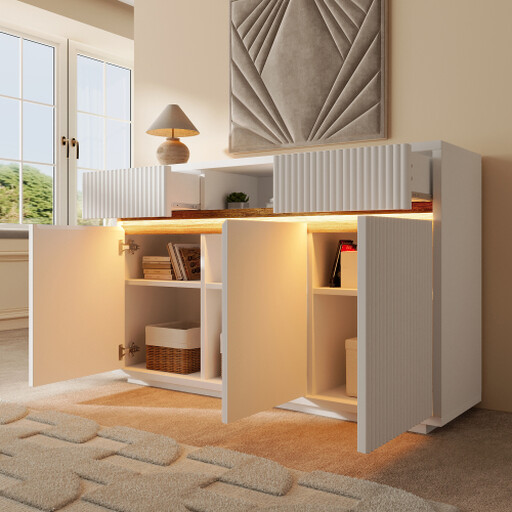
Why we recommend this product: This white sideboard stands out with its integrated and versatilely controlled LED strip. The lighting can be managed via remote control, app, or a button, and offers timer functions as well as dynamic light modes. The storage configuration is highly flexible, with two drawers, an open compartment, and three doors with height-adjustable shelves. The handleless look, featuring rounded interior door edges, accentuates its modern design.
→ See product: White Sideboard with LED
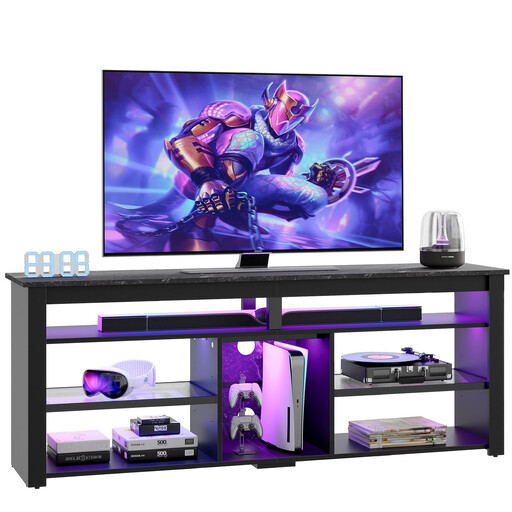
Why we recommend this product: This lowboard is specifically designed as a gaming sideboard and media centre. With a width of 160 cm, it accommodates TVs up to 70 inches and has a high top surface load capacity of 80 kg. According to the manufacturer, the RGB LED lighting features 366 dynamic modes. The open structure with seven shelving compartments, some made of acrylic, ensures good ventilation for game consoles and other electronic devices.
→ See product: Bestier Lowboard TV Cabinet
The products featured cover specific requirement profiles. If these models do not exactly match your preferences for size, colour, or layout, a wider selection of furniture is available. Different designs, from minimalist lowboards to spacious credenzas, offer solutions for various room concepts and storage needs.
You can find more models and styles in our credenza table category.
1. What is the difference between a sideboard and a chest of drawers? The primary difference lies in their shape and typical structure. A sideboard is generally wider than it is tall and often combines doors with drawers or open compartments. A classic chest of drawers is usually taller and narrower, consisting almost exclusively of drawers (chest with drawers). However, the lines are often blurred, and many modern pieces combine features of both types.
2. How tall is a typical sideboard? A sideboard's height varies but generally ranges between 70 cm and 100 cm. Models below this height are often called lowboards or TV stands, while furniture taller than 100 cm is more likely to be classified as a highboard. The choice of height depends on the intended use and the desired eye level, for example, in relation to a sofa set or a dining area.
3. Which materials are easy to maintain for a sideboard? Surfaces made of engineered wood (MDF, particleboard) with a high-quality melamine resin coating or lacquer are particularly low-maintenance. They are scratch-resistant and can be easily cleaned with a slightly damp, lint-free cloth. In contrast, solid wood requires more regular care with special wood oils or waxes to protect the material from drying out and staining.