
Lieferung heute & morgen

Qualitätsgarantie

Willkommens-Angebote freischalten: KOSTENLOSE Lieferung | Bis zu 80 % RABATT | Kostenlose 30-Tage-JoyPlus-Testphase
App herunterladen
A sideboard can provide extra storage in your living room, dining room, hallway, bathroom or office. To avoid ending up with an impractical storage cabinet, though, it’s worth looking beyond colour and design before you buy. Key considerations include the space available, the properties of the materials, the internal layout and secure installation.
Product images can make it difficult to judge the actual size of a piece of furniture. A cabinet may look compact in a photograph but need plenty of clearance in front of its doors or drawers. Always check:
A space-saving cabinet won’t necessarily fit every alcove. If you’re buying a TV cabinet, also check that there’s enough room for your screen, speakers and cables.
Terms such as ‘easy to care for’ and ‘hard-wearing’ don’t tell you much about how a product will perform in practice. Wood-based materials such as MDF, MFC and chipboard vary in their surface finish and resistance to moisture. A metal cabinet may be easy to clean, but it still needs suitable wall fixings and a level surface.
For a bathroom, choose a bathroom cabinet made from moisture-resistant materials, with enough clearance from the floor. An ordinary living room cabinet shouldn’t be exposed to splashes over time unless the manufacturer specifically says it’s suitable.
A cabinet with doors keeps its contents out of sight, but that doesn’t necessarily mean its internal layout will suit your needs. Check how many shelves it has, how much weight they can support and whether their height can be adjusted. A cabinet with an adjustable shelf is easier to adapt to files, kitchen accessories, towels or multimedia equipment.
As well as the external dimensions, check the load capacity. According to the product information, the JOYFURNOS model’s top can support a maximum static load of 50 kg. This applies to a load distributed evenly across the surface and shouldn’t be confused with the capacity of an individual compartment.
A freestanding cabinet should stand securely on a level floor. An anti-tip restraint is important for taller furniture and in homes with children. Use suitable fixings for your wall type. The anti-tip kit supplied with a product won’t necessarily be suitable for every kind of wall.
Steel surfaces are often resistant to everyday dirt and can be cleaned with a soft, slightly damp cloth. Avoid abrasive cleaning products on painted or high-gloss fronts, as they can scratch the surface.
For a kitchen cabinet or dining room sideboard, choose a surface that can be wiped clean regularly. In a bathroom, moisture-resistant materials, raised feet or sufficient clearance from the floor are useful. Even so, try to avoid leaving standing water on the surface.
Closed compartments protect their contents from dust. Open compartments make things easy to reach and are ideal for books, baskets or decorations. A pegboard or perforated back or side panel can improve ventilation and provide extra space for hooks.
If you’re buying a TV cabinet, consider cable access and the heat generated by your devices. Electronic equipment needs enough clearance and shouldn’t be used in a fully enclosed, poorly ventilated compartment.
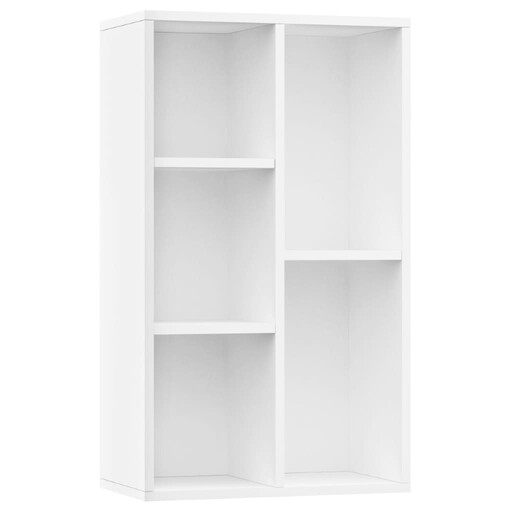
Why it suits this profile: At just 25 cm deep, it’s a good fit for smaller rooms, hallways or narrow spaces. You can use it upright as a bookcase or horizontally as a sideboard.
The external dimensions and open layout are clearly specified, making it easier to judge how much space you’ll need before buying.
Five open compartments, a white finish, flexible upright or horizontal use, and easy cleaning with a damp cloth.
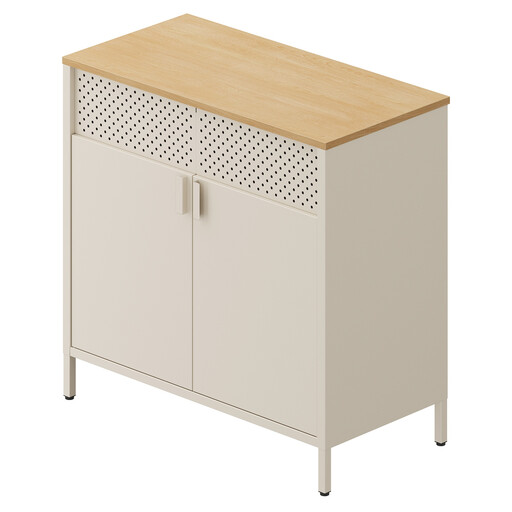
Why it suits this profile: This model combines concealed storage with an adjustable shelf. It can be used as a living room cabinet, TV cabinet or office storage cabinet.
The dimensions of 40 × 80 × 76 cm, steel construction and included anti-tip kit are all clearly specified.
Moisture-resistant steel frame, adjustable shelf, maximum static load of 50 kg on the top and perforated panels for ventilation.
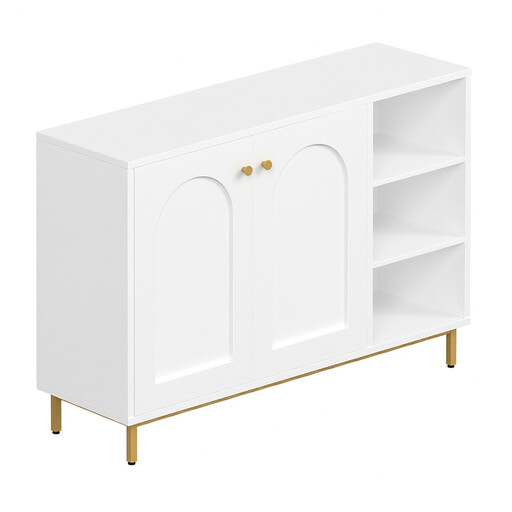
Why it suits this profile: The combination of doors, open shelves and three adjustable shelves makes it suitable for the bathroom, kitchen or utility room.
The raised cabinet stands 12.5 cm above the floor, reducing direct contact with splashes. Even so, wipe up any water promptly.
Approximate dimensions of 35.5 × 100.5 × 75.5 cm, three adjustable shelves, two doors and open compartments for everyday essentials.
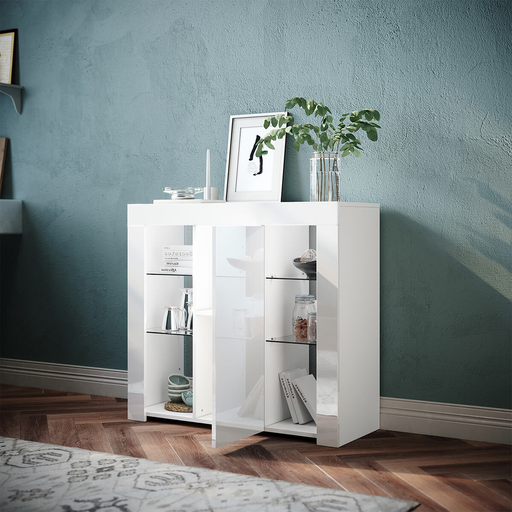
Why it suits this profile: The high-gloss front and adjustable LED lighting make it a good fit for living rooms, dining rooms or kitchens where the sideboard needs to work as both storage and a design feature.
The LED components are listed as part of the product’s features. It needs to be installed on a stable, level surface, and the electronics should be kept away from moisture.
MDF and MFC construction, dimensions of 90 × 35 × 83 cm, a white high-gloss finish and LED lighting with twelve adjustable colours.
We’ve put together a complete, regularly updated list of products that meet these strict selection criteria and fully comply with the safety regulations in force in the EU.
Before assembly, check that all the parts are included and read the instructions through carefully. Sort the screws and components according to their labels. For wall fixings, you’ll need wall plugs and screws suited to the surface. A tall or heavily loaded cabinet should always be secured to prevent it tipping over.
A soft, slightly damp cloth is all you need to clean many surfaces. Don’t leave liquids sitting on the surface. Avoid using scouring pads on high-gloss fronts. Keep an eye out for scratches on metal cabinets, as damaged coatings can make some materials more prone to corrosion.
A depth of around 25 to 35 cm may be enough for narrow hallways or small rooms. Crockery, larger storage boxes and multimedia equipment often need more depth, so check the internal dimensions carefully. Make sure the doors can open fully and that walkways remain clear.
First, make sure the furniture is level, then use the anti-tip restraint provided. Wall plugs and screws must be suitable for the type of wall, such as concrete, brick or plasterboard. If you’re unsure, ask a suitably qualified person to check the wall and fixings.
Its lifespan depends on the materials, load, assembly and care. Distributing the load evenly and staying within the manufacturer’s recommendations, keeping surfaces dry and checking the fixings regularly can all help keep it in good condition. Don’t continue using the furniture if you notice damage or loose fixings.