
Lieferung heute & morgen

Qualitätsgarantie

Willkommens-Angebote freischalten: KOSTENLOSE Lieferung | Bis zu 80 % RABATT | Kostenlose 30-Tage-JoyPlus-Testphase
App herunterladen
Choosing a new sideboard for your living room might seem simple at first. However, the vast selection of designs, materials, and terms like credenza, chest of drawers, or lowboard can quickly become overwhelming. Often, an attractive exterior hides quality defects that only become apparent with daily use. This guide will help you identify the crucial features and find a piece of furniture that impresses in both style and function.
Many buyers focus primarily on design and price, overlooking critical construction details. This often leads to disappointment and unnecessary expenses. Pay close attention to these three points:
To avoid a bad purchase, you should check three key aspects before making a decision. These largely determine the quality, longevity, and utility of your new piece of furniture.
Most modern sideboards are made from engineered wood, such as MDF or particleboard. This is not a disadvantage in itself, as long as the quality is right.
A sideboard must not only look good but also stand firmly and be able to support its intended load.
The functionality of a sideboard is revealed in its details. Whether it's a lowboard, highboard, or a classic chest of drawers, these elements make all the difference:
Instead of overwhelming you with an endless list, we have selected a few models that meet specific requirements and incorporate the quality features mentioned.
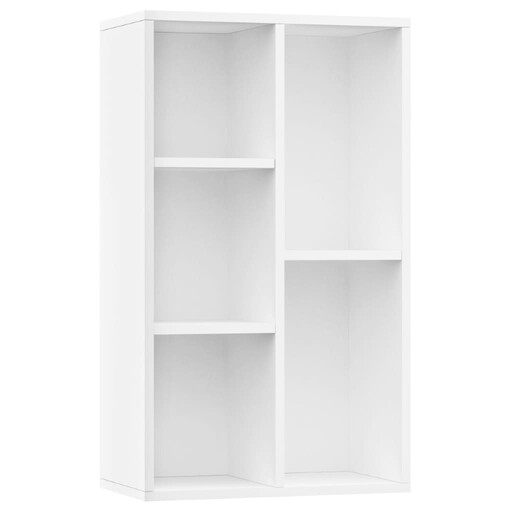
Why it's a great fit: Perfect for a first apartment or smaller rooms. The simple, white design is timeless, and its compact form is extremely versatile. It can be used horizontally as a lowboard or vertically as a narrow shelf, adapting flexibly to changing needs.
Instead of relying on complex but unstable mechanisms, this model focuses on a simple, open, and therefore stable construction. The smooth surface of the engineered wood is easy to clean and less susceptible to damage than cheap foils.
High flexibility through horizontal or vertical use. The open compartment structure is well-suited for books, decor, or media devices.
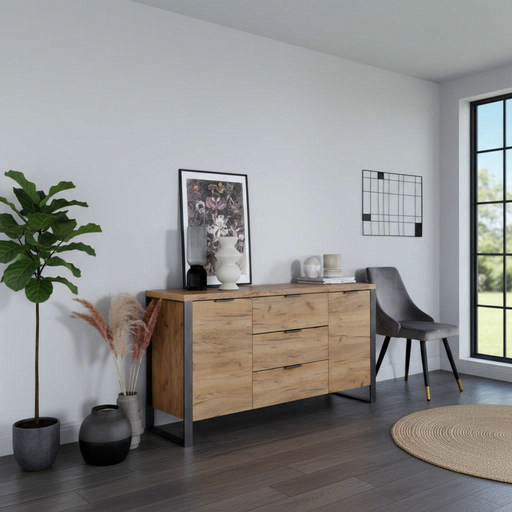
Why it's a great fit: Perfect for anyone looking for a modern statement piece. The combination of a Montana oak-effect finish and a black metal frame embodies the popular industrial sideboard look. At 150 cm wide, it offers ample storage and a generous surface area.
The sturdy metal frame ensures high stability, avoiding the pitfall of wobbly constructions. The 3D-printed surface creates a realistic wood look that is more durable than simple foils. The shelves are adjustable.
Generous storage space with 2 doors and 3 drawers. An integrated cable pass-through in the back panel allows for neat placement of media devices.
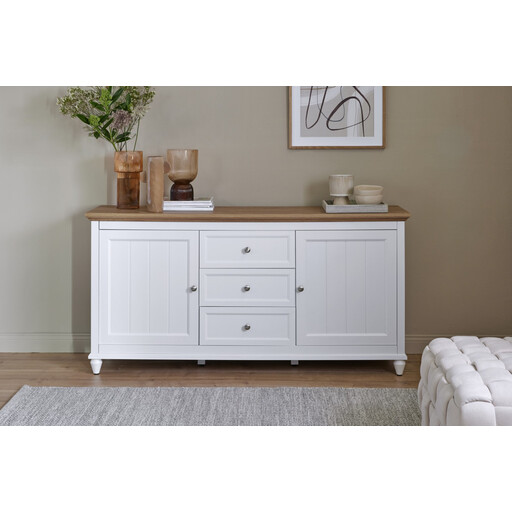
Why it's a great fit: This sideboard combines coziness with functionality. The combination of a Montana oak-effect top and a white body with framed fronts is characteristic of the modern farmhouse sideboard style and creates a welcoming atmosphere.
This isn't just about looks: the soft-close drawer mechanism prevents loud slamming and provides a high-quality feel, a feature often missing in cheaper models. The extra-thick material and sturdy feet ensure a solid construction.
Combines a cozy design with modern features like a cable pass-through and soft-close drawers. The 3D-printed surface provides an authentic wood appearance.
We've compiled a complete, up-to-date list of products that fully meet these strict selection criteria and safety standards.
The terms mainly refer to the height of the furniture. A lowboard, as the name suggests, is very low (usually under 60 cm) and is often used as a TV stand. A classic sideboard has a medium height, typically between 70 cm and 100 cm. A highboard is taller than a sideboard but shorter than a conventional cabinet, offering more vertical storage space at eye level.
The load capacity varies greatly depending on the construction and material. You can always find a reliable figure in the product details under "maximum load capacity of the top panel". For light decorations, 20-30 kg is often sufficient. If you plan to place a large television or heavy objects on it, you should choose a model whose top panel is rated for at least 40 kg.
A high-quality surface feels smooth but not "plasticky." Pay attention to the edges: are they cleanly finished without visible seams? The product description often provides clues. Terms like "melamine resin-coated" indicate higher quality and durability than a simple "foiled" or "paper-coated" surface.