
Lieferung heute & morgen

Qualitätsgarantie

Willkommens-Angebote freischalten: KOSTENLOSE Lieferung | Bis zu 80 % RABATT | Kostenlose 30-Tage-JoyPlus-Testphase
App herunterladen
By a Joybuy Product Recommendation Officer, July 28, 2026
Finding the right toy car can be more complicated than it first appears. Many parents and grandparents know the problem: a vehicle looks sturdy and detailed on the box, but it quickly turns out to be a disappointment. To help you avoid buyer's remorse, we'll highlight the key features that define high-quality SIKU toy cars and show you what to look for when making your selection.
Before we dive into the details, it's helpful to understand the two most common problems that can spoil the fun and lead to unnecessary expense.
A good model car should therefore not only be visually appealing but also offer well-designed features and durable construction.
To ensure you get a durable and engaging toy, you should check three key parameters. These criteria separate short-lived toys from models that will bring joy for years to come.
The crucial difference often lies in the material. While many toys are made entirely of plastic, quality manufacturers like SIKU use a combination of metal and plastic. A metal toy car, usually made of die-cast zinc, offers significantly greater stability and a satisfying heft.
A durable toy car for kids is an investment that pays off with a longer lifespan.
The scale indicates the size ratio of the model to the original vehicle. It is crucial for the level of detail and compatibility within a collection. The most common scales for SIKU vehicles are:
For collectors, SIKU collector's models in a uniform scale are particularly appealing, while for children, the overall size and play features are often the main priority.
Moving parts are the heart of an interactive toy. They allow children to act out real-life scenarios and unleash their creativity. Look for the following features:
We have selected several SIKU models based on these objective criteria to suit different needs and play styles.
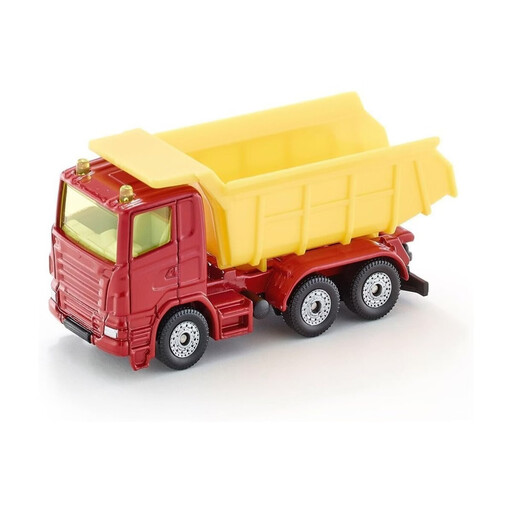
Why It's a Great Fit: Ideal for younger children and as a first model. It's compact, extremely durable, and focuses on one central, easy-to-understand play feature—loading and unloading the dumper. Perfect for use in the sandbox or on the play mat.
The metal cab and chassis withstand even intense play, thus avoiding the material trap. The functional tilting bed provides a clear play incentive and avoids the functionality deception.
High durability thanks to its metal construction and a simple yet engaging play feature.
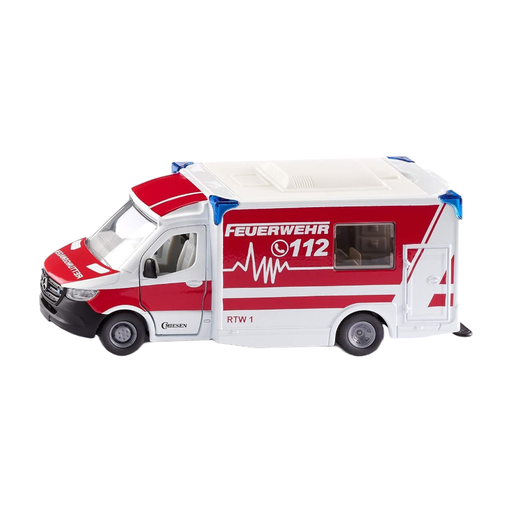
Why It's a Great Fit: For children who love rescue missions. This model in the SIKU 1:50 scale offers more details and accessories, like a stretcher and a spineboard, enabling deeper and more realistic role-playing.
This SIKU ambulance model goes far beyond simple toys with its opening doors, removable roof, and accessories, thus avoiding the functionality deception. The sturdy metal body ensures stability.
A high level of detail and included accessories encourage realistic and long-lasting role-play.
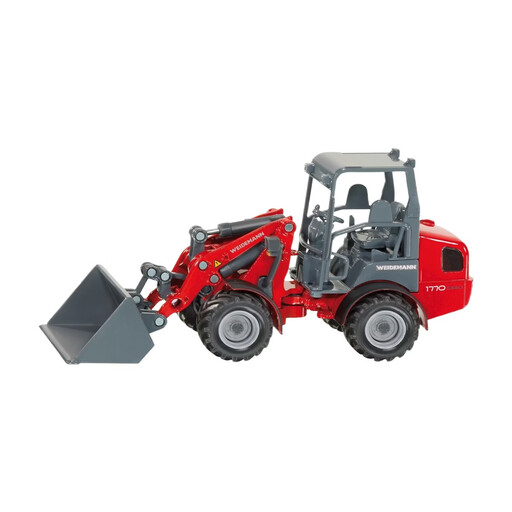
Why It's a Great Fit: Perfect for children who are fascinated by farms and construction sites. In the larger SIKU 1:32 scale, this model offers realistic features like an articulated joint for maneuverability and a fully movable loading arm.
The precise functionality of the movable loading arm and articulated joint offers high play value that goes far beyond simple pushing. The robust metal construction is designed for "farm" use in the playroom.
Realistic functions and compatibility with the SIKU FARMER 1:32 scale series for building entire play worlds.
We've compiled a complete, up-to-date list of products that fully meet these strict selection criteria and all applicable safety regulations.
Most SIKU models are recommended by the manufacturer, Sieper GmbH, for children ages 3 and up. This is due to small parts that could pose a choking hazard to younger children. It is always important to check the specific age recommendation and warning labels on the product packaging. For younger children, there are specially designed toys with larger, rounded parts.
To clean SIKU vehicles, a dry or slightly damp cloth is usually sufficient. Avoid harsh cleaning agents or full immersion in water, as this can damage the metal parts, stickers, and paintwork. For heavy soiling, such as after playing in the sand, the wheels can be carefully cleaned with a soft brush.
The scale describes the size ratio of the model to the real vehicle. For example, a scale of 1:32 means the model is 32 times smaller than the original. A smaller number after the colon (e.g., 1:32) indicates a larger model, while a larger number (e.g., 1:87) denotes a smaller model. The choice of scale affects the level of detail and the size of the toy.