
Lieferung heute & morgen

Qualitätsgarantie

Willkommens-Angebote freischalten: KOSTENLOSE Lieferung | Bis zu 80 % RABATT | Kostenlose 30-Tage-JoyPlus-Testphase
App herunterladen
SIKU toy cars combine compact dimensions with metal bodies, plastic parts and themed details. But before buying, parents and relatives face a practical question: which model suits the child’s age, the kind of play they enjoy and the collection they already have? A SIKU police car has different requirements from a SIKU tractor or a lorry with a trailer.
An intricately printed body tells you little about whether a model is suitable for regular play. Check the information on materials, moving parts and tyres. The SIKU models featured here often have metal bodies and plastic attachments. Opening doors, tailgates or movable loading equipment can add to the play possibilities, but may be damaged if handled roughly.
Many toy vehicles for children are intended for ages 3 and over, but still contain small parts. An age recommendation is not just a minor marketing detail: it needs to suit the child’s stage of development. Direct adult supervision is sensible for models with trailers, detachable mowers or small accessories.
A tank building set with lots of small parts or an RC tank that fires water-gel balls, on the other hand, is aimed at older children. The CAYI M4 Sherman model in the range is offered for children aged 6 and over. The 4DRC Water Bullet Tank is also intended for older children and must not be used without supervision because of its gel balls.
SIKU models are not automatically the same size as one another. For example, the SIKU Dodge Challenger SRT County Sheriff is described as being in 1:55 scale, while the SIKU Mercedes-Benz Sprinter ambulance is listed in 1:87 scale. If you want to create a shared play world, check length, width and height, not just the vehicle type.
Metal bodies can provide a sturdy base for normal use. Plastic is often used for tyres, attachments, trailer couplings and moving components. Before buying, it’s worth checking the product description:
The materials listed are no substitute for checking the individual product. Do not continue using damaged parts.
Many of the SIKU models mentioned are listed as suitable for ages 3 and over. However, the warning about small parts that could be swallowed still applies. These models should not be given to children under 3. Supervision is recommended for younger children aged 3 and over, particularly when playing with trailers, accessories and small moving parts.
Military toys come with additional points to consider. A building set with 740 or 899 pieces is not comparable to a traditional metal model. Building it takes more time and is intended for children of an appropriate age and with a suitable level of interest. An RC tank also involves a rechargeable battery, charging time, range and the safe use of gel balls.
A SIKU emergency vehicle, SIKU fire engine, SIKU police car or ambulance is ideal for role play. A SIKU tractor with detachable equipment is a good choice for farm scenarios. Construction site fans might prefer a SIKU lorry with a trailer and a working tipper or container feature.
If you’re mainly buying a model to display, consider the printed finish, vehicle type and how much space it will need. Some vehicles appeal to adult collectors, while also being approved for children aged 3 and over. Always follow the specific manufacturer’s information.

Why it suits this buyer profile: This compact emergency vehicle is ideal for first role-play adventures and can be combined with other SIKU models. It doesn’t need batteries and, according to the product information, is intended for children aged 3 and over.
The product details clearly state the materials, dimensions, age recommendation and safety warning. This makes it easier to check before buying whether the vehicle is suitable for the intended age group.
Metal and plastic construction, rolling tyres, 8.5 cm long and no batteries required.
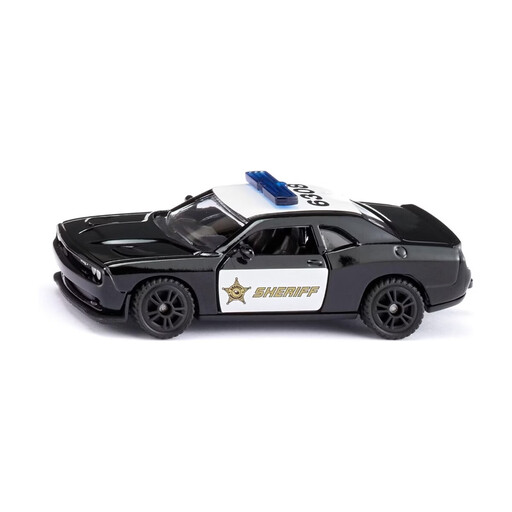
Why it suits this buyer profile: This model combines a 1:55 scale metal body with County Sheriff markings, rubber tyres and opening doors. It’s suitable for police role play and makes a compact addition to a collection.
The product description covers more than just the decoration: it also lists the doors, tyres, trailer coupling and materials. This helps you get a realistic idea of what the model can do.
Metal body, rubber tyres, opening doors, working trailer coupling and no batteries required.
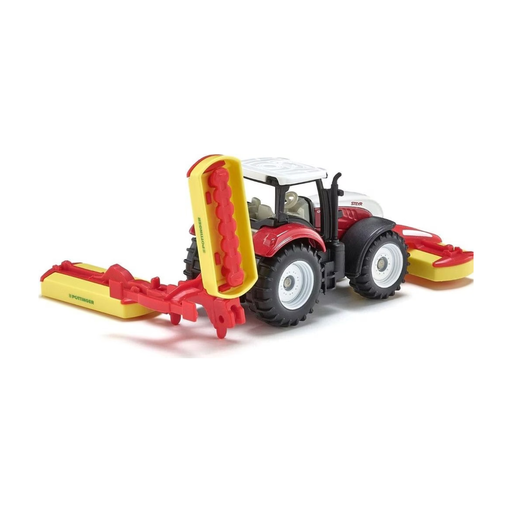
Why it suits this buyer profile: This model is for children who want to act out farm scenarios involving several stages of work. The mowers can be detached, and the rear mower folds up for transport.
The feature details make it clear that this is more than just a tractor with printed decoration. You can check in advance whether you want detachable and foldable attachments.
Metal and plastic construction, detachable mowers, a folding rear mower and a model length of 11.3 cm.
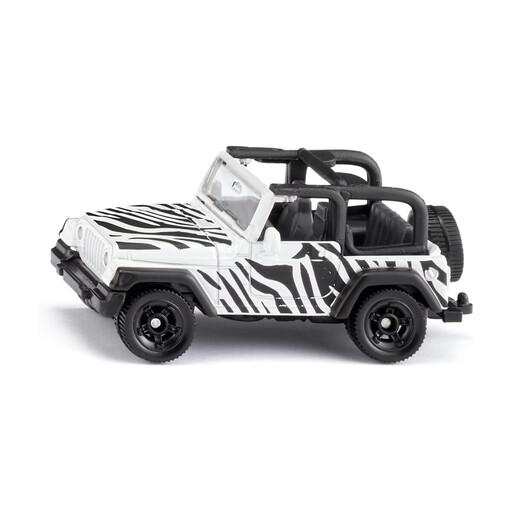
Why it suits this buyer profile: The Jeep Wrangler pairs a compact design with black and white safari styling. You can play with it, connect it to compatible SIKU trailers or display it in a vehicle cabinet.
The description lists the vehicle’s dimensions, materials, tyres and trailer coupling. This makes it easier to see whether the model is better suited to a compact collection or combined play scenarios.
Metal body, large plastic wheels, compact dimensions of 7.5 cm in length and a working trailer coupling.
We’ve put together a complete, regularly updated list of products that meet these strict selection criteria and fully comply with the safety regulations in force in the EU.
According to the product information, many of the SIKU toy cars mentioned are intended for children aged 3 and over. Children under 3 should not use them because they contain small parts. Depending on the model, supervision may be sensible for children aged 3 and over, especially when playing with trailers, detachable parts and moving attachments.
Models with metal bodies and plastic parts are designed for normal rolling play and imaginative scenarios. They should not be thrown, put under excessive strain or submerged in water. Check moving doors, couplings and mowers regularly for loose parts.
The classic SIKU vehicles mentioned here, such as the ambulance, Jeep, tractor and Dodge Challenger, do not need batteries. An RC tank, on the other hand, needs a rechargeable battery and a charger, or the components supplied with that particular model. Before buying, check the charging time, running time and safety information for the specific model.