
Lieferung heute & morgen

Qualitätsgarantie

Willkommens-Angebote freischalten: KOSTENLOSE Lieferung | Bis zu 80 % RABATT | Kostenlose 30-Tage-JoyPlus-Testphase
App herunterladen
Siku toy cars are a firm favourite with parents, grandparents and model car collectors, offering compact vehicles in a range of scales, materials and features. The selection spans from the classic VW Beetle model car to a BMW model car, sports cars and even remote-controlled drift cars. To make sure your purchase is right for its intended purpose, you shouldn't let colour and brand be the only deciding factors.
A model in 1:55 scale is noticeably more compact than a vehicle in 1:24 scale. For small play areas, travel or a space-saving collection, smaller miniature cars can be a sensible choice. However, if you prefer visible details and a larger body, it's worth checking the stated external dimensions.
The scale indicates the ratio to the original, but doesn't automatically tell you the actual product size. That's why the length, width and height measurements are more important than the model name alone.
Many Siku model cars have a metal body with plastic parts and rubber tyres. This can offer a different feel and stability compared with a fully plastic vehicle. However, moving parts such as doors, tow bars or spoilers are still components that can be damaged if handled incorrectly.
A Siku metal car isn't automatically suitable for every play situation. For younger children, you should pay attention to the age recommendation, while collectors may also want to consider moving details, paintwork and display space.
A classic Siku vehicle usually doesn't need batteries and is pushed or moved around a play area. An RC drift car or a remote-controlled racing car, on the other hand, requires a rechargeable battery, charging accessories and plenty of space. What's more, running time, range and suitable surfaces differ significantly.
Before buying, you need to be clear whether you're looking for a compact vehicle for role play, a collector's model or an actively controlled RC car.
Pay attention to the specific material combination. The Siku 1557 VW Beetle and the Siku 1581 BMW M4 Racing 2016 are described as having a metal body with plastic parts. Rubber tyres can help with rolling on flat surfaces. For models with doors, rear spoilers or tow bars, you should check whether these features are actually included.
For children, models that can be used straight away without assembly or batteries are ideal. For collector cars, however, paintwork, scale and how faithfully the original is represented may be more important.
The Siku vehicles mentioned are recommended for ages 3 and up. The product information also warns about small parts and choking hazards. A toy car for ages 3+ should therefore not be used unsupervised by children below the stated age limit.
For an RC vehicle recommended for children aged 8 and over, you should also check the battery, charging time, controls and recommended environment. The information on the product page and packaging is what matters.
For Siku toy cars without batteries, a flat play surface is all you need. The Bugatti Chiron, for example, is described as having a friction drive. An RC drift car with 4WD drive, two sets of tyres and LED lighting, on the other hand, needs a charged battery and enough open space. According to the product description, the stated running time of the RC model is around 20 to 40 minutes per charge.
Tiles, smooth indoor floors and flat outdoor surfaces can behave differently depending on the tyre type. So it's worth checking the recommended use before you buy.
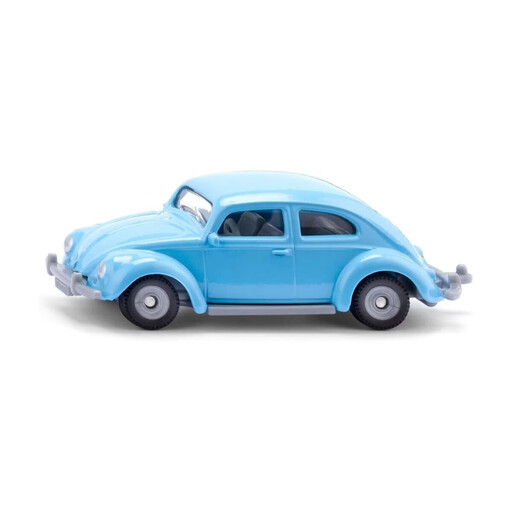
Why this product fits the profile: This light blue VW Beetle model car is compact, needs no batteries and can be used straight away on flat surfaces. It works well as a car gift for children aged 3 and over, or as a nostalgic model for adults.
The product data clearly states the material, dimensions, age recommendation and the fact that no batteries are needed. So you know exactly what you're getting and what it's designed for before you buy.
Metal body with plastic parts, rubber tyres, 1:24 scale and compact external dimensions of approximately 7.8 cm in length.
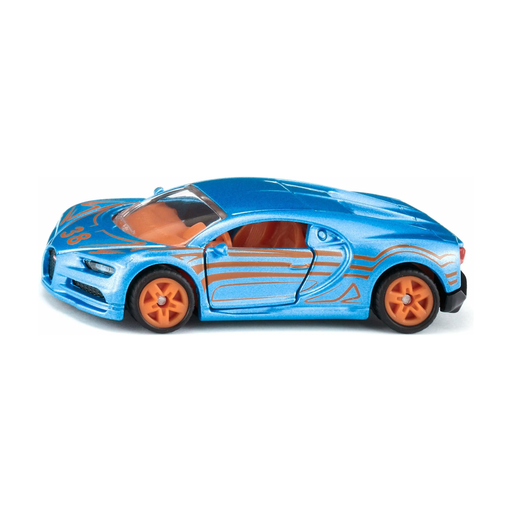
Why this product fits the profile: This sports car model combines a metal body with visible details, opening doors and a contrasting colour scheme. It suits collectors and children aged 3 and over who have an interest in distinctive vehicle shapes.
The features are clearly described, including the 1:50 scale, metal and plastic parts, rubber tyres and opening doors.
Friction drive, detailed interior, opening doors and a model length of approximately 8 cm.
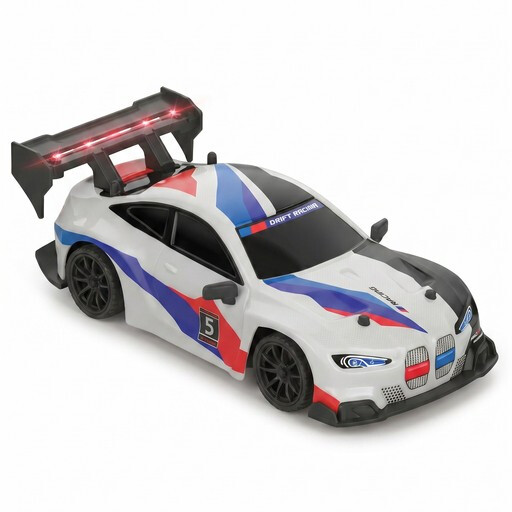
Why this product fits the profile: This remote-controlled racing car is aimed at users aged 8 and over who want to actively control speed, steering and drift manoeuvres. It's designed for flat indoor and outdoor surfaces.
The drive system, tyre sets, battery type, LED lighting and stated running time are all listed in the product data. This makes it easier to assess the accessories and where you can use it.
4WD drive, two interchangeable tyre sets, proportional speed control and integrated LED lighting.
We've put together a full, regularly updated list of products that meet these strict selection criteria and comply fully with EU safety regulations.
Many of the Siku models mentioned are recommended for children aged 3 and over according to the product information. Because of possible small parts, you should follow the age and safety instructions on the packaging and product page. Children under 3 should not be given these vehicles.
How long they last depends on how intensively they're played with, the surface and how the moving parts are handled. A metal body and rubber tyres are specific features, but they don't replace careful use. Doors, tow bars and spoilers shouldn't be forced. For cleaning the models mentioned, a slightly damp cloth is sufficient; they are not designed to be immersed in water.
Classic Siku model cars such as the VW Beetle, BMW i8 or Bugatti Chiron are described as not needing batteries. An RC drift car, on the other hand, requires a rechargeable battery. So before you order, you should decide between a manually moved model and a remote-controlled vehicle.