Silent film fans with a bright living room
You want to watch films during the day in front of tall windows and need a picture where dark scenes and intertitles remain visible despite the incoming light.


For watching silent films during the day, your choice of projector and screen should depend on how much window light reaches the screen and whether you can limit it. A high brightness rating or an ALR screen alone won’t guarantee a high-contrast picture; screen size, throw distance and seating position matter too. Also check the aspect ratio of the film version and make sure the intertitles are easy to read.
You want to watch films during the day in front of tall windows and need a picture where dark scenes and intertitles remain visible despite the incoming light.
Visible detail in dark scenes matters more to you than an overall bright picture. If your room allows, you can also protect the screen more effectively from ambient light.
You want a large picture but have little distance between the projector and the wall. The throw ratio and whether you might also need a screen will affect your choice.
A good fit if: you can keep light off the screen and have enough distance for the projector.
Trade-off: A higher quoted brightness won’t automatically prevent dark areas of the picture from looking washed out. Lamp models may also need a replacement lamp later on.
A good fit if: you have little space between the projector and the wall and can use a screen designed for ultra-short-throw projection in your chosen location.
Trade-off: The screen and projector need to be compatible. Directional screens may look different from side seats than they do from the central seating area.
A good fit if: a standard projector would need to sit too far from the wall, but you have room for a shorter throw distance.
Trade-off: A shorter throw solves a positioning problem, not the loss of contrast caused by window light.
Window light can reduce contrast on the screen. ProjectorCentral notes that ambient light can make dark areas of the picture look brighter, so check how the combination performs in the room where you plan to use it rather than relying on a brightness rating alone.
| Buying priority | What to check when buying | Who will find this particularly important? |
|---|---|---|
| Visibility in daylight | How much light reaches the screen at viewing time and your planned screen size; compare the brightness rating in the operating mode you intend to use. | If I watch during the day in front of tall windows, I want dark scenes to remain visible. Around 36% of consumers put the effect of daylight first. |
| Detail in dark scenes | Match the screen type to the projection direction; check the picture from the seats you’ll actually use. | If shades of dark matter more to me than an overall bright picture, I want to know whether dark scenes will remain visible in my room. Around 29% of consumers prioritise contrast. |
| Screen size and positioning | Measure the wall width and available distance; check that the throw ratio of the specific model suits your chosen screen width. | If space between the projector and wall is limited, I want to be able to set up a suitably large picture. Around 21% of consumers put positioning first. |
| Film playback and ongoing costs | Check that the connections work with your film source; check whether a screen is included, as well as the light source and any replacement parts you might need. | If I watch older film versions, I want to plan for playback and any extra purchases in advance. Around 14% of consumers prioritise playback and ongoing costs. |
Window light can brighten the screen and affect dark scenes in particular. Screen size and operating mode also matter when comparing projectors.
First, decide on your preferred screen size and see how you can limit the incoming light. Then watch a dark scene and some intertitles using your planned set-up.
ALR screens direct light in a particular way. The projection angle, compatibility and side seating can therefore all affect the picture you see.
Before buying, check compatibility with the specific projector and test the seats you plan to use.
You may need to buy a compatible screen separately from the projector.
An older film version may have a different aspect ratio. Stretching or cropping it can distort the picture or cut out part of the image.
Check the format of the specific version and choose a setting that doesn’t distort the picture. Black bars at the sides may be correct.
For home cinema and ultra-short-throw models, the specific combination of projector and screen is what matters.
The H6542BDi MR.JW011.00B is an example of a traditionally positioned model where you’ll need to check the available distance.
The TK705STi is a specific short-throw home cinema model and an alternative to an ultra-short-throw set-up.
The PX3-PRO is an ultra-short-throw laser cinema model. Its short distance from the wall is a useful feature to consider when planning your room.
The Joybuy projectors below are relevant to film projection. If you plan to use one in front of tall windows, check how well you can control the light and view dark scenes in your room.
 No image available
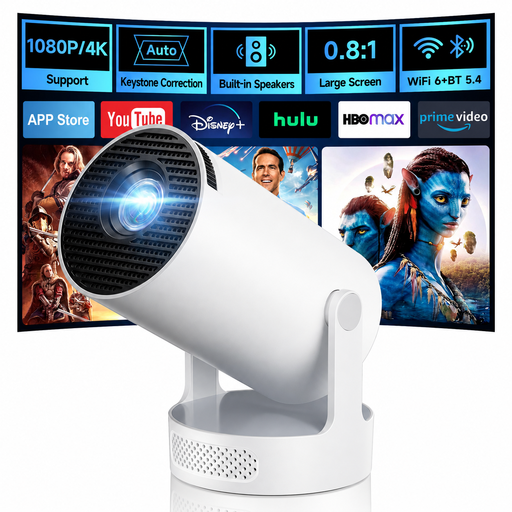
The product title describes an ultra-short-throw projector for small rooms. Check how the picture looks in your planned set-up with window light.
The title specifies 4K/1080P support.
 No image available
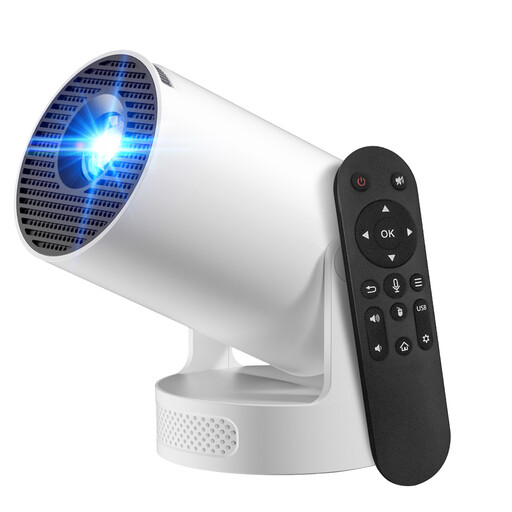
If you’re considering integrated apps or flexible picture positioning, check the specifications against your film source and planned set-up location.
The product title specifies 50–200 inches, 50–100% digital zoom and 180° rotation.
No image available
Only consider this projector if you can check before buying that it has the connections your film source needs and that the picture works in your room.
 No image available
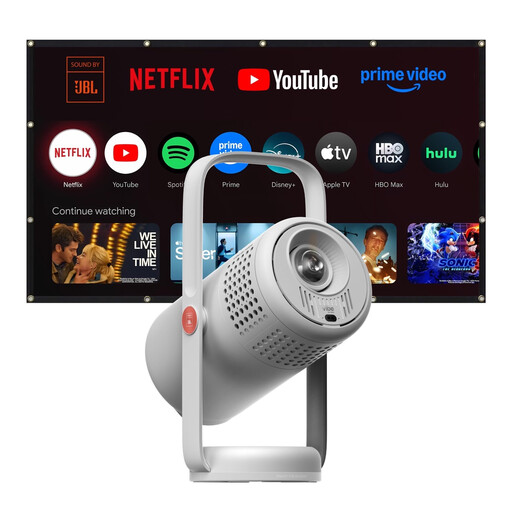
Its portable design may be useful if you need flexible positioning. You’ll need to assess its suitability for daylight in the room where you plan to use it.
The product title specifies 250 ISO lumens.
 No image available
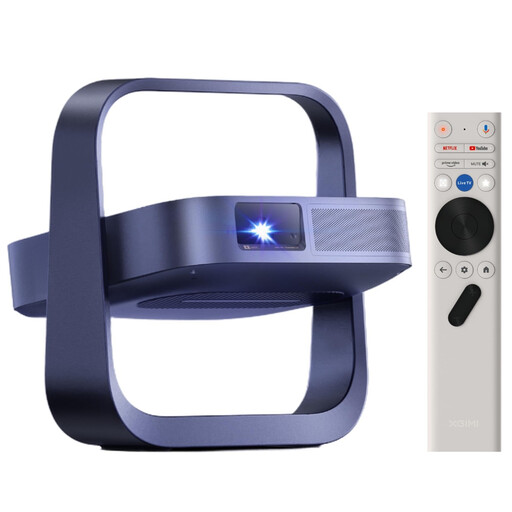
Consider the brightness rating alongside the screen size and incoming light; check how dark film scenes look in your planned set-up.
The product title specifies 1.600 ISO lumens.
No, not on its own. Ambient light can reduce picture contrast, so check the screen size, incoming light and dark scenes in your actual set-up.
No, the projection direction and screen type need to be compatible. Check the specific model’s compatibility; Epson Germany explicitly lists certain Epson ultra-short-throw projectors for the ELPSC36.
Check the aspect ratio of the specific version and set up playback so the picture isn’t stretched or cropped to fit 16:9. Also check the connection to your film source and make sure the intertitles are readable from your seat.
Check whether you’ll need a compatible screen and whether a replacement lamp is available for any lamp model you’re considering. For purchases from business sellers in the EU, EU information states that goods are generally covered by a minimum two-year legal guarantee from the date you receive them. This is separate from any additional manufacturer’s guarantee.
The age of a silent film alone doesn’t prove that a particular version is free to use. The German Patent and Trade Mark Office explains copyright protection for films and how usage rights are granted. If you’re planning a public screening, check the rights for the specific version and event.