First, measure your viewing distance and check whether you can read the intertitles in a typical film version from your seat. With a historical 4:3 image, a 16:9 TV will have unused screen space at the sides if the original proportions are preserved. RTINGS describes OLED as a typical choice for dark rooms and Mini-LED LCD as a common alternative for brighter rooms. However, reflections, the film source and how it handles motion all matter when choosing a specific TV.
Who should consider this?
Silent film fans who sit a long way from the screen
You want to be able to read intertitles from your usual seat. The Verbraucherzentrale provides guidance on screen size and viewing distance; with historical film versions, the aspect ratio and text size also affect the visible image.
Collectors of historical film copies
With older DVDs, files or restorations, the original aspect ratio and careful image processing are important things to check. The British Film Institute describes the historical 4:3 format, while RTINGS notes that excessive sharpness settings can alter the look of the image.
Film fans in bright living rooms
If you can’t always darken the room, assess reflections and the brightness of the specific model in the room where you usually watch films. RTINGS and the Verbraucherzentrale identify ambient light as a relevant factor when comparing OLED and LCD technologies.
What should you look for when buying?
The percentages show which buying priority matters most in each of the silent film scenarios described. The Verbraucherzentrale’s HDTV guidance on screen size and viewing distance is included for reference; it is not a specific threshold for silent films.
| What matters |
What to check before buying |
Who is this important to? |
| Reading intertitles from a distance |
Measure your viewing distance and check an intertitle from your own film version in its undistorted aspect ratio, from your seat. For HDTV, the Verbraucherzentrale gives 3.1–3.8 m as a guide for a 75-inch TV. |
When I watch from further away, I want to read the intertitles without stretching or leaning forward. Around 31% of consumers put readability at a distance first. |
| Historical image and film source |
Test one of your own DVDs or files: are the 4:3 format and proportions preserved? Sharpness and noise reduction should be adjusted to suit the source. |
When watching older film versions, I care more about preserving the original image than making it look as sharp as possible, so I pay particular attention to the format and processing. Around 25% of consumers prioritise staying true to the source. |
| Seeing the picture in ambient light |
Consider the windows and lamps in the room where the TV will go, and check the specific model’s reflections and picture brightness. RTINGS and the Verbraucherzentrale describe some typical differences between OLED and LCD. |
If I can’t always darken the room, I want to be able to make out dark scenes in my usual ambient light. Around 19% of consumers prioritise performance in daylight. |
| Motion suited to the film version |
Watch the specific version using the intended playback method and check 24p or 25p playback with that setup. A high refresh rate alone doesn’t guarantee the right playback speed. |
If motion that looks wrong bothers me, I want to be able to check how my specific film version plays. Around 13% of consumers prioritise this. |
| Total cost and space required |
Compare the model’s energy data and dimensions, and check the delivery and installation services included in the specific offer. Larger TVs may take up more space and increase electricity consumption. |
When weighing up the purchase price and running costs, I want to know the total cost without choosing a screen size that doesn’t suit my needs. Around 12% of consumers put this cost question first. |
Avoid common misconceptions
-
Assuming the entire 16:9 screen will show the film
A historical 4:3 image won’t fill a 16:9 screen if its proportions are preserved. The usable screen area for the film and its intertitles will therefore differ from that of a widescreen film that fills the screen.
Keep the original aspect ratio and check the intertitles in your own film version from your actual viewing distance.
A larger screen may need more space and increase electricity consumption. The Verbraucherzentrale notes the link between screen size and energy use.
-
Expecting 4K or AI upscaling to improve a restoration
Upscaling adapts a lower-resolution source to the display, but it doesn’t automatically improve the film version. Excessive sharpness settings can alter the intended look of the image, as RTINGS notes in its guidance on image processing.
Test a typical source of your own and adjust sharpness and noise reduction to suit the picture, rather than relying on a marketing term.
-
Choosing OLED or Mini-LED regardless of the room
Typical suitability for dark or brighter rooms is no substitute for comparing the specific models. Reflections and the way dark scenes appear can also affect your decision.
Consider windows, lamps and when you usually watch films as you compare models. Check how the picture looks in suitable lighting conditions.
-
Comparing only refresh rate and purchase price
A high panel refresh rate doesn’t prove that every silent film version will play at the right speed. Early films were not always shown at a consistent speed, as the British Film Institute explains.
Check the specific version using its intended playback method, and compare energy data as well as the delivery and installation services on offer.
Delivery and installation may incur additional costs. Compare the services and prices in each offer rather than assuming there’s a standard charge.
TV brands to consider
LG
An OLED option for watching films in a mostly dark room.
- For the 65-inch OLED65C6ELB, LG lists a low-reflection OLED display and Filmmaker Ambient Mode.
- These are manufacturer claims, not proof of performance with a specific silent film source. Check the screen size, reflections and playback setup for your room.
TCL
Mini-LED LCD models may be a good option if your room is often bright.
- TCL advertises 646 dimming zones and HDR peak brightness of up to 2,000 nits for the 65Q7D Pro.
- These manufacturer claims are not measurements for historical SDR films. Check black levels, reflections and how the specific model processes your source.
Sony
An LCD option with larger models; the exact model number and screen size matter when comparing TVs.
- Sony lists the K-65XR95M2 as a BRAVIA 9 II with a 65-inch screen.
- The model name or processor alone doesn’t prove that a TV is suitable for silent films. Check the full model number, screen size and inputs you need.
Philips
OLED models with Ambilight as an added feature.
- Philips lists a 65-inch screen, Ambilight and P5 picture processing for the 65OLED809/12.
- Ambilight doesn’t increase the actual visible area of a 4:3 film image. Check the aspect ratio and intertitles with your own film version.
Panasonic
A Mini-LED LCD option with Fire TV, according to the TV-65W95BEG product name.
- Panasonic describes brightness, contrast and picture processing as strengths of this model.
- The German product page marks the model as unavailable, so this doesn’t confirm that it can currently be bought. The picture features listed are manufacturer claims.
TVs to consider at Joybuy
Here you’ll find a 77-inch OLED TV for longer viewing distances. Whether you can read the intertitles still depends on the distance, film version and aspect ratio.
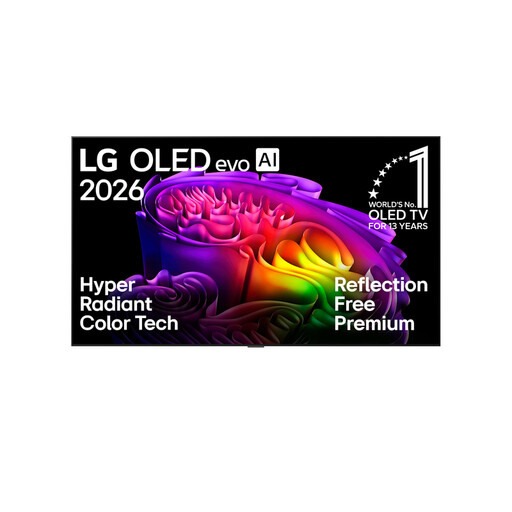 No image available
LG OLED77G67LW OLED evo AI G6, 77-inch, 4K Smart TV (2026)
The 77-inch screen may suit a longer viewing distance, but check whether you can read the intertitles from your actual seat.
The product name specifies a 77-inch, 4K Smart TV and the 2026 model year. When shown without distortion, a 4:3 image leaves unused screen space at the sides; 4K alone doesn’t prove that a film has been restored more effectively.
View at Joybuy
Frequently asked questions
Is 65 inches big enough if I sit a long way from the screen?
It depends on your viewing distance and the film version. For HDTV, the Verbraucherzentrale gives a viewing-distance guide of 2.4–3.1 m for 65 inches or 163 cm, and 3.1–3.8 m for 75 inches or 190 cm. Also check the text size in a historical 4:3 version from your seat.
Does a silent film need to fill the whole screen on a widescreen TV?
No. Early 35mm films often used the 4:3 format, as the British Film Institute explains. If those proportions are preserved on a 16:9 TV, unused space at the sides is normal. Forcing the picture to fill the screen may distort or crop it.
Does a 120 or 144 Hz panel mean every silent film plays at the right speed?
No. Early silent films were not always shown at a consistent speed, as the British Film Institute explains. Check the specific digital version and 24p or 25p playback using the intended playback method.
What running costs and consumer rights should I consider in Germany?
Compare the specific TV’s EU energy label and check delivery and installation costs. The Verbraucherzentrale distinguishes the statutory legal guarantee provided by the seller from a voluntary warranty. Online purchases generally come with a right to cancel, usually within 14 days; when the period starts depends on the requirements that apply to the contract. The ARD ZDF Deutschlandradio Beitragsservice explains that the broadcasting fee is generally charged per household and doesn’t depend on whether you buy this TV.


