
Lieferung heute & morgen

Qualitätsgarantie

Willkommens-Angebote freischalten: KOSTENLOSE Lieferung | Bis zu 80 % RABATT | Kostenlose 30-Tage-JoyPlus-Testphase
App herunterladen
When temperatures drop, the desire for quick and uncomplicated warmth in your own home grows. A modern energy-efficient and quiet fan heater can be a practical addition to your central heating system, perfect for selectively warming specific areas like a home office, bedroom, or a chilly corner of the living room. However, the market is filled with a wide variety of models, often with only subtle differences in their features.
This article serves as a guide. We'll outline the objective criteria to consider when choosing the right device and present a selection of models with different strengths—from high efficiency and quiet operation to distinctive design.
To find a device that meets your needs, a few technical aspects are crucial. Instead of being swayed by marketing promises, the following three points will help you make an informed decision.
Modern electric fan heaters often use PTC (Positive Temperature Coefficient) heating elements. These ceramic fan heaters are known for heating up quickly and distributing warmth evenly. A key advantage is their self-regulating feature: upon reaching a certain temperature, they reduce their power output, which minimises the risk of overheating and contributes to energy efficiency. An energy-efficient fan heater is often equipped with an ECO mode that automatically adjusts the power based on the room's temperature, thereby optimising electricity consumption.
The noise level, measured in decibels (dB), is a critical factor, especially for use in quiet areas. A quiet fan heater for the bedroom or office should not significantly exceed 40 dB during operation. This is roughly equivalent to the sound of a soft whisper or a quiet library. Models with brushless DC motors often have an advantage here, as they operate with less vibration and noise compared to conventional motors.
A safe fan heater is essential, especially in households with children or pets. Standard safety features include:
A fan heater with a thermostat also allows for precise temperature control. You set the desired temperature, and the device only heats when the room temperature drops below it. This not only ensures consistent comfort but also prevents unnecessary energy consumption.
Based on the criteria mentioned, we have compiled a selection of devices that cater to different needs.
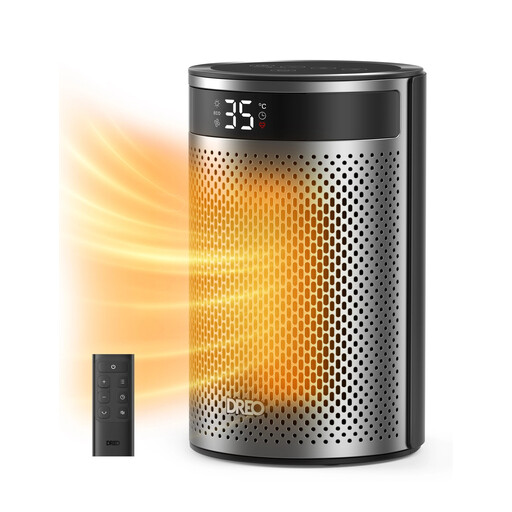
Why it stands out: The DREO Atom 416 is a compact fan heater designed for efficiency and quiet operation. According to the manufacturer, its Hyperamics technology ensures rapid heat-up within two seconds. With an operating noise level of just 34 dB on its lowest setting, it is well-suited for noise-sensitive environments.
Advantages:
Who is it for? This model is an excellent choice for individuals looking for a fast and quiet heat source for smaller rooms up to 20 m?, such as a home office, bedroom, or as supplemental heating in a seating area.
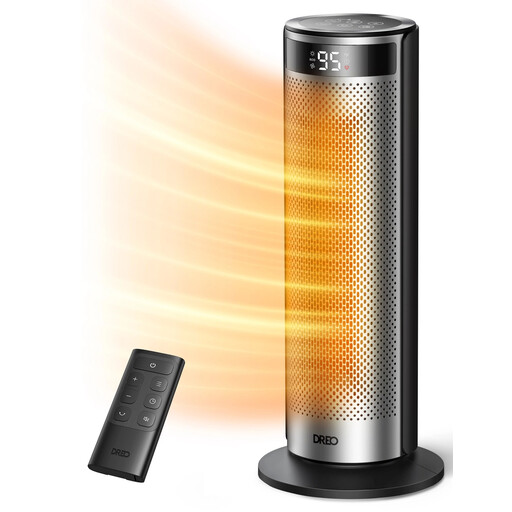
Why it stands out: The Solaris 628 is designed as a tower fan heater and, with 2000 W of power and 70° oscillation, offers wider heat distribution for medium to large rooms. Despite its high performance, it remains very quiet with a noise level starting at 25 dB.
Advantages:
Who is it for? Ideal for users who need a powerful yet quiet fan heater for living rooms or larger offices and value even heat distribution.
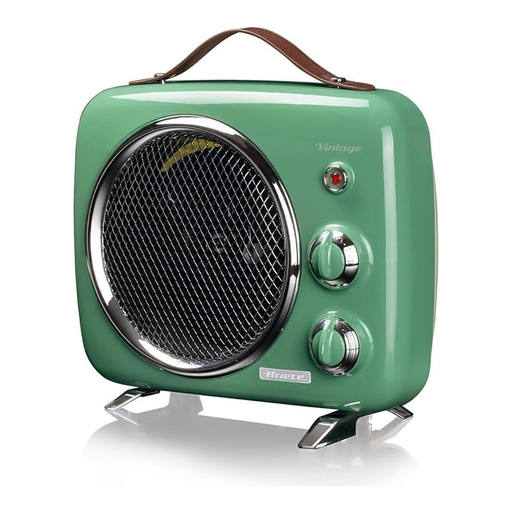
Why it stands out: This retro fan heater from Ariete combines functionality with a striking 1950s-style design. It's not just a heater but also a decorative element. In addition to its heating function, it also offers a cool air setting for the summer.
Advantages:
Who is it for? This model appeals to design-conscious buyers looking for a functional device that also serves as a stylish home accessory. It is well-suited for living areas where aesthetics play an important role.
The models presented already cover a broad spectrum. However, if you are looking for other specific devices or want to compare different models with precise setting options, you will find a larger selection in our category.
Discover more fan heaters with thermostats and find the perfect device for your needs.
The electricity consumption depends on the device's wattage and duration of use. A 1500 W (1.5 kW) fan heater uses 1.5 kilowatt-hours (kWh) when operated for one hour at its highest setting. However, models with a thermostat and ECO mode are significantly more efficient because they turn off or reduce their power once the target temperature is reached. As a result, they do not run continuously at full power.
The heating technology itself (ceramic) does not produce noise. The volume of a fan heater is determined by the fan that circulates the heated air in the room. However, modern ceramic fan heaters are often paired with quiet, brushless DC motors, making them significantly quieter than older models with conventional AC motors.
To be used in a bathroom, a fan heater must meet specific safety requirements and be protected against splashing water. Look for the IP protection rating certification. A fan heater for the bathroom should have at least an IP21 rating, which offers protection against vertically dripping water. Devices without this certification are not suitable for damp rooms.