
Lieferung heute & morgen

Qualitätsgarantie

Willkommens-Angebote freischalten: KOSTENLOSE Lieferung | Bis zu 80 % RABATT | Kostenlose 30-Tage-JoyPlus-Testphase
App herunterladen
A silicone baby bib should fulfil three main purposes at mealtimes: protect clothing, catch dropped food and be easy to clean afterwards. During the weaning phase from around 4 to 6 months, however, it is not just the material that matters. An unsuitable neck size, an unstable catch-all pocket or hard-to-reach gaps can mean that a bib is rarely used in everyday life.
As a Joybuy Product Recommendation Officer, I filter product information according to clear, verifiable criteria and match it to different everyday situations. This helps you avoid common buying hurdles without relying solely on marketing claims.
A waterproof surface protects clothing from liquids, but it does not catch dropped pieces of food. If the pocket is too shallow or folds inwards when the child is sitting, purée can still end up on their lap or the floor. With a baby bib with a catch-all pocket, the pocket should therefore remain visibly open and provide enough depth for small food scraps.
A fastening with several positions can extend the useful life of a bib. What matters, however, is whether the spacing suits the individual neck size and whether the edge sits comfortably. The fastening must not be too tight. As a practical guide, Kikka Boo models specify leaving a gap of two fingers between the neck and the bib.
Terms such as “premium silicone” do not say much on their own. Look for specific information about a BPA-free bib, freedom from PVC and phthalates, suitability for food contact and care instructions. “Dishwasher-safe” should also be supported by clear manufacturer information, such as a note specifying the top rack. Sharp objects can damage silicone, even when the material is designed to be flexible and durable.
Platinum silicone bibs are made from a type of silicone that Kikka Boo models describe as 100% food-safe and odourless. According to the product information, the models are BPA-free, phthalate-free and PVC-free. The material designation alone does not replace the need to check the relevant safety and care information.
A classic food-grade silicone bib should likewise include information about the material, recommended age and cleaning. For example, the BC-Babycare set is described as BPA-free, PVC-free and phthalate-free. The packaging or product information is decisive when assessing the specific suitability of a product.
A deep, open catch-all pocket is particularly helpful in everyday use when a child is eating independently with a spoon or their hands. The pocket should not simply be decorative, but should remain open through its construction. Three-dimensional shapes can help prevent the catch-all area from collapsing too quickly.
With a flat bib without a pocket, the focus is more on protecting the upper body. For purée, pieces of fruit and finger food, however, a model with a catch-all pocket is usually more practical.
An adjustable bib can be adapted using press studs or other fastenings. Before buying, check:
Some platinum silicone models from Kikka Boo are specified for babies aged 6 months and over and, according to the product description, are suitable for dishwashers, steam sterilisers and temperatures from −40 °C to 230 °C. This does not mean that every use is identical: you should follow the specific care instructions for the product in question.
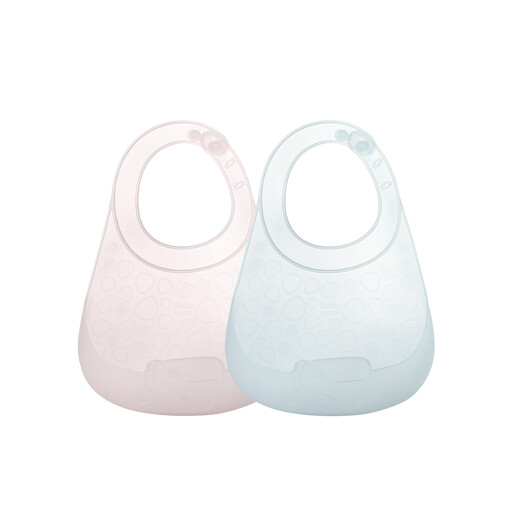
Why this product suits this profile: The two-piece set provides a practical spare for everyday weaning and includes a carry case for when you are out and about.
According to the product information, the three-dimensional construction is designed to retain its shape. Multiple fastening positions avoid a rigid one-size-fits-all design.
Two bibs, lightweight silicone, an adjustable fastening and compact storage in the supplied case.
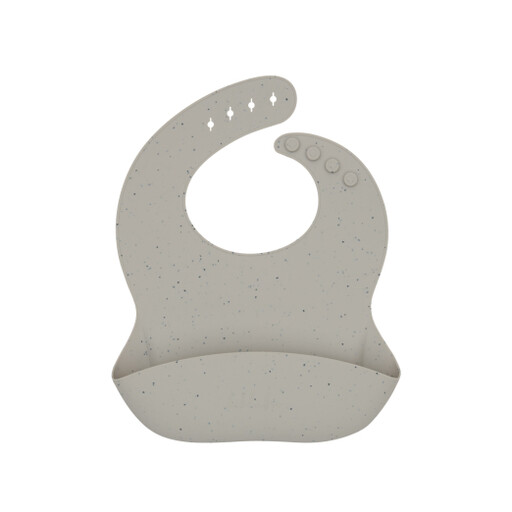
Why this product suits this profile: This model is aimed at families who prefer clear information about materials, care and adjustability for everyday use.
The product description specifies a deep, open catch-all pocket, an adjustable neck size and cleaning in the top rack of the dishwasher.
100% platinum silicone according to the manufacturer, BPA-free, phthalate-free, food-safe and suitable for steam sterilisation.
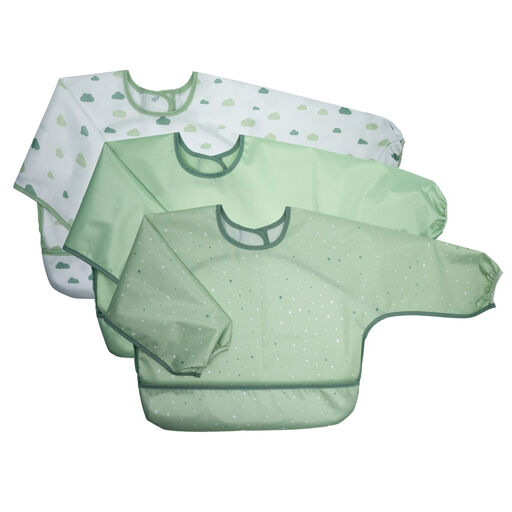
Why this product suits this profile: The long-sleeved design is suitable for meals where you want to protect not only the chest and lap, but also the sleeves.
The design combines water-repellent polyester with sleeves and a catch-all pocket. This means it is not limited to a small area at the front.
Three bibs in the set, hook-and-loop fastening and cleaning by wiping or machine washing according to the product information.
We have put together a complete, regularly updated list of products that fully meet these strict selection criteria and the safety regulations applicable in the EU.
A reusable bib remains hygienic only if it is cleaned after every meal and dried thoroughly. With silicone, warm water and mild washing-up liquid are often sufficient. If the manufacturer states that the product is dishwasher-safe, it should be placed in the top rack. Check the surface regularly for cracks, holes or damaged fastenings.
Regardless of the material:
This depends on the particular model. Some products are described as suitable from 4 months, while others are expressly recommended from 6 months. The manufacturer’s age recommendation and the child’s motor development are decisive. Check the fit around the neck before first use.
There is no general answer to this. Silicone is waterproof and can usually be wiped clean quickly. Fabric models may be suitable for longer periods of wear or for absorbing liquids, but will often need washing afterwards. An integrated catch-all pocket can be practical for purée and finger food.
Its useful life depends on the quality of the material, care and level of use. A bib should be replaced as soon as cracks, holes, deformation or a damaged fastening become visible. Even a correctly maintained product is not intended for use while sleeping.