
Lieferung heute & morgen

Qualitätsgarantie

Willkommens-Angebote freischalten: KOSTENLOSE Lieferung | Bis zu 80 % RABATT | Kostenlose 30-Tage-JoyPlus-Testphase
App herunterladen
Starting solid foods brings new demands when it comes to spoons and forks. Silicone baby cutlery from 6 months should be soft and easy to hold, but it should also suit your child’s stage of development, how you plan to use it and your cleaning routine. Products can vary considerably in their materials, shape and features.
A soft spoon can be gentle on your baby’s gums, provided the spoon tip is flexible and well made. The size of the bowl matters too. If it’s too deep or wide, it may be harder for your baby to pick up small portions. An ergonomic handle should sit comfortably in little hands without being unnecessarily heavy.
For a fork, look for rounded, slightly flexible prongs. Very sharp or rigid prongs may not be suitable for babies. So an age recommendation of “from 6 months” doesn’t replace checking the shape and safety information.
Not all silicone cutlery is made entirely from silicone. Some designs combine food-grade silicone with polypropylene (PP), for example inside the handle. This isn’t necessarily a drawback, but the materials should be clearly stated.
The Kikka-Boo models featured here are described as being made from 100% food-grade platinum silicone. According to the product details, the BC Babycare sets are made from food-grade silicone and PP. They’re also described as BPA-free. Check whether the material information applies to the whole item of cutlery or just certain parts.
“Easy to clean” may simply mean that a product can be washed. For everyday use, what matters more is whether the dishwasher-safe baby cutlery is actually suitable for the dishwasher and whether food can get trapped where the parts meet.
According to their product descriptions, the Kikka-Boo models are suitable for the dishwasher, microwave and steriliser. The BC Babycare sets are described as being cleaned with warm water and mild detergent. After cleaning, let the cutlery dry completely before putting it in a case.
Look for clear information about:
The material alone doesn’t automatically make cutlery suitable for every child. Before each meal, check the spoon and fork for cracks, sticky patches, distortion or signs of wear.
Lightweight weaning cutlery can be easier for your baby to handle as they start trying to feed themselves. For example, the Kikka-Boo spoons listed in the product details measure around 14.8 × 2.7 cm and weigh approximately 24 g. The spoons and forks in the sets are listed as approximately 13.8 cm long.
A textured or non-slip handle can make cutlery easier to hold. However, always supervise your child while they’re eating. Cutlery isn’t a toy and shouldn’t be used for walking around, chewing or playing.
A stated temperature range is particularly useful if you plan to use the cutlery with warm food, in the microwave or for sterilising. The Kikka-Boo models are listed as heat-resistant from -40 °C to 230 °C. This doesn’t mean food is ready to serve without checking: always check the temperature before feeding your baby.
Baby cutlery with a storage case can be handy when you’re out and about. Only use the case with cutlery that has been cleaned and dried thoroughly, so unnecessary moisture doesn’t build up inside.
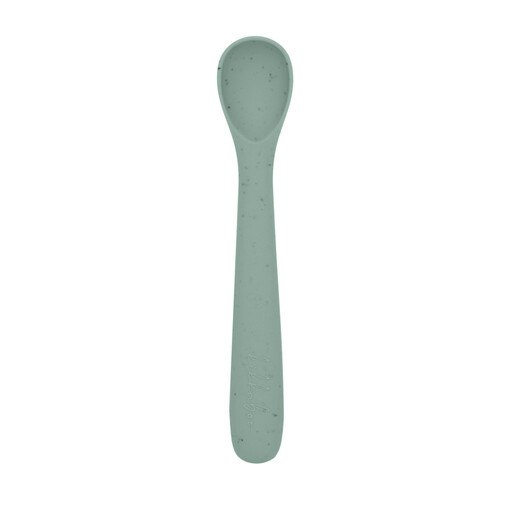
Why it suits this profile: A single silicone baby spoon is a straightforward option for families who want to start with small portions and their baby’s first spoon-fed meals.
The product details describe a soft, flexible spoon made from 100% food-grade platinum silicone and suitable from 6 months.
Listed as BPA-free and dishwasher-safe, with a lightweight design weighing approximately 24 g.

Why it suits this profile: This baby fork and spoon set is a good choice for households that want to use a spoon and fork for different weaning foods.
The set includes one fork and one spoon. Their rounded, flexible design is intended for babies from 6 months.
Listed as 100% platinum silicone, BPA-free and suitable for the dishwasher, microwave and steriliser.
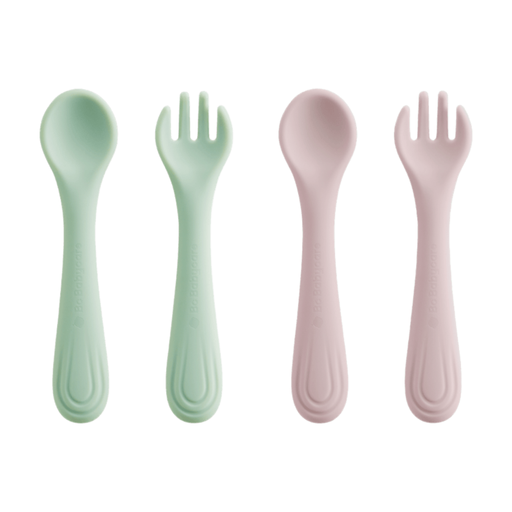
Why it suits this profile: For families who use weaning cutlery regularly at home and when out and about, this set comes with a portable storage case.
The case helps solve the common problem of how to store cutlery. According to the product details, the spoon and fork should be cleaned and dried completely before being packed away.
Set includes a spoon, a fork and a portable storage case; the product description states that the silicone and PP materials are BPA-free.
We’ve put together a comprehensive, regularly updated list of products that meet these strict selection criteria and fully comply with the safety regulations in force in the EU.
A small, lightweight spoon with a soft, flexible tip is a practical choice to start with. A baby fork and spoon set can be useful once your child starts trying different foods and having their first go at feeding themselves. Follow the manufacturer’s age recommendation.
There’s no set answer, as it depends on the condition of the product. Check the cutlery before each use and replace it if you notice cracks, discolouration, a sticky surface, loose parts or damaged fork prongs. Even when it’s in good condition, your child’s needs may change as their hands and mouth grow.
Being dishwasher-safe makes cleaning easier, but it doesn’t replace a thorough check. Remove all food residue, let the cutlery dry and store it somewhere clean. If you’re using a storage case, only put dry cutlery inside. An adult must supervise your child closely throughout every meal.