
Lieferung heute & morgen

Qualitätsgarantie

Willkommens-Angebote freischalten: KOSTENLOSE Lieferung | Bis zu 80 % RABATT | Kostenlose 30-Tage-JoyPlus-Testphase
App herunterladen
A silicone baby dummy is an essential for many families. There’s plenty of choice, too: MAM dummies, Philips Avent dummies, orthodontic dummies, dummies with sterilising boxes and more sustainable baby dummies vary in age range, shape, pack size and care instructions.
Not every advertised feature makes a difference in everyday use. What matters more is choosing the right age range, checking that the material is undamaged and storing the dummy hygienically. The guide below will help parents and parents-to-be compare product information objectively and avoid common buying mistakes.
A 0–6 month dummy is designed for the early stages of development. After that, models for 6–16 months or 6–18 months may be more suitable for the child’s age. For older children, there are options such as a dummy for 16 months and over.
The age range isn’t just a marketing claim. It relates to the size of the shield, the shape of the teat and the intended use. So don’t choose based on colour or brand alone.
Silicone is odourless and tasteless, and easy to clean. However, teeth, heat, sunlight or unsuitable cleaning products can damage the teat. And a BPA-free dummy isn’t automatically indestructible.
Before each use, gently pull the teat in all directions and check it for cracks, sticky patches, discolouration or bite marks. Depending on the manufacturer’s instructions, it may need replacing after around four weeks or one to two months. Replace it immediately if you notice any damage.
A sterilising box can be handy when you’re out and about, but it doesn’t replace checking the product. Dummies with large ventilation holes also need regular cleaning. If you’re using a microwave box, follow the instructions for the amount of water, heating time and cooling time.
First, check the exact age range:
A symmetrical teat can sit in the mouth either way round. What matters is that the specific model is suitable for your child’s age.
The teats on the products mentioned here are made of silicone, sometimes described as SkinSoft silicone. Parents should also look out for:
It’s worth looking more closely at the term “sustainable”. It may refer to bio-based plastic parts, packaging or carbon offsetting described by the manufacturer. The teat itself is still made of silicone in the models mentioned here.
A 2-pack of dummies is handy for families who want to check and replace dummies one at a time. A 4-pack of dummies gives you more spares for the changing bag, pushchair and home.
A dummy case keeps clean dummies separate from other loose items. For use on the go, choose one that’s easy to open and clean. A sterilising box is only suitable if it’s specifically designed for that purpose.
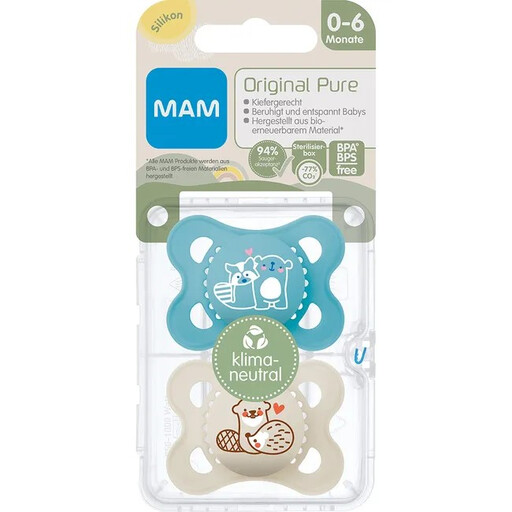
Why it suits this type of buyer: The 2-pack covers the basics during the early baby stage and includes a sterilising and travel case.
The clear age range helps prevent using a larger model too soon. The case keeps the dummy away from loose items when you’re out and about.
SkinSoft silicone teat, symmetrical shape, BPA/BPS-free and a sterilising box included.
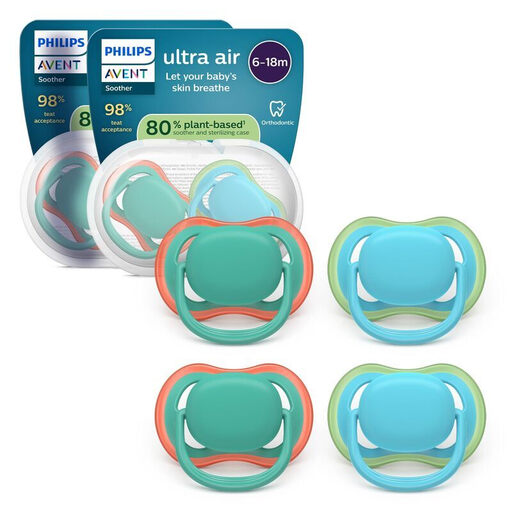
Why it suits this type of buyer: The larger pack is ideal for families who want to keep several clean dummies ready for different situations.
The 6–18 month age range and symmetrical teat give you clear criteria to choose by, rather than relying on a supposed one-size-fits-all option.
Four BPA-free silicone dummies and two reusable travel and sterilising cases.

Why it suits this type of buyer: This model is designed for toddlers aged 16 months and over, making it a useful addition for families catering for children at different stages.
The 16+ marking helps prevent using a smaller baby dummy when it’s no longer suitable. The ventilation holes and care instructions support careful use.
Symmetrical orthodontic teat made from SkinSoft silicone, two dummies per pack and a sterilising box for use on the go.
We’ve put together a complete, regularly updated list of products that meet these strict selection criteria and fully comply with the safety regulations in force in the EU.
As well as a silicone baby dummy, the right accessories can make everyday life easier. A dummy case made from food-grade silicone, for example, is designed to keep dummies clean in a changing bag or pushchair. The MiaMia Pacifier Box is sold as a twin pack and, according to the product details, each case can hold up to three dummies.
For bottle-feeding, don’t confuse a teat with a dummy. The MAM bottle teat in size 2 is designed, according to the manufacturer, for babies aged four months and over and has a medium flow. The MAM Silicone Feeding Nipple in size 3 is intended for babies aged six months and over, according to the product details, and has a faster flow. Both options are designed for MAM wide-neck bottles and must not be used as dummies.
It depends on the manufacturer’s instructions and the condition of the dummy. Some Philips Avent models recommend replacing it every four weeks, while MAM products often recommend every one to two months. If you notice cracks, bite marks, a sticky surface or any deformation, discard the dummy immediately, regardless of how long you’ve had it.
Before first use, boil or sterilise the dummy according to the instructions. When using a microwave box, follow the manufacturer’s instructions for the amount of water, power setting and heating time. Let the container cool after sterilising before taking the dummy out.
“Orthodontic” primarily describes the shape of the teat as specified by the manufacturer. The term isn’t a personal medical assessment and doesn’t replace advice from a paediatrician or dentist. Choosing the right age size, using the dummy correctly and checking it regularly for damage are what matter most.