
Lieferung heute & morgen

Qualitätsgarantie

Willkommens-Angebote freischalten: KOSTENLOSE Lieferung | Bis zu 80 % RABATT | Kostenlose 30-Tage-JoyPlus-Testphase
App herunterladen
Silicone bakeware is flexible, space-saving and available for all sorts of baked goods. However, the material name alone doesn't automatically lead to the right purchase decision. A soft mould can be tricky to handle when filling, a large baking tray might not fit on your oven rack, and a so-called non-stick baking mould may still need preparation when used with delicate batters.
As Joybuy Product Recommendation Officer, I filter the most important product details and show you what home bakers, families and pâtisserie enthusiasts should look out for before buying.
Silicone is easy to fold and store. However, with large or deep moulds, this flexibility can become a drawback: when transporting the mould to the oven, it can warp or cause liquid batter to spill over the edge. An integrated steel or plastic frame, or a sturdy rim, makes it easier to place the mould securely.
Not every silicone baking mould is automatically suitable for every temperature. Claims like "heat-resistant" should be backed up by a specific temperature range. Switching between oven, microwave and freezer only makes sense if the manufacturer explicitly states this usage. For example, the 5five Silitop Loaf Tin is rated for use from -20 °C to 220 °C.
A madeleine mould with many cavities is great for batches of small pastries, but it won't replace a loaf tin for a sponge cake. For cake tins, you also need to consider diameter, height and capacity. For small kitchens, collapsible moulds are practical, while families often benefit from a silicone muffin tray with multiple wells.
Look for a clear material specification such as food-grade silicone. For larger moulds, a combination of steel and silicone is interesting because it combines flexibility with extra shape stability. This applies, for example, to the 5five Silitop Silicone Loaf Tin 26 cm Long.
With fully soft moulds, it's advisable to use them on a sturdy baking sheet. This allows you to move the filled mould safely without putting unnecessary strain on the silicone walls.
A heat-resistant silicone mould should state a verifiable temperature range in the product description. Also check whether the manufacturer says the mould is suitable for:
Sub-zero temperatures are particularly relevant for desserts, mousses and frozen tartlets. For bread, sponge cakes and savoury bakes, on the other hand, the maximum oven temperature is what matters most.
The mould should suit both your recipe and your oven. A silicone loaf tin measuring 26 cm long is ideal for bread and cakes in an oblong shape. A shallow silicone tart tin is designed for tarts, quiches and flans. For classic French petits fours, a cannelé mould or a madeleine mould would be suitable.
Cleaning also deserves attention. A dishwasher-safe baking mould can reduce the effort of upkeep. However, with strongly coloured ingredients like berries or chocolate, you should still follow the manufacturer's care instructions.
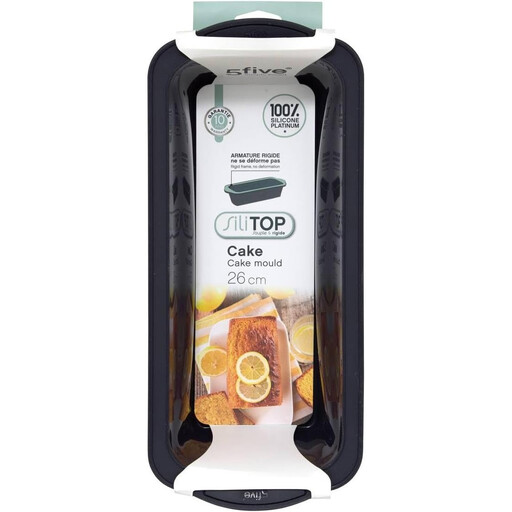
Why this product fits the profile: The oblong shape is suitable for bread, sponge cakes and other loaf-format bakes. Steel and silicone are combined, with a stated capacity of 1.59 litres.
The integrated rigid frame supports shape stability when filling and removing. The manufacturer also states suitability for dishwasher, oven and freezer.
26 cm loaf format, steel-silicone construction and stated temperature range of -20 °C to 220 °C.
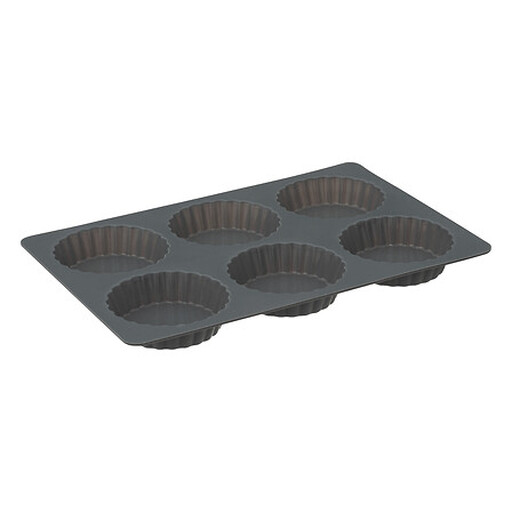
Why this product fits the profile: The shallow, rectangular mould measuring 37 x 22 x 3 cm is designed for tarts, flans, quiches and flat cakes.
The clearly defined format reduces the risk of choosing a deep cake tin for shallow batters. For transport, the mould should be placed on a baking sheet.
100 % food-grade silicone according to the product specification, shallow rectangular format and space-saving storage thanks to flexibility.
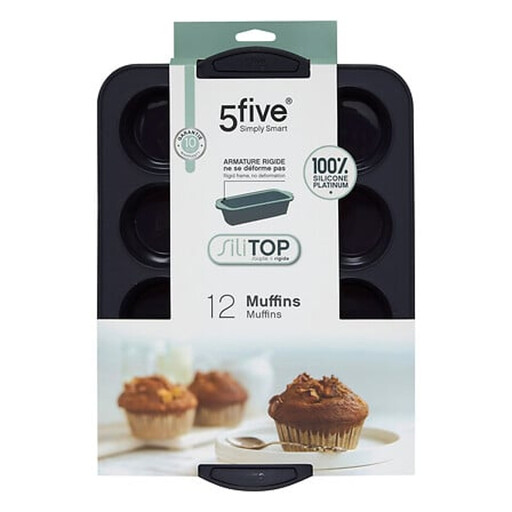
Why this product fits the profile: Twelve cavities, each 6.5 cm in diameter, allow you to bake several muffins or cupcakes in one go.
The rigid frame counteracts the sagging of a fully soft muffin tray. The mould is also stated as dishwasher-safe.
12 wells, 0.85 litre total volume and dimensions of 33.1 x 23.7 x 4.1 cm.
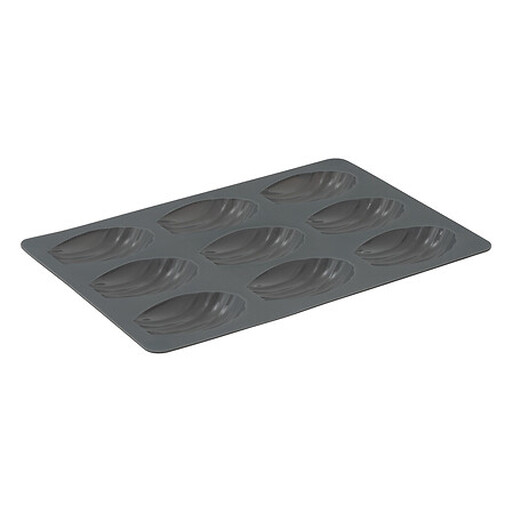
Why this product fits the profile: The shell-shaped cavities are aimed at fans of French pâtisserie and are suitable for madeleines as well as small chocolate or ice cream variations.
The defined cavity geometry prevents a standard muffin tray from being used for the characteristic shell shape. Before first use, the care instructions should be checked.
Dimensions of 36 x 21.5 x 2 cm, flexible silicone and several small mould cavities for portion-controlled baking.
We've put together a complete, regularly updated list of products that fully meet these strict selection criteria and the safety regulations in force in the EU.
Even a dishwasher-safe baking mould should be allowed to cool completely after baking before it is cleaned. Do not use sharp knives directly in the mould, as cuts can permanently damage the surface. With sticky batters, light greasing can be useful, even if the product is described as non-stick.
For soft moulds, the rule is: always fill them on a baking sheet, do not fill beyond the recommended rim, and do not twist the mould while the cake is still warm. This helps cavities, edges and frames stay shape-stable for longer.
Many silicone baking moulds are intended for oven use, but the permissible temperature range varies from product to product. Check the specific manufacturer's information. For the 5five Silitop Loaf Tin, the product description states it can be used up to 220 °C.
Not necessarily. With many non-stick silicone moulds, it's enough to use the mould clean and dry. With batters that are very high in sugar, fat or egg whites, light greasing can help with release. The care and usage instructions from the respective manufacturer take priority.
The lifespan depends on material quality, temperature management and care. Avoid sharp objects, direct heat sources outside the intended use and excessive mechanical stress. Visible cracks, sticky changes or deformation are reasons to stop using the mould.