
Lieferung heute & morgen

Qualitätsgarantie

Willkommens-Angebote freischalten: KOSTENLOSE Lieferung | Bis zu 80 % RABATT | Kostenlose 30-Tage-JoyPlus-Testphase
App herunterladen
Silicone bakeware is flexible, space-saving and suitable for many recipes. However, muffin tins, cake tins and bakeware with metal frames differ significantly in stability, temperature range and handling. If you only focus on a supposedly non-stick baking tin or a flashy product description, you can easily overlook important details.
Pure silicone bends easily. While this makes it easier to release your baked goods, it can be impractical when carrying the mould to the oven. Liquid batter can slosh over the edge if the mould is unstable.
An integrated steel reinforcement or a rigid frame can be useful here. The mould stays in position better when you fill it and slide it into the oven. This detail is particularly relevant for a silicone muffin tin or a large silicone cake tin.
"Heat-resistant" is only meaningful if a specific temperature range is given. Before you buy, you should check:
These details usually apply to the product and should be checked against the packaging or product page before first use. A silicone mould should not be placed directly on a hob or under an open grill unless this is expressly stated.
A dishwasher-safe baking tin can make cleaning easier. However, grease, chocolate and fruit batter can get stuck in grooves and indentations. With a madeleine mould or cannelé baking mould, it is worth looking at the surface texture and cleaning instructions.
After the wash cycle, the mould should be allowed to dry completely. For delicate relief patterns, hand washing with warm water and mild washing-up liquid can protect the material surface in the long term.
Look for a clear material specification. Food-grade silicone is standard for bakeware; additionally, the product should be labelled for its intended food contact. A steel core or integrated frame increases shape stability, while fully flexible models are easier to store.
For frequent baking, a combination of silicone and steel can be practical. If you have limited storage space, however, you will benefit from a reusable baking mould that can be rolled up or stored compactly.
The dimensions must fit your oven rack and your recipe. With multi-cavity moulds, the number of cavities also matters:
Also check whether the mould should be placed on a baking tray. This improves handling with soft silicone moulds and prevents twisting during transport.
A dishwasher-safe baking tin saves time, provided the manufacturer's instructions expressly allow it. For regular use, smooth, low-porosity surfaces are practical. With coated moulds, avoid sharp knives and harsh scouring pads so the surface is not damaged.
When it comes to temperature, the maximum oven temperature is not the only thing that matters. Suitability for the freezer and microwave can also expand the range of uses. According to the product details, the 5five Silitop loaf tin model, for example, is suitable for the oven and microwave and is designed for temperatures up to 220 °C in the oven and down to −20 °C in the freezer.
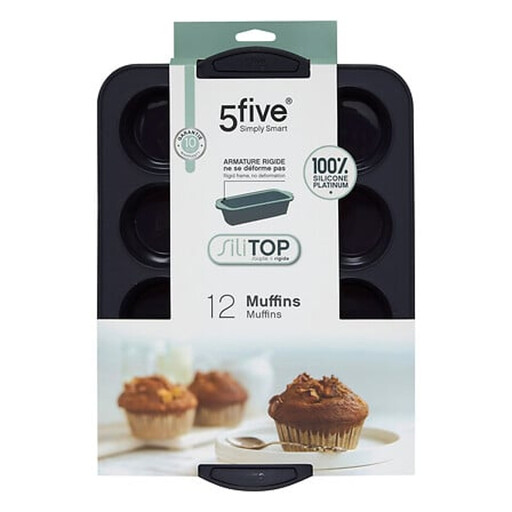
Why this product fits the profile: The 12 cavities are designed for muffins and cupcakes of a uniform size, making them ideal for families, children's birthday parties or batch baking.
The combination of silicone and steel supports stability when filling. The clearly stated dimensions of 33.1 × 23.7 × 4.1 cm make it easy to assess the space required.
12 individual cavities, 6.5 cm diameter and a stated total volume of 0.85 l.
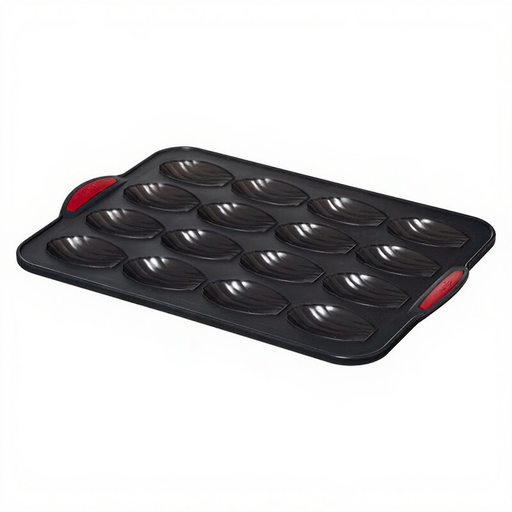
Why this product fits the profile: This mould is aimed at those who want to make French patisserie with a uniform shell shape.
The integrated rigid frame reduces bending during transport. The product description also mentions a coated surface and dishwasher suitability.
16 cavities for madeleines, plus stated suitability for cupcakes and other small bakes.
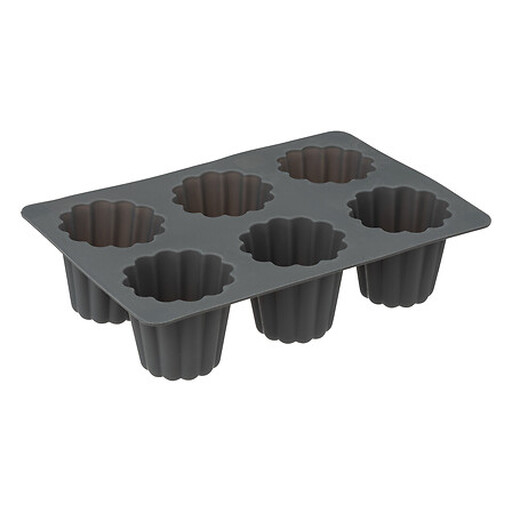
Why this product fits the profile: The cannelé mould is tailored to a specific French pastry with a fluted surface and complements an extensive baking collection.
The special grooved shape matches the intended pastry type. The stated size of 31 × 17 × 6 cm makes it easy to check the space in your oven.
Food-grade silicone, suitable for oven, microwave and freezer according to product details, and dishwasher-safe.
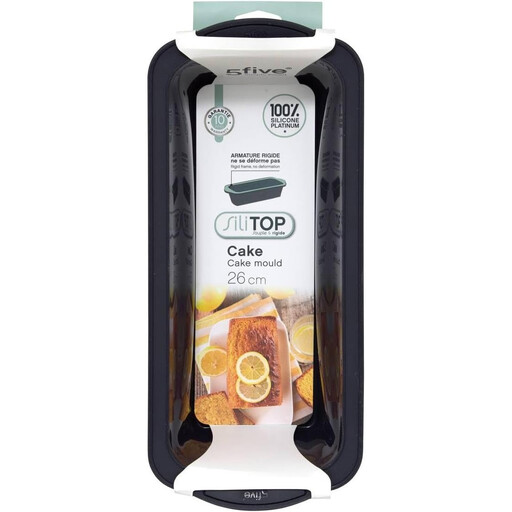
Why this product fits the profile: This silicone loaf tin is suitable for bread, loaf cakes and oblong savoury bakes, and can be used flexibly when storage space is limited.
The integrated frame supports shape stability. Temperature ratings up to 220 °C and dimensions of 31 × 13.7 × 7.6 cm provide clear guidance.
Combination of steel and silicone, capacity of 1.59 l and, according to product details, dishwasher-safe.
We have put together a complete, regularly updated list of products that fully meet these strict selection criteria and the safety regulations in force in the EU.
To keep silicone bakeware in good shape and with a good surface for as long as possible, a few simple habits help:
That depends on the recipe and the surface. Many silicone moulds make releasing easier, but with very sugary, low-fat or finely textured batters, a thin layer of fat can still be useful. With a madeleine mould, follow the recommendation on the product page or packaging.
It is not possible to give a fixed lifespan. The key factors are material quality, frequency of use, temperature, cleaning and how you handle sharp objects. Cracks, sticky patches, significant deformation or persistent odours are reasons to replace the mould.
Yes, provided the specific model is approved for oven use and the size and shape suit your recipe. A silicone loaf tin is suitable for bread and loaf cakes; a round silicone baking tin is designed for round cakes and desserts. For very heavy batters, a sturdy frame or a baking tray as a base is practical.