
Lieferung heute & morgen

Qualitätsgarantie

Willkommens-Angebote freischalten: KOSTENLOSE Lieferung | Bis zu 80 % RABATT | Kostenlose 30-Tage-JoyPlus-Testphase
App herunterladen
A silicone baking mat can be more practical than loose sheets of baking paper when rolling out, kneading and baking. It protects your work surface, can be used multiple times and, depending on the model, may come with measurement markings or a non-slip surface. However, models differ significantly in size, material thickness and intended use.
If you only look for terms like "non-stick" or "heat-resistant", you risk missing important details. This buying guide shows what home bakers, families, catering businesses and frequent users should look for when making a purchase.
"Heat-resistant" does not automatically mean the mat is suitable for every type of oven or temperature. Some products are designed for standard baking temperatures but must not come into contact with open flames, heating elements or the grill.
Before buying, you should therefore check:
A heat-resistant kitchen mat should always be used according to the manufacturer's instructions.
A large silicone dough mat certainly offers plenty of space for pizza, bread or biscuit dough. However, if it is very thin and lightweight, it can slip while you roll out dough or curl up at the edges. For regular kneading, a certain material thickness or higher weight is helpful.
With a dough mat for rolling out, you should pay particular attention to the dimensions and stability. A mat measuring 50 × 70 cm needs more storage space but offers a larger work surface than a compact model.
A baking mat with measurement markings can help with portioning and rolling out. However, printed circles, lines or units do not replace a precise set of scales and can become less legible through cleaning or frequent use. So check whether the measurement markings actually suit your working style and whether metric measurements are present.
Look for a clear material specification such as food-grade silicone. Some listings also mention BPA-free materials in the product description. Such claims should be checked directly on the individual product, as they do not automatically apply to every mat in a category.
The surface should be free from visible damage. Do not use sharp knives directly on the mat unless the manufacturer expressly allows it. A cut can permanently damage the surface and make cleaning more difficult.
For small kitchens or occasional biscuit baking, formats around 40 × 50 cm may be sufficient. Families and frequent users often benefit from larger surfaces of around 50 × 70 cm. A non-slip dough mat sits more securely, particularly on a clean, dry and level work surface.
Weight is a practical point of comparison: a heavier model is less likely to slip during kneading but can be harder to store. Rollable mats save space, but should not be permanently folded at sharp angles.
A reusable baking liner reduces the need for baking paper, provided it is suitable for the intended use. After use, it should be cleaned with warm water and a mild detergent. Some models are described as dishwasher-safe, while others should be hand-washed only.
With greasy doughs or sticky ingredients, cleaning is usually easier straight after use. Check the mat for cracks, deformation or stuck-on residue before each use.
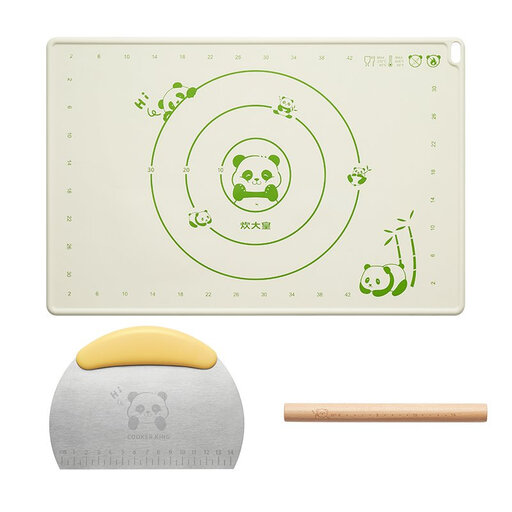
Why this product fits the profile: The stated size of 70 × 50 cm offers plenty of space for dough, while the product description mentions a thicker, non-slip design.
The larger surface area and the described non-slip base address the problem of a mat that is too small or slips easily.
70 × 50 cm; according to the product name, a thicker, non-stick and non-slip silicone design.
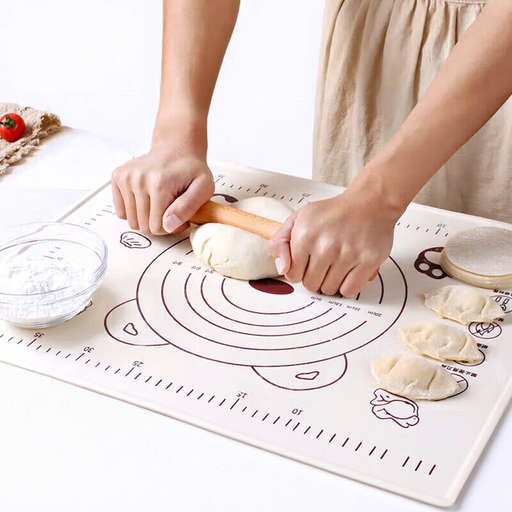
Why this product fits the profile: The 50 × 40 cm format is suitable for everyday baking tasks. The product description mentions food-grade silicone and measurement markings along the edges.
The stated dimensions and the food-safe labelling make it easier to compare with mats that have vague descriptions.
50 × 40 cm; measurement markings; according to the product description, BPA-free, food-grade silicone and dishwasher-safe.
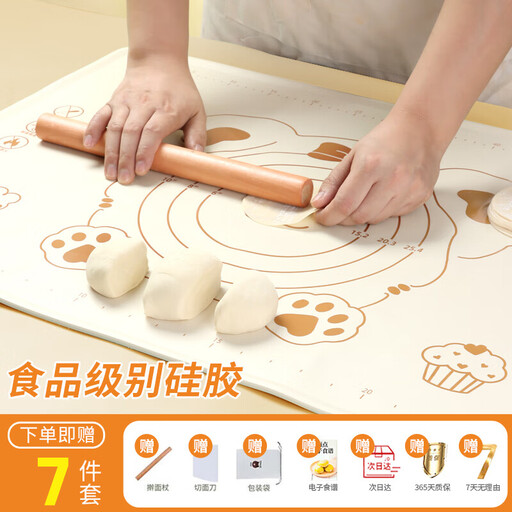
Why this product fits the profile: The 50 × 70 cm mat is aimed at users who regularly work with larger quantities of dough and prefer a heavier mat.
The stated weight of 730 g can counteract a dough mat that is too light and slips during kneading.
50 × 70 cm; 730 g; according to the product description, food-grade silicone, non-slip base and dishwasher-safe.
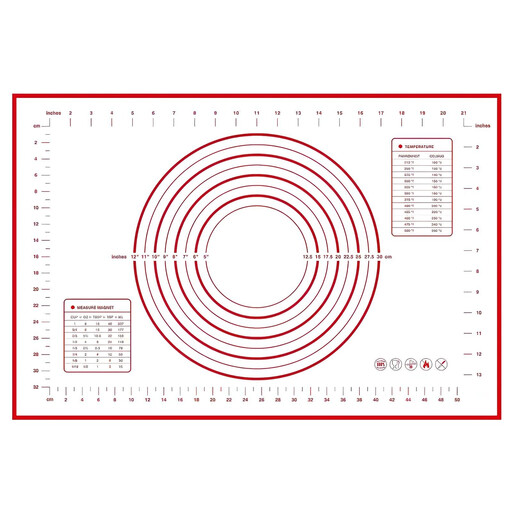
Why this product fits the profile: The integrated metric and imperial measurement markings are practical for users who frequently roll out dough to a specific size or thickness.
The measurement scale makes the function of the markings more understandable, rather than just advertising precision in general terms.
Non-stick surface; measurement markings in metric and imperial units; according to the product description, food-grade silicone and easy to clean.
For a compact work surface, the High-Elasticity Silicone Dough Rolling Mat 69.8 × 49.7 cm is an option. According to the product description, it is rollable, non-slip and intended for food preparation. The warnings exclude direct flames and contact with electric heating elements.
If you need multiple mats, you could consider the Preparation Mat Assortment Silicone 40 × 60 cm Multicolor. The set includes six mats in different colours, according to the product description. The mats are designed for hanging and are suitable for baking, cooking and general food preparation.
For grilling, roasting or very fatty foods, a disposable solution such as the COOKER KING Barbecue Paper with 50 sheets in the 35 × 25 cm format is relevant. This is not a reusable silicone mat but silicone greaseproof paper. According to the product description, it is intended for baking trays, grills and ovens and must not be placed directly in open flames.
We have compiled a complete, regularly updated list of products that fully meet these strict selection criteria and the safety regulations in force in the EU.
That depends on the use. A reusable mat can reduce the need for disposable materials with regular baking and is often suitable for rolling out or kneading. Baking paper, on the other hand, is practical when you want quick disposal or do not want to clean the liner. What matters are the manufacturer's instructions regarding temperature and specific use.
First remove any dough and grease residue. The mat can then usually be cleaned with warm water and mild washing-up liquid. Whether it can go in the dishwasher should be stated in the individual product description. The mat must be completely dry before rolling up or storing.
It is not possible to give a fixed lifespan. It depends on frequency of use, cleaning, storage and heat exposure. Visible cracks, sticky patches, severe deformation or a damaged surface are reasons not to use the mat for food any longer.