
Lieferung heute & morgen

Qualitätsgarantie

Willkommens-Angebote freischalten: KOSTENLOSE Lieferung | Bis zu 80 % RABATT | Kostenlose 30-Tage-JoyPlus-Testphase
App herunterladen
Silicone baking moulds promise easy handling, space-saving storage and effortless release. In practice, though, the results depend largely on the mould’s stability, dimensions and material details. If you focus only on a flexible surface or the term ‘non-stick’, you could end up with a mould that warps when filled, sits poorly on the oven shelf or doesn’t fit your oven.
This guide explains what home bakers, families and keen cooks should look for when buying. It focuses on product details that can be objectively checked.
Silicone bends easily and can be stored without taking up much space. However, a very soft silicone baking mould can warp when filled with runny batter. This makes it harder to carry to the oven and can lead to uneven edges. A sturdy rim or an integrated metal frame is therefore a practical feature to look for.
For a silicone muffin mould, also check that it fits on a baking tray. Individual cups without a sufficiently wide base can be less convenient to fill.
A smooth, non-porous surface can make it easier to release your bakes. The results still depend on the recipe, baking temperature and cooling time, though. A light greasing can be useful, particularly for sugary batters, caramel or delicate tarts. So don’t treat the term non-stick baking mould as a guarantee that every recipe will release cleanly.
Not every mould is suitable for the same uses. Before buying, check the guidance for use in the oven, microwave, freezer and dishwasher. A silicone loaf tin with steel reinforcement may have different temperature limits from a fully flexible mould. Always follow the manufacturer’s instructions, and only expose the mould to sudden temperature changes if this is specifically permitted.
Look for clear material information, such as food-grade silicone, as well as details of the manufacturer or importer. ‘Food-grade’ is a product description, but it doesn’t replace checking the labelling and instructions for use. For products sold on the German market, information about the responsible economic operator and intended use should be available.
The 5five Silitop loaf tin is an example of a different construction: it combines steel and silicone. The steel frame helps the mould keep its shape, while the silicone surface is designed to make it easier to release your bake.
The external dimensions determine whether the baking mould will fit in your oven and on your baking tray. For the quantity of batter your recipe makes, the internal capacity matters more than length and width alone. For muffins, the number and diameter of the cups are also important. For example, the 12-cup Silitop muffin mould specifies 12 cups measuring 6.5 cm in diameter and a total capacity of 0.85 litres.
For a silicone tart mould or cake mould, make sure the depth suits your recipe. Shallow moulds are better suited to tarts, quiches and flans; deeper versions are more suitable for sponge cakes, fruit cakes and layered desserts.
A dishwasher-safe baking mould can save you time on cleaning. Even so, let it dry completely after washing before folding or rolling it up. Flexible models are convenient to store, while reinforced moulds need more space. Also check whether the mould absorbs odours or has a textured surface that could be difficult to clean.
The models below cater to different baking preferences. The details are based on the product information available for each one.
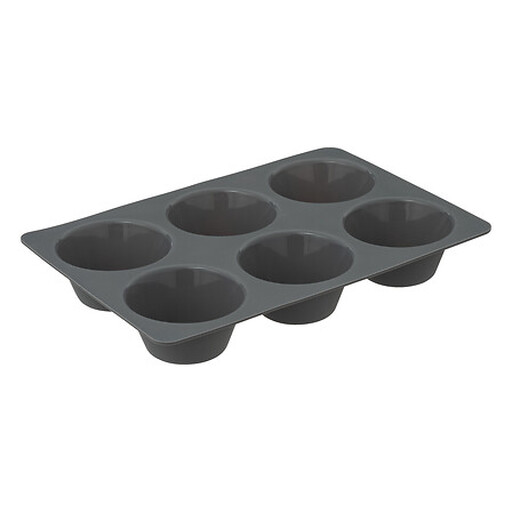
Why it suits this type of baker: The muffin mould has several cups for evenly sized portions and is suitable for muffins, cupcakes and small savoury bakes.
Its dimensions of 35 × 20 × 4 cm and clearly specified multi-cup design make it easier to plan the amount of batter and the space needed.
Food-grade silicone, a flexible design and, according to the product information, dishwasher-safe.
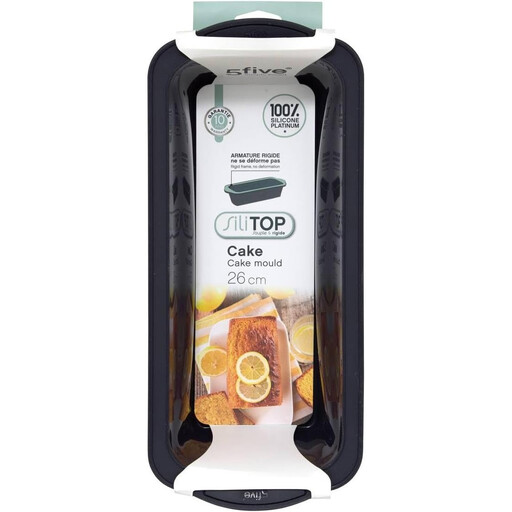
Why it suits this type of baker: The combination of steel and silicone is a good choice if you want a loaf tin with a sturdy frame.
The integrated rigid frame helps prevent the tin from warping when filled or taken out of the oven.
A 26 cm loaf tin with a capacity of 1.59 litres, dishwasher-safe and, according to the product information, suitable for temperatures up to 220 °C and down to −20 °C.
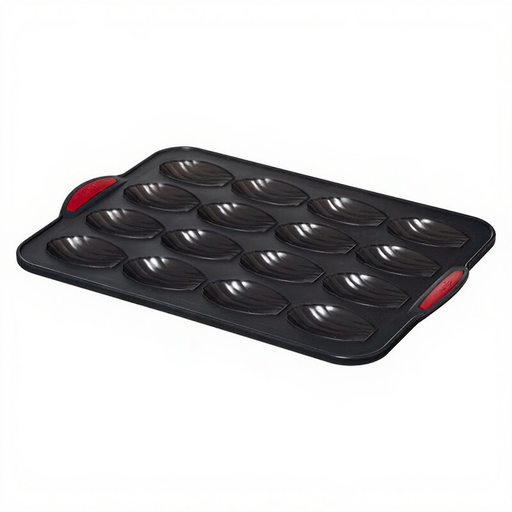
Why it suits this type of baker: This madeleine mould is designed for larger batches and delicate French bakes with a uniform shell pattern.
The rigid frame supports the rectangular shape and reduces the risk of the cups warping during transport.
16 cups, a weight of 0.31 kg and, according to the product information, dishwasher-safe.
We’ve put together a complete, regularly updated list of products that meet these strict selection criteria and fully comply with the safety regulations in force in the EU.
Many models are designed for oven use, but the permitted temperature range varies from product to product. Always follow the information on the packaging, product page or in the instructions for use. If the silicone mould doesn’t have rigid reinforcement, it should also be carried on a stable baking tray.
Their lifespan depends on the quality of the material, exposure to heat, cleaning and how they’re handled. Frequent overheating, sharp utensils and unsuitable cleaning products can damage the surface. A sturdy frame, clear material information and proper care can help a mould last longer, but won’t make it last indefinitely.
Not necessarily for every recipe. The flexible, smooth surface can make it easier to release many types of bake. For sticky, sugary or particularly delicate bakes, though, a light greasing can still be useful. The recipe, mould design and manufacturer’s instructions are all important.