
Lieferung heute & morgen

Qualitätsgarantie

Willkommens-Angebote freischalten: KOSTENLOSE Lieferung | Bis zu 80 % RABATT | Kostenlose 30-Tage-JoyPlus-Testphase
App herunterladen
Silicone baking moulds are flexible, space-saving and suitable for all kinds of sweet and savoury recipes. However, choosing a cheap silicone baking mould doesn’t guarantee even results. Problems often stem not from the recipe, but from a lack of stability, unclear temperature guidance or a mould that isn’t suited to the bake you have in mind.
Before you buy, it’s worth taking a closer look at the material, dimensions and care instructions. This can help you avoid a muffin tray losing its shape after a short time, a cake getting misshapen when you move it, or cleaning proving more difficult than expected.
Silicone bends easily. This makes it easier to release your bake, but can make it trickier to put the mould in the oven if it doesn’t have a rigid support. A full silicone muffin tray can bend out of shape as you carry it, or spill batter.
For large moulds and runny batters, it’s a good idea to place the mould on a baking tray. Alternatively, look for models with a sturdy frame, such as a Madeleine mould with built-in reinforcement.
Silicone is often less prone to sticking than untreated metal. That doesn’t mean every recipe will come out reliably without greasing the mould, though. Mixtures high in sugar, caramel, sticky fruit and very delicate batters can still stick.
For a non-stick baking mould, check whether it really has a coating or whether the description simply refers to the non-stick properties of silicone. Always follow the manufacturer’s instructions on preparation and greasing.
Not every mould is suitable for use in the oven, microwave, freezer and dishwasher. A heat-resistant baking mould should come with a clearly stated temperature range. If this information is missing, it’s best to be cautious.
The description “easy to clean” is no substitute for care instructions, either. Some products are dishwasher-safe, while others should only be washed by hand with warm water and a soft sponge.
Look for a clear material description such as food-grade silicone. This indicates that the material is intended to come into contact with food, but you should still check the product information. A neutral smell, even surface and clean edges are useful things to look for when inspecting a mould.
Don’t place silicone moulds directly on a hob, an open flame or a grill. For safe handling, place the mould and baking tray together on a stable oven shelf.
The dimensions determine whether the mould will fit in your oven at home and how much batter it can hold. Some examples:
A dishwasher-safe baking mould can save you time day to day, as long as this feature is clearly stated. Don’t use metal brushes or abrasive cleaners on delicate surfaces. After washing, let the mould dry completely before folding or rolling it up.
Don’t store sharp objects on top of silicone moulds. Moulds with a rigid frame take up more space, but they’re often easier to fill and carry.
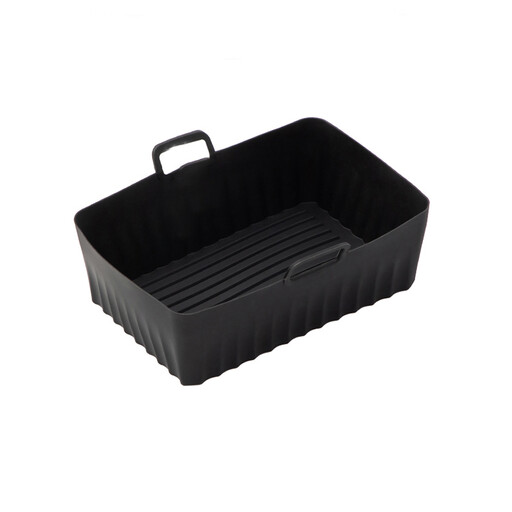
Why this product suits this profile: This set of two, measuring 22 × 15 cm, is a good fit for smaller households, novice bakers and recipes that make modest portions.
Two separate moulds make it easier to plan quantities. Their compact size means the set can be carried securely on a suitable baking tray.
Two rectangular silicone moulds with clearly stated dimensions; suitable for individual bakes and savoury oven dishes.
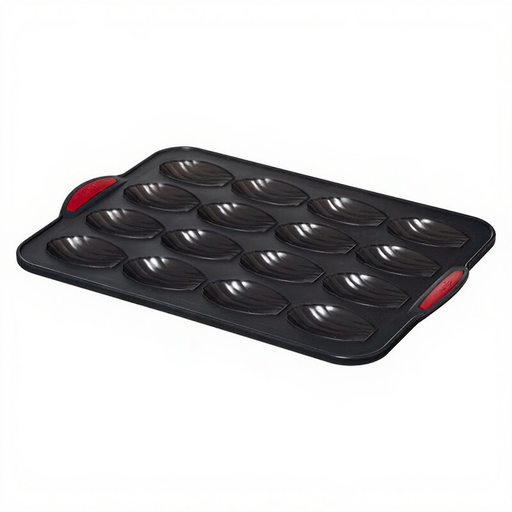
Why this product suits this profile: This mould is designed to make 16 Madeleines and, according to the product description, has a rigid frame for greater stability when filling and carrying it.
The built-in frame reduces the risk of the soft mould bending out of shape when you put it in the oven.
16 cavities, dimensions of 35,9 × 24,3 cm and, according to the product details, dishwasher-safe; weight 0,31 kg.
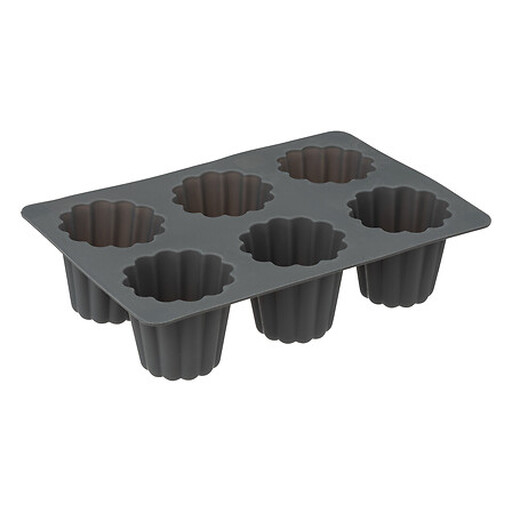
Why this product suits this profile: This mould is designed specifically for cannelés and measures 31 × 17 × 6 cm, according to the product description. It’s a good match for anyone who regularly bakes this distinctive French pastry.
The fluted cavities are made for cannelés, so you won’t have to use an all-purpose mould for a specialist recipe.
According to the product details, it’s made from food-grade silicone, suitable for the oven, microwave and freezer, and dishwasher-safe.
We’ve put together a complete, regularly updated list of products that meet these strict selection criteria and fully comply with the safety regulations in force in the EU.
Many models are designed for oven use, but always check the details for the specific product. Temperature ranges and suitability for the microwave or freezer can’t be assumed to apply to other moulds.
It depends on the recipe, surface and type of mould. Little or no grease is often needed for dry cake batters. Caramel, sticky fruit and delicate batters, on the other hand, often benefit from a thin layer of grease. Follow the manufacturer’s instructions.
There’s no single answer, as it depends on how often you use the mould, as well as the temperature, cleaning and storage. Avoid sharp objects, abrasive cleaners, direct flames and unnecessarily high temperatures. Replace the mould if it cracks, becomes sticky or stays misshapen.