
Lieferung heute & morgen

Qualitätsgarantie

Willkommens-Angebote freischalten: KOSTENLOSE Lieferung | Bis zu 80 % RABATT | Kostenlose 30-Tage-JoyPlus-Testphase
App herunterladen
Silicone baking moulds promise easy release, space-saving storage and straightforward cleaning. In practice, however, the result depends heavily on the construction, size and care of the mould. If you focus only on a flexible baking mould or a supposedly non-stick baking mould, you can easily overlook important details.
A completely flexible mould can twist when you carry it to the oven. Liquid batter may then spill over the edge more easily or spread unevenly. A stabilising frame or sturdy baking tray underneath is particularly useful for a silicone cake tin, a bread tin or a large silicone tart tin.
Not every silicone baking mould is automatically suitable for all appliances. Instructions for ovens, microwaves, freezers and dishwashers must be considered separately. A mould designed for the oven must not be used on a hob, over an open flame or on a barbecue unless this is specifically permitted.
The external dimensions do not always indicate the actual capacity. For families, twelve muffin cups or a baking mould set may be more practical than a small individual baking mould. If you want to bake bread, sponge cake or quiche, compare the internal dimensions, depth and capacity with the recipe you have.
Silicone is flexible and can often be stored in a space-saving way. For safe handling, however, it is crucial to consider how well the mould can be supported when filling it and removing it from the oven. An integrated steel frame, a firm rim or using the mould on a baking tray reduces the risk of it losing its shape.
When choosing a product, you should also be able to verify the information about food contact, the manufacturer and the responsible person in the EU. The product description should include clear care and safety instructions. Terms such as “premium” or “professional” alone are not proof of a particular material quality.
Look for specific values rather than general advertising claims. For example, the 5five Silitop loaf tin is specified as suitable for 220 °C in the oven and –20 °C in the freezer. This provides a clear reference for cakes, bread and frozen desserts.
Other moulds are described as suitable for ovens, microwaves or freezers without a precise temperature range being provided in the data. In this case, follow the instructions on the packaging and product page. As a general rule, a silicone mould must not be placed directly on a hob or over an open flame.
Many silicone moulds are dishwasher-safe, but not all of them. A dishwasher-safe baking mould saves time, while coated carbon-steel moulds should often only be cleaned by hand. Use soft sponges and avoid metal scouring pads or harsh abrasive cleaners, as these can damage the surfaces.
Even when a mould is described as non-stick, lightly greasing it can be helpful for recipes that are particularly high in sugar, fat or protein. This makes it easier to release delicate shapes, such as those made in a madeleine mould or cannelé mould.
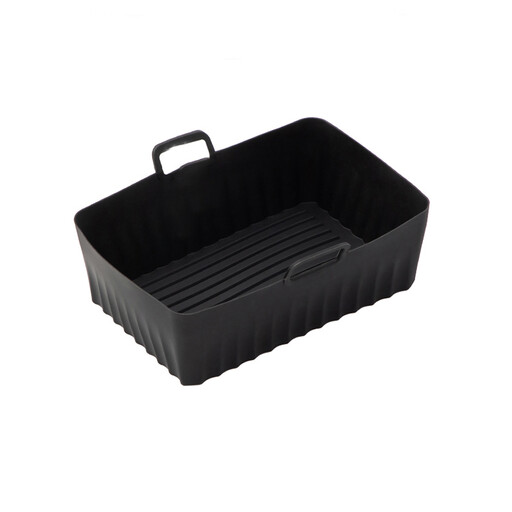
Why this product suits this profile: Two rectangular silicone baking moulds measuring 22 × 15 cm are suitable for smaller cakes, brownies, roasted vegetables or individual bakes. The set allows you to work on two dishes at once without having to buy several large moulds straight away.
The stated dimensions make the size of the mould clear. For greater stability, place it on a baking tray when filling it.
Two moulds included and compact dimensions for smaller ovens or limited storage space.
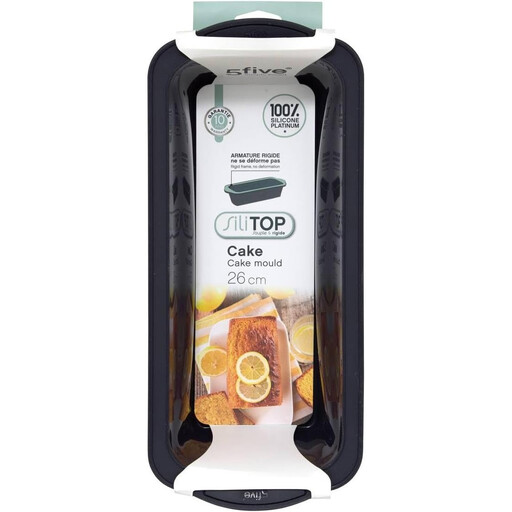
Why this product suits this profile: The combination of steel and silicone provides a firm frame with a flexible inner surface. With a capacity of 1,59 litres and a length of 26 cm, this silicone bread tin is suitable for many loaf bread and sponge cake recipes.
The integrated rigid frame addresses the tendency of soft moulds to twist out of shape. The product information also specifies a range from –20 °C to 220 °C and confirms that it is dishwasher-safe.
Steel and silicone construction, 1,59-litre capacity and suitability for bread, cakes, ovens and microwaves according to the product description.
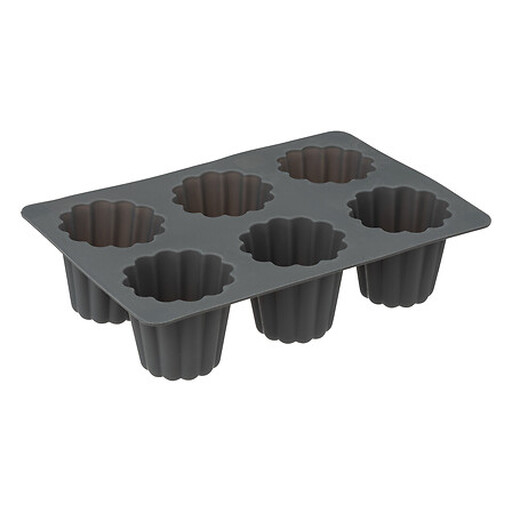
Why this product suits this profile: This mould is designed for cannelés with a ridged cylindrical shape. Measuring 31 × 17 × 6 cm, it is ideal for baking enthusiasts who want to create French pâtisserie or individual desserts.
The defined mould geometry prevents a general muffin mould from being used for a speciality bake. The description lists the oven, microwave, freezer and dishwasher among its possible applications.
100% food-grade silicone according to the product information, a ridged cannelé design and dishwasher-safe cleaning.
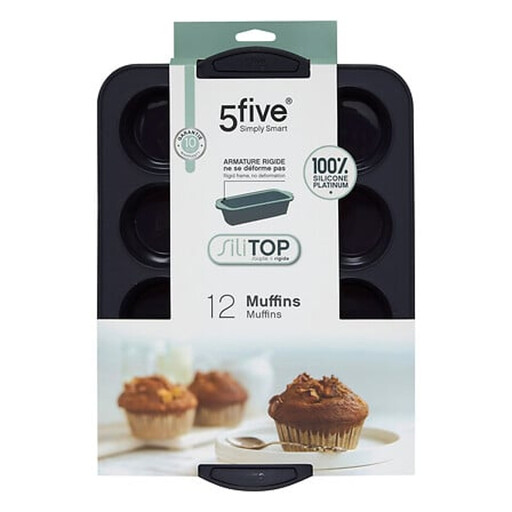
Why this product suits this profile: Twelve cups, each measuring 6.5 cm in diameter, allow you to bake a larger batch of muffins or cupcakes. The substantial steel content makes the mould easier to place in and remove from the oven.
The steel reinforcement helps prevent a fully filled muffin mould from bending. The capacity of 0,85 litres and dimensions of 33,1 × 23,7 × 4,1 cm are clearly stated.
12 cups, a flexible silicone surface, a steel structure and a weight of 0,345 kg according to the product description.
We have compiled a complete, regularly updated list of products that fully meet these strict selection criteria and the safety regulations applicable in the EU.
Not always. With many moulds, the flexible surface makes releasing the bake easier. For fine details, very sugary batter or the first use, lightly greasing the mould can still be helpful. The manufacturer’s specific recommendation and the recipe being used are the deciding factors.
There is no standard service life that can be given across the board. Gentle cleaning, suitable temperatures and avoiding sharp objects can extend the mould’s usable life. If cracks, persistent odours or noticeable deformation appear, the silicone baking mould should be replaced.
Some models, including several 5FIVE moulds in this selection, are described as dishwasher-safe. However, this does not automatically apply to every silicone baking mould. Check the relevant product information before buying and before cleaning.