
Lieferung heute & morgen

Qualitätsgarantie

Willkommens-Angebote freischalten: KOSTENLOSE Lieferung | Bis zu 80 % RABATT | Kostenlose 30-Tage-JoyPlus-Testphase
App herunterladen
Silicone baking moulds are flexible, space-saving and useful for a wide range of recipes. However, a flexible mould doesn’t automatically guarantee great results. Buyers often focus only on the phrase ‘non-stick baking tin’ and overlook stability, temperature limits or the mould’s actual dimensions.
Three common buying pitfalls are worth watching out for:
Check these points before you buy and it’ll be easier to find silicone baking moulds that suit your baking routine.
Silicone is flexible, but flexibility alone isn’t a sign of quality. A sturdy rim is important when baking bread, sponge cakes or larger quantities of batter. Some models combine silicone with a steel frame or an integrated rigid support. This helps the mould keep its shape when you lift and fill it.
A reinforced frame can also be useful for muffins and madeleines. A silicone muffin tray with 12 cups needs to support the weight evenly across the whole mould. Without enough stability, it may bend when you take it out of the oven.
Check for:
As a rule, place a flexible baking mould on a baking tray when moving it. This makes it easier to put in the oven and helps prevent runny batter from spilling.
A baking mould that’s suitable for both the oven and freezer can be versatile, provided the manufacturer explicitly lists both uses. Temperature limits vary from one product to another. For example, the product details for the 5five Silitop Silicone Loaf Tin state that it’s suitable for up to 220 °C in the oven and down to -20 °C in the freezer.
These limits don’t apply to every silicone baking mould. Before you buy, check:
Take care when moving the mould between hot and cold conditions, too. Unless the manufacturer specifically says otherwise, don’t move it directly from one extreme temperature to another.
A dishwasher-safe baking mould can make cleaning easier. Even so, it’s a good idea to dry it thoroughly after washing and check for residue or discolouration. For mixtures that are prone to sticking, a light coating of grease can help, even with a non-stick mould.
Choose a shape to suit your recipe:
Choose a mould size that matches your recipe. A 26 cm diameter mould isn’t always interchangeable with a smaller or larger one.
The models below suit different baking habits. Base your choice on the stated dimensions, materials and intended uses.
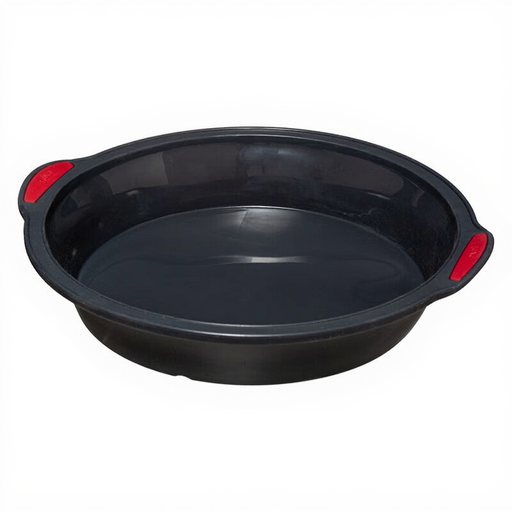
Why it suits this type of baker: Its round shape works well for everyday cake recipes and is versatile if you’re looking for a single, standard-sized mould to start with.
Its round shape reduces the risk of buying a specialist mould that’s only suitable for a few recipes. Check the temperature and cleaning instructions before you buy.
A 26 cm size and flexible silicone construction for classic cakes.
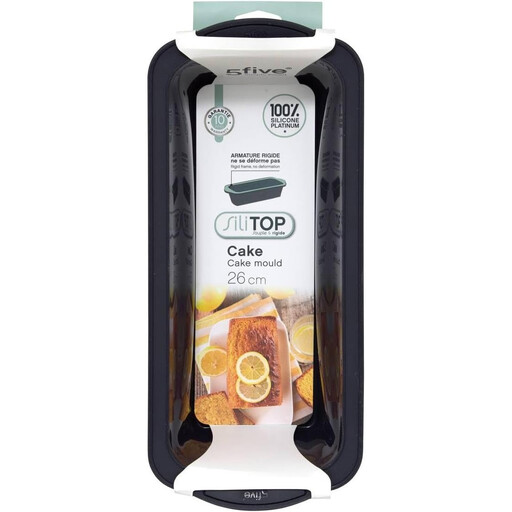
Why it suits this type of baker: The combination of steel and silicone is a good choice if you’re looking for a silicone loaf tin with extra stability.
The integrated rigid frame helps prevent the mould from bending when filled or carried. Its stated limits of 220 °C and -20 °C give you clear guidance.
Steel/silicone construction, a 1,59-litre capacity and dishwasher-safe, according to the product details.
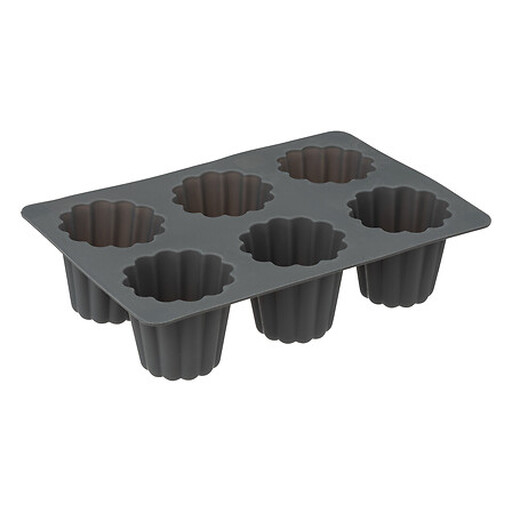
Why it suits this type of baker: Its fluted shape is designed for cannelés, making it a good option for fans of French pastries who want to use a specialist baking mould regularly.
Its purpose-made cannelé shape means you won’t have to use a general cake tin for a bake with distinctive ridges. The product description states that it’s suitable for the oven, microwave and freezer.
31 × 17 × 6 cm, 100% silicone according to the product details, and dishwasher-safe.
The 16-Cavity Madeleine Silitop Silicone Mold is also worth considering for families and anyone who regularly bakes individual portions. It has 16 cups, a rigid frame and a dishwasher-safe surface, according to the product description. If you bake muffins more often, take a look at the MUFFINS 12 SILIC MOLD SILITOP, with 12 cups and a steel structure.
We’ve put together a complete, regularly updated list of products that meet these strict selection criteria and the safety regulations in force across the EU.
It depends on the recipe, the shape of the mould and the mixture you’re using. For fine ridges, madeleines or cannelés, lightly greasing the mould can make it easier to release the bake. With smooth moulds, it’s often unnecessary if the product details state that they have non-stick properties.
Their lifespan depends on the quality of the material, how they’re heated, how they’re cleaned and how they’re handled. Never cut directly in the mould, and avoid using sharp-edged kitchen utensils. A mould with a reinforced frame can be easier to handle with frequent use, but it still needs proper care.
Only if the manufacturer explicitly says they are. Check the minimum temperature limit and place the mould on a stable surface when filling it. This makes it easier to carry, even when it contains a runny mixture.