
Lieferung heute & morgen

Qualitätsgarantie

Willkommens-Angebote freischalten: KOSTENLOSE Lieferung | Bis zu 80 % RABATT | Kostenlose 30-Tage-JoyPlus-Testphase
App herunterladen
Silicone baking moulds are space-saving, flexible and suitable for many French bakes. However, having plenty of choice doesn’t guarantee the right results. A mould that’s too soft can bend when filled, shallow tarts may not brown enough underneath, and intricate designs don’t always release cleanly.
If you’re looking for a silicone tart mould, a silicone quiche mould or a baking mould for French pastries, don’t focus solely on claims such as ‘non-stick’ or ‘professional’. The key factors are the material information, dimensions, stability and intended use.
Flexibility makes it easier to release cakes and pastries. But when you pour in runny batter, a very soft mould can tip or bend out of shape. A stable base is useful, especially for large tarts, quiches and shallow cakes. Some moulds should therefore be placed on a baking tray before you pour in the batter.
Silicone often has natural non-stick properties. That doesn’t mean every recipe will work perfectly without preparation, though. Very sugary, caramelised or particularly delicate mixtures can stick. For the first use, follow the manufacturer’s care and baking instructions. Depending on the recipe, a thin layer of grease may help, but don’t assume it’s always necessary.
A 31 × 31 cm tart mould needs more space than an elongated 37 × 22 cm mould. The depth also affects the result: a shallow mould is better suited to tarts, flans and quiches, while deeper cavities are needed for canelés or small cakes. Before buying, check the size of your baking tray and oven, and make sure the mould will produce the number of portions you want.
Look for a clear description such as food-grade silicone, along with information about the product’s intended use. For products that come into contact with batter and food, the manufacturer should provide care instructions and details about temperature resistance and use in the oven, microwave or freezer.
A general claim such as ‘heat-resistant’ may not be enough to make an informed choice. Check whether the manufacturer specifies a temperature range and whether the mould is suitable for the way you plan to use it. The product information should also explicitly state if it’s a dishwasher-safe baking mould.
For a silicone cake mould or tart mould, the diameter or length and width are especially important. Shallow moulds around 3 to 4 cm deep are suitable for tarts, quiches and flans. Canelé moulds, on the other hand, need deep, narrow cavities. Madeleine moulds have shell-shaped indentations designed for individual portions.
Stability also matters with larger moulds. A rigid frame or a baking tray used as a base can make filling and moving the mould easier.
A non-porous surface absorbs fewer odours and residues than a damaged or heavily textured one. A dishwasher-safe baking mould is handy for regular use, provided the manufacturer explicitly confirms that it’s suitable. Don’t use knives or sharp-edged kitchen tools directly on the mould.
One advantage of a flexible baking mould is that it takes up little storage space. However, avoid leaving it heavily folded or creased, as this could affect its shape. Carefully clean moulds with intricate designs to make sure no batter is left in the indentations.
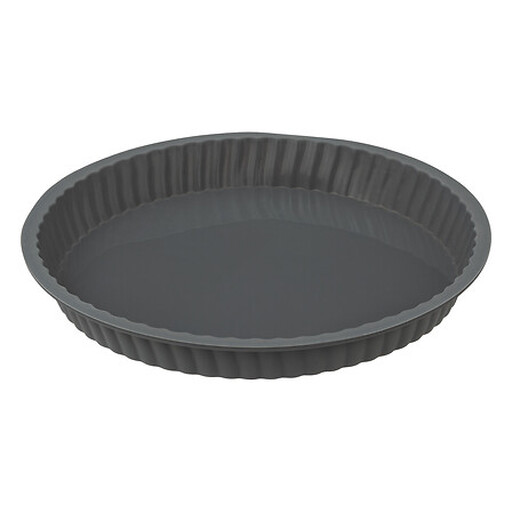
Why this product suits this type of user: Measuring 31 × 31 × 4 cm, this square mould is suitable for classic tarts, quiches, flans and savoury pastry bases.
The stated dimensions make it easy to check how much space you’ll need before buying. Its flexible design makes it easier to release your bakes.
Food-grade silicone, stated in the product information to be suitable for the oven, microwave and freezer; dishwasher-safe.
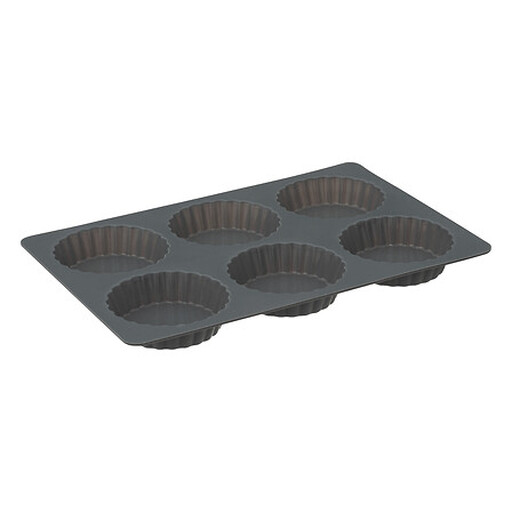
Why this product suits this type of user: Measuring 37 × 22 × 3 cm, this elongated mould is designed for shallow tarts, flans, quiches and oblong cakes.
The shallow depth is clear in advance, so you won’t expect it to make tall cakes. Its low-profile design suits recipes that call for a shallow mould.
100 per cent food-grade silicone according to the product description; rolls up for storage and is stated to be dishwasher-safe.
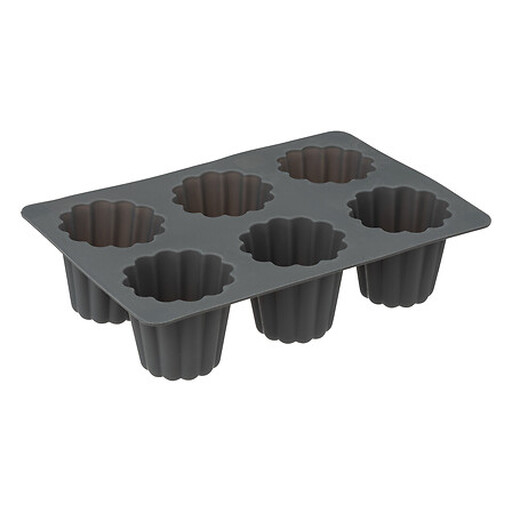
Why this product suits this type of user: Measuring 31 × 17 × 6 cm, its deep, fluted cavities are designed specifically for canelés.
Its design makes it clear that this isn’t a general-purpose tart mould. The cavities are intended for deep, individual bakes.
Fluted canelé design, flexible silicone and cleaning stated in the product information to be suitable for the dishwasher.
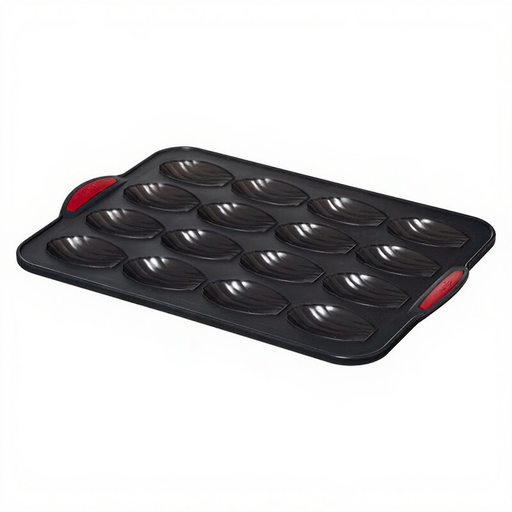
Why this product suits this type of user: With 16 cavities, this mould is ideal if you want to bake several madeleines or small cakes in one batch.
The rigid frame helps prevent the mould from bending when filled or moved. The number of cavities is clearly stated before you buy.
16 individual cavities, stated non-stick coating and dishwasher compatibility; dimensions according to the product description: 35.9 × 24.3 × 19 cm.
We’ve put together a complete, regularly updated list of products that meet these strict selection criteria and fully comply with the safety regulations in force in the EU.
Not necessarily. Many silicone moulds are flexible and have a non-stick surface. However, a thin layer of grease may help with very sticky mixtures, caramelised recipes or the first use. The recipe and the manufacturer’s instructions are the best guide.
Their lifespan depends on the quality of the material, how they’re cleaned and how they’re handled. Direct contact with knives or sharp objects, severe creasing or unsuitable temperatures can damage the material. Careful cleaning and dry storage help them last longer.
Only if the manufacturer explicitly says so. A mould labelled as a dishwasher-safe baking mould can generally be cleaned in the dishwasher. After washing fluted canelé or madeleine moulds, check the cavities for any residue.