
Lieferung heute & morgen

Qualitätsgarantie

Willkommens-Angebote freischalten: KOSTENLOSE Lieferung | Bis zu 80 % RABATT | Kostenlose 30-Tage-JoyPlus-Testphase
App herunterladen
Silicone baking moulds make baking easier when you need to release batter cleanly from the tin and want flexible storage options. However, models vary significantly in stability, cleaning and intended use. A soft mould without a rigid edge can tip during transport, very small cavities make even filling tricky, and unclear temperature ratings can lead to disappointing purchases.
Silicone is great for saving space in storage, but it can sag when placed in the oven. This is especially true with runny cake batter or chocolate, where a firm base is helpful. A silicone muffin tray with an integrated frame, or a baking sheet placed underneath, reduces the risk of spilling batter.
Many product descriptions mention a non-stick property but don’t explain which foods and temperatures the mould is designed for. Before buying, you should check the details for oven, microwave, freezer and cleaning suitability. For recipes high in sugar or caramelised ingredients, a light greasing can still be useful, even with a non-stick coating.
A madeleine tray with shallow indentations won’t automatically work for tall cupcakes. Even with a cupcake tray, the diameter matters so that paper cases and batter quantities match. Details such as 35 × 20 × 4 cm or 6.5 cm diameter per cavity help you check the mould against your oven and your own recipes.
For food contact, the mould should be clearly labelled as food-grade silicone. Equally important is the temperature range stated by the supplier. For example, the 6-piece heart-shaped mould set specifies a range of -40 °C to 230 °C. According to the product description, this allows use in the oven, microwave and freezer.
If specific temperature details are missing, don’t assume the mould is suitable for every application. Also, only switch from high heat to cold temperatures if the manufacturer explicitly states this is safe.
For evenly shaped bakes, cleanly defined contours and the right depth are important. A madeleine mould needs the characteristic shell-shaped indentations. For muffins and cupcakes, the cavity height and diameter affect baking time.
A rigid frame is handy if you fill or transport the mould frequently. For very flexible models, placing a sturdy baking sheet underneath is recommended. This is especially useful for families preparing several moulds at once.
Dishwasher-safe baking moulds save time, provided this feature is stated in the product description. Before loading, remove any large batter residue and make sure the mould has cooled completely. Coated metal tins often have different care instructions to silicone. For example, the Le Creuset carbon steel set is recommended for hand washing with a mild detergent.
Reusable baking moulds can be stacked or folded away to save space. However, they don’t automatically replace paper cases: for certain recipes, paper liners can make handling and serving easier.
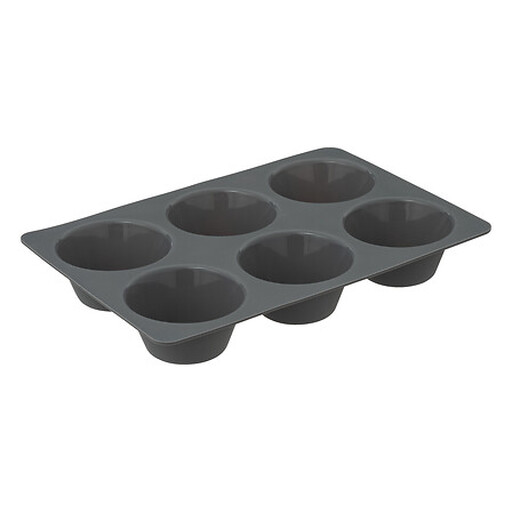
Why this product fits the profile: The mould offers 12 cavities for muffins or cupcakes, making it suitable for regular home baking.
The combination of silicone and steel is described as offering shape stability and even heat distribution. This can help reduce sagging compared to a fully flexible mould.
12 cavities, 6.5 cm diameter per cavity, overall dimensions 33.1 × 23.7 × 4.1 cm, and reusable design.
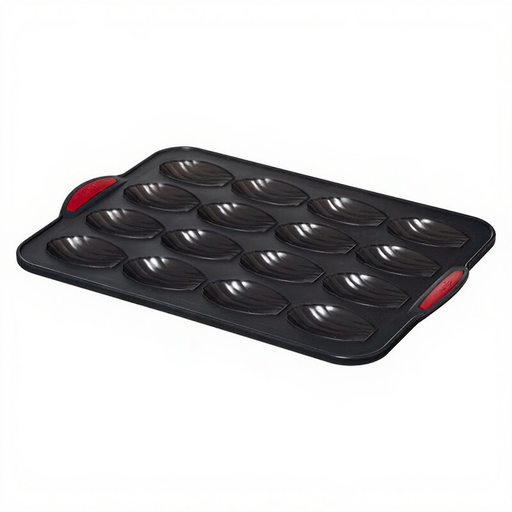
Why this product fits the profile: The 16-cavity madeleine mould is designed for users who want to bake multiple identical treats in one go.
The integrated rigid frame addresses the common problem of cavities distorting when lifted. The product description also mentions dishwasher-safe cleaning.
16 cavities, dimensions 35.9 × 24.3 cm according to the product details, silicone material and frame construction.
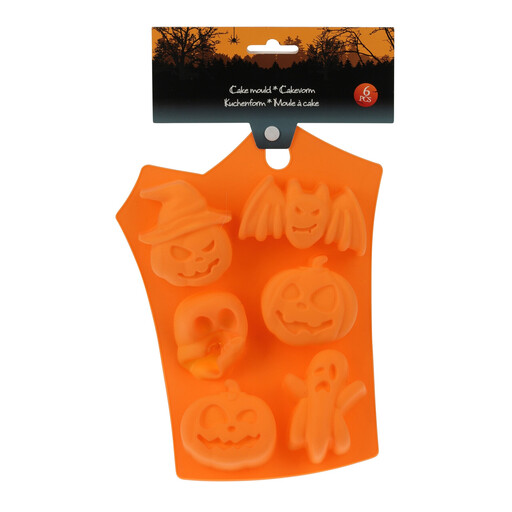
Why this product fits the profile: This mould is designed for seasonal bakes, jelly, chocolate and ice cubes, making it ideal for family activities or parties.
The six fixed motif cavities do limit use to specific designs, but this makes the choice clearer than a mould with vague all-purpose claims.
Six motif cakes, described as oven-safe and freezer-safe, as well as dishwasher-safe.
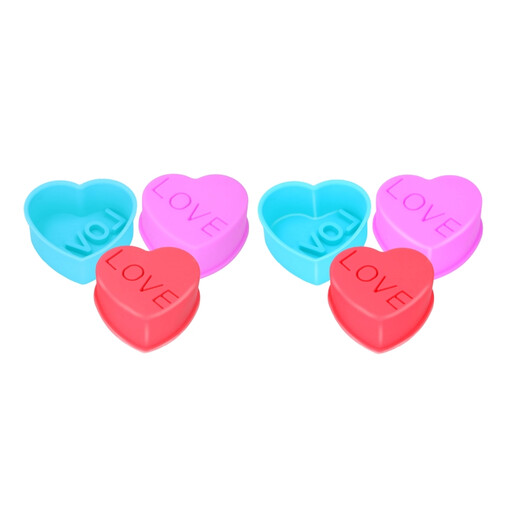
Why this product fits the profile: The heart-shaped moulds are intended for individual cakes, cupcakes, jelly and chocolate, making them suitable for homemade gifts too.
The individual cavities measuring 8 × 7.5 × 3.1 cm make the portion size clear. The stated temperature range helps with planning different preparation methods.
Six-piece set, stackable, described as dishwasher-safe and suitable for -40 °C to 230 °C.
We’ve put together a full, regularly updated list of products that meet these strict selection criteria and comply with EU safety regulations.
This depends on the individual model. For several of the products mentioned here, dishwasher cleaning is explicitly stated. A carbon steel tin with a non-stick coating, on the other hand, may require hand washing. Always check the product page and care instructions before buying.
Not always. With non-stick baking moulds or food-grade silicone moulds, release may be possible without extra fat. However, for very sticky batters, caramelised ingredients or detailed cavities, a light greasing can still make removal easier.
There’s no one-size-fits-all answer. Gentle handling, appropriate temperatures, careful cleaning and avoiding sharp objects can all extend their lifespan. Deformation, cracks or a damaged surface are signs that it’s time to replace the mould.