
Lieferung heute & morgen

Qualitätsgarantie

Willkommens-Angebote freischalten: KOSTENLOSE Lieferung | Bis zu 80 % RABATT | Kostenlose 30-Tage-JoyPlus-Testphase
App herunterladen
Silicone baking moulds are flexible, space-saving and suitable for a wide range of recipes. However, a flexible mould alone won’t guarantee good results. The key factors are the material, how sturdy the mould is and whether its shape suits the mixture you’re using. If you focus only on a low price or claims such as ‘non-stick’, you could miss important details.
This guide is for home bakers, families and beginners who want to buy a silicone baking mould and compare products on their merits.
A very soft mould may be easy to store, but it can tip or warp when you carry it to the oven. A stable base is particularly important for runny cake batter, quiche filling or cakes with a high liquid content.
Useful features include:
Not all silicone baking moulds are suitable for the same temperatures. Claims such as ‘heat-resistant’ aren’t very informative unless they specify a temperature range. Check whether the manufacturer gives temperature limits for the oven, microwave and freezer.
If no temperature guidance is provided, use the mould only as described in the official product information. Depending on the material and construction, it may also be important to avoid moving it straight from extreme cold to high heat.
Silicone often has a smooth surface that makes it easy to release baked goods. That doesn’t mean every recipe will work without preparation, though. Mixtures high in sugar, very low in fat or particularly delicate can stick. When using a new non-stick baking mould, it’s a good idea to apply a thin layer of grease at first, until you know how it performs.
Look for clear information about the material, such as food-grade silicone. For products made from more than one material, all materials should be listed. For example, the 5five Silitop loaf tin is made from steel and silicone. The steel frame helps the tin keep its shape, while the silicone sections make it easier to release baked goods.
The mould should be free from visible burrs, cracks or thin joins at the corners. For products made of several parts, it’s also worth checking the connection between the frame and the silicone body.
Specific temperature limits are important if you plan to use the mould regularly. According to the product description, the 5five Silitop loaf tin is suitable for use in the oven up to 220 °C and in the freezer down to –20 °C. These figures help you choose a mould that’s suitable for your recipe and appliance.
For air fryers, the mould’s size needs to fit the inside of your appliance. Browse our range of silicone baking moulds for air fryers to find suitable options.
The outside dimensions don’t always tell the whole story. When choosing a silicone muffin mould, the number and diameter of the cups matter too. The 12-cup Silitop muffin mould measures 33,1 × 23,7 × 4,1 cm, has twelve cups, each approximately 6,5 cm in diameter, and a total capacity of 0,85 litres.
Also check the manufacturer’s cleaning instructions. A dishwasher-safe baking mould means less hand-washing. Even so, remove any packaging residue before first use and follow the care instructions.
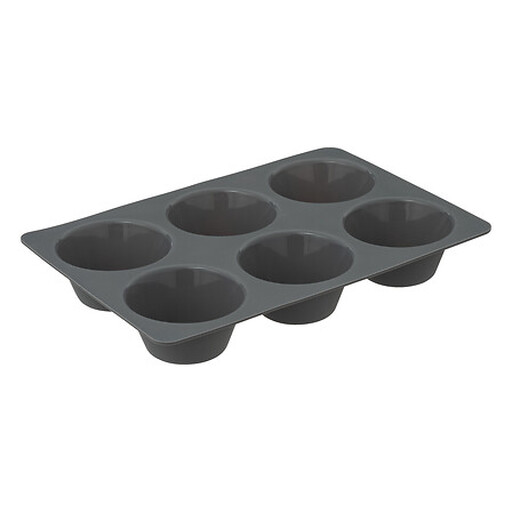
Why it suits this profile: This multi-cup mould is designed for muffins and cupcakes. With twelve cups, it’s a practical choice for family baking or your first attempts at baking.
The mould has clearly specified dimensions of 35 × 20 × 4 cm, making it easy to check whether it will fit on your baking tray.
According to the product description, the mould is made from food-grade silicone and is dishwasher-safe.
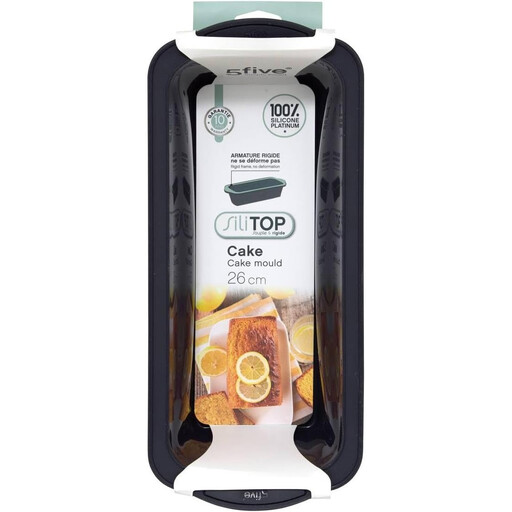
Why it suits this profile: The combination of steel and silicone pairs a sturdy construction with easy release. It’s suitable for bread, loaf cakes and other oven-baked dishes.
The integrated frame helps prevent the mould from warping when you fill or carry it. The product also specifies temperature limits of up to 220 °C and down to –20 °C.
The mould has a capacity of 1,59 litres and is dishwasher-safe according to the product description.
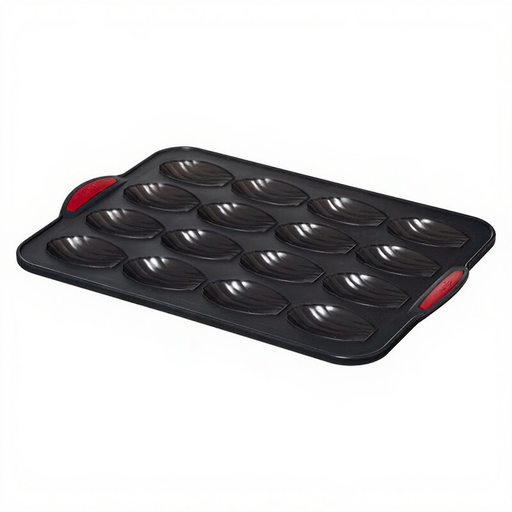
Why it suits this profile: This madeleine mould is ideal if you regularly bake small cakes, madeleines or individual desserts in larger batches.
According to the product description, the rigid frame helps the rectangular mould keep its shape when you fill or carry it.
The mould has 16 cups, is dishwasher-safe according to the product information and weighs approximately 0,31 kg.
We’ve put together a complete, regularly updated list of products that meet these strict selection criteria and fully comply with the safety regulations in force in the EU.
It depends on the mould, the recipe and the manufacturer’s instructions. A light coating of grease can make delicate bakes easier to release. After a few uses, you’ll have a better idea of whether your mould works well without any extra preparation.
There’s no set lifespan that applies to every mould. It depends on the quality of the material, temperature, cleaning and storage. Avoid sharp objects, direct sources of heat and cutting inside the mould. If it develops cracks, a sticky surface or permanent distortion, stop using it.
Many are, but not all. Check the product description or care instructions for confirmation. For moulds with a steel frame, also follow the guidance for products combining metal and silicone.